




Bright Ideas to Improve Your Fleet
This compilation of “bright ideas” focuses on single ideas aimed to reduce costs, improve operations, improve customer service, and more. Fleet managers explain how they executed their plan, the challenges they faced, and the results they’ve seen or expect to achieve.

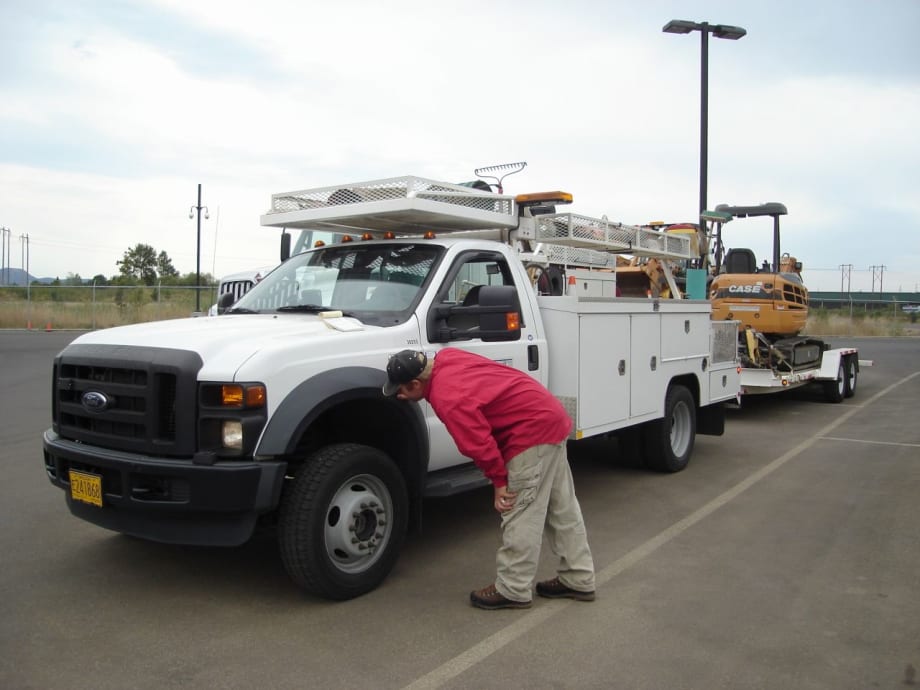
All fleet drivers at the Eugene Water and Electric Board in Oregon now perform a pre-trip vehicle inspection and turn in a report. These frequent inspections have improved safety and vehicle maintenance.
Photo courtesy of Eugene Water and Electric Board, Ore.
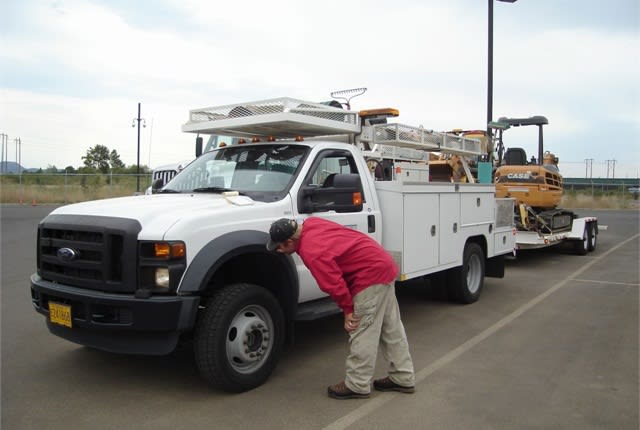
All fleet drivers at the Eugene Water and Electric Board in Oregon now perform a pre-trip vehicle inspection and turn in a report. These frequent inspections have improved safety and vehicle maintenance.
Photo courtesy of Eugene Water and Electric Board, Ore.
Improving Safety
Expand Driver Inspection Reporting to Light-Duty Vehicles
Plan: Eugene Water and Electric Board, a public utility in Oregon, began requiring drivers of all vehicles, regardless of class, to complete a driver vehicle inspection report (DVIR). The goal was to increase driver safety and reduce liability. Drivers of heavy-duty vehicles — about 25% of the fleet — already performed inspections for their vehicles. With light-duty vehicles, “we had a lot of gray area in determining what was and wasn’t a commercial vehicle, and this can change depending on your towing trailers,” Gary Lentsch, fleet services supervisor, explained.
Execution: Fleet staff created three different inspection reports that detail what kind of inspection is required. The heavy-duty DIVR matches up with FMCSA guidelines for pre-trip and post-trip inspection, light-duty vehicles use a condensed DVIR, and motor pool vehicles have a streamlined version that doesn’t include checking fluids. During a one-month period, fleet staff met with all departments to inform them of the new program and offer training. Staff also makes sure drivers are performing the DVIRs by checking vehicle use through GPS units.
Challenges: There’s always pushback to change, Lentsch said. Since this was a fleet advisory board suggestion supported by the executive management team, fleet management was able to enforce the program by making driver inspections part of the utilities safety manual.
Results: “Our drivers have now formed the habit of inspecting vehicles before driving them,” Lentsch said. Drivers performed about 37,000 DVIRs for the fleet’s 212 vehicles in a one-year period, finding 1,100 vehicle-related repair items that needed to be addressed. These include check engine lights coming on and off, nails in tires, low tire pressure, and broken lights. Fleet staff repairs these issues the same day, schedules repairs for another day, or delays them for the routine maintenance service, depending on severity. Drivers have also reported such things as safety belts not latching or retracting, an issue technicians wouldn’t have found during their routine services. Additional administrative work has been minimal. Lentsch said 47% of all repair work orders are now coming from DVIR reports. Although technicians are handling more repair requests, early fixes prevent more time-consuming and costly repairs later on. Because vehicle problems are identified early, “the fleet is probably in the best shape it’s ever been in,” Lentsch said. The DVIR expansion reduced breakdowns and yard delays by 30% and has allowed the fleet to reduce its spare vehicles.
Advice: Get support from supervisors and managers of user departments in order to enforce the plan, Lentsch advised.
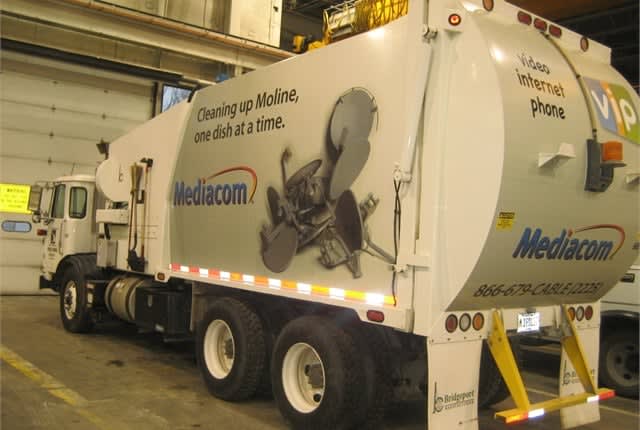
The City of Moline, Ill., uses advertising on its refuse vehicles to cover the maintenance costs of its automated refuse trucks.
Photo courtesy of the City of Moline, Ill.
Generating Revenue
Put Advertising on Sanitation Trucks
Plan: The City of Moline, Ill., began advertising on its refuse vehicles in 2006, a project that began to cover the increased maintenance costs of new automated refuse trucks. J.D. Schulte, CAFM, CPFP, fleet manager, wanted to bring in revenue, and he knew buses in the transit agency were doing so through advertising. However, he didn’t have the staff to set this up and manage it.
Execution: Schulte contacted the same advertising company the transit agency used, setting up a deal where the City gets a portion of proceeds (explained monthly via a matrix the company sends to fleet services) from an advertising contract without having to do any work. The company manages the program, and the City is only responsible for paying for vinyl repairs if the vinyl is damaged. The City started advertising on all five of its new refuse trucks and has since expanded to six.
Challenges: Working out the contract details was time-consuming. “Everyone wanted to make sure we protected the City from untactful and distasteful ads,” Schulte explained. To solve this, the final contract states that Moline staff has the final approval over all ads. There was also concern about the cost of repairing the vinyl, but Schulte reported that in the years this program has been running, this has yet to happen.
Results: Annual revenue from the advertising program is currently $39,600 for the six trucks, up from $30,000 back in 2006 for five trucks. This revenue is used solely to cover refuse vehicle maintenance, which will help the sanitation department as garbage collection transitions into an enterprise finance model, Schulte said. The program has also received praise from the local media.
Advice: “Forge ahead!” Schulte said. “As public servants, anything we can do to create a revenue stream to offset the use of hard-earned tax dollars is beneficial.” He added that agencies should make sure they don’t leave themselves open to loopholes when creating the contract.
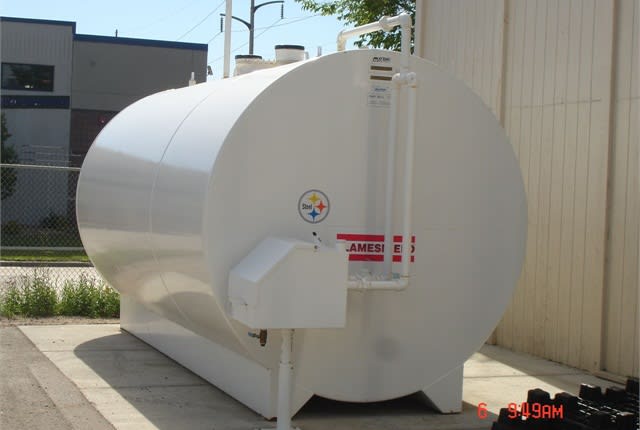
The City of Fargo, N.D. fleet purchased this 6,000-gallon waste oil storage tank in order to store enough oil to burn all year.
Photo courtesy of the City of Fargo, N.D.
Lowering Costs
Reuse Waste Oil for Heating
Plan: The City of Fargo, N.D., fleet purchased three waste oil furnaces and a large storage tank to collect oil all year. The furnaces are in the parking area and set to 60 to 65 degrees to keep vehicles at above-freezing temperatures and allow any ice on them to melt. In the past, the fleet sold its used oil for $0.25 per gallon.
Execution: The fleet purchased the 250,000 BTU furnaces during a facility upgrade. Realizing after the first year that its two 1,000-gallon storage tanks wouldn’t store enough oil to last the entire six-month heating season, fleet staff purchased an additional 6,000-gallon storage tank. Wayne Hegseth, building maintenance, said he sets the regular natural gas heater at about 50 degrees as a backup, in case there are heating problems during the weekend and no one is there to fix it.
Challenges: Because of the layout of the facility, the storage tanks are farther away from the furnaces than recommended. To compensate, fleet staff purchased a 5-gallon day tank for each furnace, and oil is automatically pumped from the storage tank into the day tanks. The furnaces need to be serviced every 500-600 hours of use, which takes staff two hours to complete. Finally, Harold Pedersen, fleet services manager, said there are additional labor hours in handling used oil to consider.
Results: The fleet uses approximately 8,000 gallons of stored oil per year, which on average reduces natural gas heating costs by $35,000 annually. With all costs considered, Pedersen estimated that return on investment took three years.
Advice: For those thinking about starting a waste oil heating program, Hegseth said, “Find out how many gallons of waste oil you create to see if you have enough to run [the furnaces]. It defeats the purpose if you don’t have enough oil.” He added that fleet staff was surprised at how much oil the furnaces used per hour — 1.7 gallons per heater.

The City of Columbus, Ohio, fleet facility had 2,650 solar panels put on its roof. Using energy from the collected solar power, the fleet division reduced its energy costs by 60% in June compared to the prior year.
Photo courtesy of the City of Columbus, Ohio.
Lowering Costs
Install a Solar Array on the Fleet Facility Roof
Plan: When the City of Columbus, Ohio, Mayor Michael Coleman’s office sought potential host sites for a solar array, staff at fleet services volunteered. The no-cost solar array would allow the fleet to lower its utility costs while helping the mayor move forward with the City’s greening goals.
Execution: The Mayor’s office had issued a request for qualifications (RFQ) for the solar array, and Tipping Point Energy COC PPA SPE-1, LLC, a renewable energy company, won the bid. Following a lengthy engineering review of the roof structure and an assessment of the fleet’s electricity use, the company had the 2,650 solar panels installed on the fleet facility roof. The facility has 151,000 sq. ft. of roof space. The contract is structured as a power purchase agreement — the fleet division buys the power generated by the system, and the company owns and maintains the solar array, merely leasing space from the City.
Challenges: Bill Burns, fleet operations manager, said the only inconvenience was during installation. The utility company came in to shut down the power for about five hours on a Saturday to make adjustments to the utility lines. The fleet division simply switched to its back-up generator for those five hours in order to continue working. Burns added that the fleet’s 2008 facility is new and can handle the added weight of the array, whereas older facilities may not be able to do so. He also said the fleet had to dedicate 120 sq. ft. of space in the facility for the installation of two electrical inverters.
Results: Kelly Reagan, fleet administrator, said as long as the sky is clear, the solar array is collecting energy. Even at night, it can gather energy from the sun’s rays bouncing off the moon. The fleet division projected an annualized 40% reduction in its energy costs, which totaled $184,000 in 2012. However, in June, the first full month of implementation, the City realized savings of 60% ($8,770 savings) off its electricity costs compared to June 2012.
Advice: For fleet managers considering their own solar array, Reagan said it’s best to start by talking to the mayor or sustainability specialist within the agency. If continuing ahead, Burns advised: “Hire a good consultant.” He explained that fleet professionals usually have little experience with solar energy, so a specialized consultant is ideal. In Columbus’ case, the partnering company hired one.
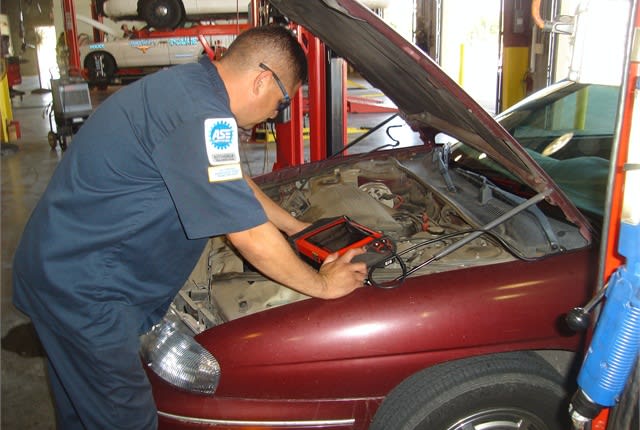
The City of Fort Worth, Texas, sends vehicles such as this one to the nearby schools for their automotive technology classes. Vehicles are limited to light-duty units and exclude front-line police vehicles.
Photo courtesy of the City of Fort Worth, Texas.
Lowering Costs
Offer Vehicles to the Local School District’s Automotive Classes
Plan: The City of Fort Worth, Texas, offered to send its vehicles to schools in a local district for repair after the district stopped receiving vehicles from dealerships. The fleet had worked with the district before by offering its students an internship and having employees sit on the education group’s advisory council, said Wayne Corum, Equipment Services Department director.
Execution: After setting up the agreement with the district, each of the five schools sent fleet staff their curriculum, detailing what they would be working on each week. Each week, fleet staff identifies up to five vehicles needing those specific repairs. Vehicles are limited to light-duty units and exclude frontline police units. Repairs are usually basic and include brake jobs, oil changes, and installation and repair of minor parts. Staff makes sure the departments that own each vehicle approve the repair by students, which they mostly do. Fleet staff checks the vehicles, sources the parts needed for repair through NAPA, and sends them to the separate schools. When the vehicle comes back a day or two later, a technician does a quality check before releasing it back to the user department.
Challenges: The biggest challenge so far is the delay in delivering the vehicle to the school and getting it back, Corum said. The fleet is using non-billable staff for delivery.
Results: The program frees up technician time for other repairs, reducing downtime for more critical vehicles. The fleet doesn’t charge user departments for labor time on these vehicles, which reduces their bills. Corum said he expects $100,000 in labor cost savings in the first year. As for the school, “the big thing for them is they get newer vehicles,” Corum said. After the dealerships stopped providing vehicles, students began working on older vehicles, which have much different technology from newer vehicles.
Advice: To start a similar program, get in contact with someone in the automotive program at the school district, get buy-in from the administrative authority, and make sure user departments approve of the program, Corum said. For police vehicles, specify that no frontline patrol cars can be sent to students.
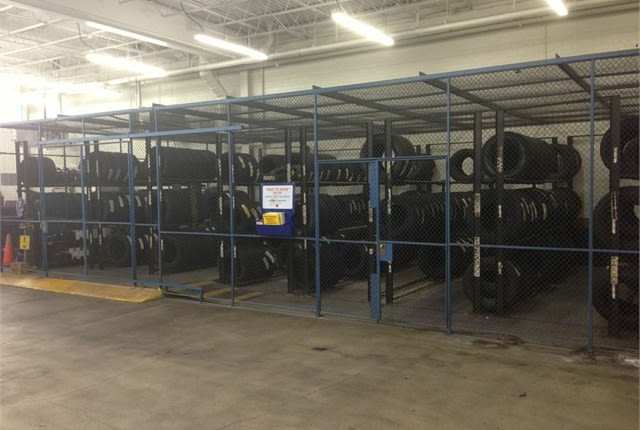
The tire cage at the Wake County, N.C., fleet facility is located in an inconvenient location. By moving it closer to the parts room, the fleet will improve efficiency on the shop floor.
Photo courtesy of Wake County, N.C.
Improving Efficiency
Relocate the Tire Storage Cage Closer to the Parts Room
Plan: The placement of the tire storage cage at the Wake County, N.C. fleet facility had long been the cause of inefficiencies. With the parts room in the front of the large building and the tire storage area in the back, the parts manager had to continually run back and forth to get tires as part of his duties. When it was time to replace the facility’s in-ground lifts, Thomas Kuryla, director of fleet operations, decided to also move tire storage to the front of the building, near the parts room, in order to improve shop efficiency.
Execution: The fleet has a 28,000-lb. drive-up lift near the entrance that takes up the space of three bays. Since this is hardly used, Kuryla plans to donate the lift to a joint local school and community college project and put the tire cage and tire mounting and balancing equipment in its place. He said the few jobs that need such a large lift will be outsourced. In the empty space of the tire storage cage, Kuryla plans to create three service bays for upfitters of emergency equipment. These technicians are currently working out of a secondary maintenance shop on the same property. This move will allow fleet maintenance to consolidate and allow those technicians and the supervisor to work out of the main shop rather than running between the two to get parts. As of August, Kuryla was looking at the first round of architectural designs. The design will then go back to the architect for any changes, then be put to bid. If everything goes according to schedule, the restructured shop could be ready for use in six months to one year, Kuryla said.
Challenges: As with any project, the challenges of this one are budget and maintaining operations. Even if the project goes through, the costs have to be reasonable for it to be approved. Kuryla said one reason for doing it now is to time it with the vehicle lift replacements in order to lower costs. Once the project begins, Kuryla will have to ensure normal operations are uninterrupted while construction impacts a large percent of the fleet area.
Expected Results: With this change, Kuryla expects to improve facility efficiency, especially that of the parts manager. Consolidation of the two shops will also improve communication and enhance workflow of the staff members in the secondary facility as they will no longer have to go to the main facility for parts.
Advice: “Work with your staff who are affected by the change,” Kuryla said. “A project will be successful when you partner with your entire team for input. Their buy-in is essential.”[PAGEBREAK]
Improving Customer Service
Utilize Clerical Staff as a Liaison for Clients
Plan: The Snohomish County Public Utilities District (PUD) in Washington began having a fleet clerical staffer arrange and schedule preventive maintenance (PM) appointments, a task usually reserved for the shop foremen. Since PMs are usually done outside of regular day shift hours, this meant the foremen working the second and third shifts were making the appointments, making scheduling with drivers and user departments a headache, said Frank Castro, CAFM, transportation manager.
Execution: Castro assigned and trained Chris Yurick, an office clerk, to be the liaison between customers and the foremen. He made sure she understood the goal for the change, to make sure that vehicles needing preventive maintenance are brought in on time. She also provides a PM forecast and can look up basic information in the fleet management system to review notes or answer customer questions.
Challenges: There haven’t been any challenges, and Yurick has been able to fit the job into her regular duties, Castro said.
Results: Being able to get a hold of someone during regular working day hours has significantly improved customer satisfaction. Since someone is actively handling scheduling, PM performance has improved significantly, with more vehicles coming in on time for maintenance. Foremen were happy to give up this job and now have time to focus on their other duties.
Advice: “Make sure the person they have as liaison has good communication skills and can also work closely with shift foremen. They should have a little background in fleet to answer questions or know where to get the answers,” Castro advised.
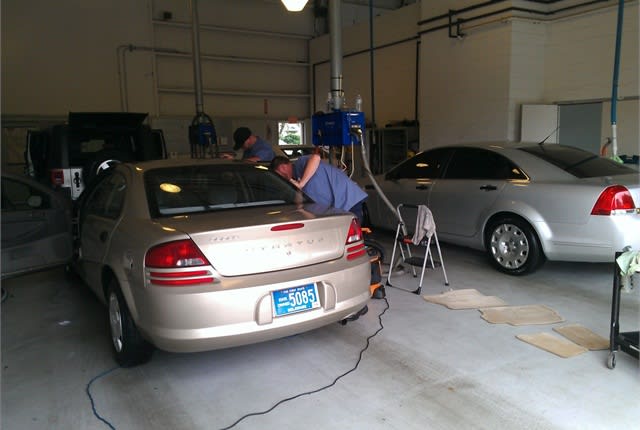
The State of Delaware fleet management ensures motor pool vehicles are washed with more frequency and on weekends so they’re ready on Monday.
Photo courtesy of the State of Delaware.
Improving Customer Service
Increase Vehicle Washing Frequency of Motor Pool Vehicles
Plan: Following customer complaints about the cleanliness of cars, the State of Delaware fleet began washing motor pool cars weekly in order to boost customer satisfaction and fleet image, said Terry Barton, fleet administrator.
Execution: Focusing on motor pool cars, Barton worked with prison industries and contracted vendors to have them come every Friday afternoon to pick up keys for motor pool vehicles. They clean the vehicles during the weekend so the vehicles are ready to go by Monday morning. Depending on the contract, this can cost between zero and $20 for a regular interior and exterior wash. Barton got more stringent with maintenance bids, making sure they included cleaning as well. He also got stricter with drivers who left vehicles dirty and didn’t report it, enforcing a $125 fine to their departments if they were caught.
Challenges: When the economy was at its lowest, it was harder to keep vehicles regularly washed. About two years ago, Barton realized vehicle rentals were very strong and the fleet could afford to wash cars regularly, so he picked up the wash program.
Results: Regular cleaning has increased customer satisfaction. In the latest customer service survey, respondents gave the fleet 3.5 out of 4.
Advice: Vehicle cleanliness is a big part of image, and fleets should wash their vehicles regularly, Barton said. “When you skip obvious maintenance items and your customers realize you’re doing that, your service is not as good in their eyes,” he explained.
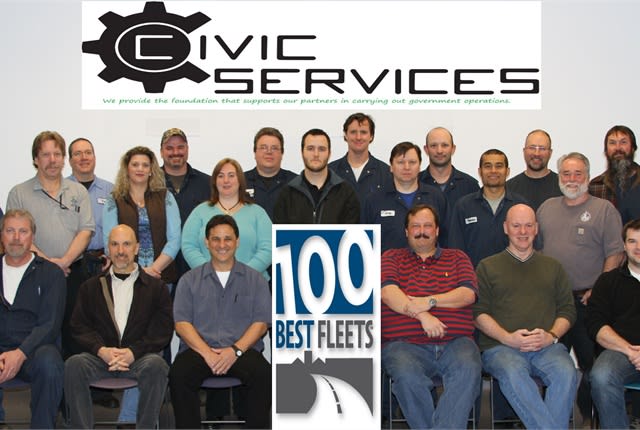
At the City of Bellevue, Wash., fleet, new self-directed work teams allow technicians to make their own decisions about repairs and communicate with customers.
Photo courtesy of the City of Bellevue, Wash.
Promoting Collaboration
Restructure Repair Groups into Self-Directed Work Teams
Plan: As part of a larger fleet organization restructuring, the City of Bellevue, Wash., divided its three repair groups into self-directed work teams that are encouraged to make their own decisions and coordinate their own jobs. These teams — light-duty, heavy-duty, and fire equipment — were previously led by two crew leaders who handed out work assignments and managed the groups.
Execution: Fleet Supervisor Pat Spencer first sat down with each of the teams to ask if this was something they wanted to do. After getting commitment, staff worked together on agendas and a charter. The charter included objectives such as decreasing operational cost, increasing customer satisfaction, and committing to continual individual improvement. Each group, which consists of three technicians, makes decisions together regarding work assignments, parts purchases, and communication with user department coordinators and vendors. They also can ask crew leaders for input. Crew leaders now split their time between the shop floor and administration.
Challenges: Teams are still learning to work and make decisions together. Spencer explained that where before a crew leader might assign a job to a person he knew had a certain strength, groups are still working to learn each other’s strengths and coordinate assignments accordingly.
Results: Carter Dillon, fire equipment technician, explained that the organizational change has resulted in improved employee attitude. Each employee feels his or her decisions matter, leading to improved confidence and better internal communication. Secondly, employees have a more direct relationship with management, which allows them to better understand management’s decision-making, creating more trust. Lastly, there have been improvements in employee perception and engagement, with technicians more aware of each other’s strengths and weaknesses, Dillon said.
Advice: “Sit down with employees, ask them if they want this, and get their buy-in,” Spencer advised. Dillon added, “The person who does sit down with the group has to be dedicated and open enough to let this happen.”
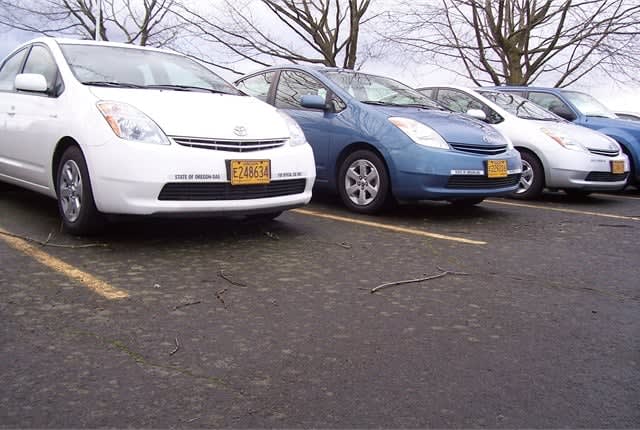
The State of Oregon is making sure hybrid vehicles are used more often. The new policy affects 400 vehicles, mostly Toyota Priuses and Honda Civic sedans.
Photo courtesy of the Department of Administration, State of Oregon.
Improving Utilization
Increase Hybrid Vehicle Minimum Mileage
Plan: The State of Oregon updated its statewide fleet management policy to increase the hybrid minimum mileage from 590 miles per month to 750. Brian King, fleet and parking services manager, Department of Administration (DAS), said this was done to ensure there is a return on investment for the additional cost of the hybrids when it reaches its 10-year lifecycle.
Execution: The State’s Fleet Management Advisory Council enacted the policy change, which affects more than 400 hybrid vehicles. In January, the DAS conducted its annual fleet review and in April, notified those departments with low-use hybrid passenger vehicles to manage their vehicles so that hybrids would be used more often. The departments have until October to make the changes, and fleet employees are available to help guide user departments into better utilization of the hybrids. Fleet staff can suggest they internally shift vehicles around, or if they can’t, they can ask for a gasoline vehicle that has a minimum utilization requirement of 590 miles per month. If they don’t or can’t comply, they will have to return the vehicles.
Challenges: King said one of the larger challenges lies in educating user departments about how to shift their usage around to use the hybrid vehicles more often. Smaller departments with a high percentage of hybrid vehicles in their fleet may not be able to comply, which means they may have to switch to a gasoline-powered vehicle. Sometimes internal vehicle use changes don’t work, as some users need a larger vehicle. King is working with these departments to determine the alternatives.
Expected Results: King expects to see an overall decrease in fuel use and greenhouse gas emissions. Additionally, because hybrids seem to be able to run a higher mileage without significant increases in maintenance costs, this shift may stretch the average lifecycle of vehicles in the field. He explained that while a gasoline vehicle’s lifecycle in the fleet is approximately 130,000 miles or eight years, the hybrid vehicle lifecycle is 175,000 miles or 10 years.
Advice: “Do it in collaboration and cooperation with the group of agencies that either represent the customer or client base, or bring them in if you do have something like this,” King said. He added that reducing operating costs is everyone’s responsibility, and when a State-wide policy is enacted to do so, “we’ve got to work on this together.”

The City of Roseville, Calif., conducted a fleet summit to encourage local dealers to bid on the City’s RFPs for vehicles. Local dealership participation rose significantly.
Photo courtesy of the City of Roseville, Calif.
Lowering Purchasing Costs
Create a Fleet Summit to Encourage Local Dealers to Participate in Vehicle Purchases
Plan: After City leadership questioned why local dealerships weren’t putting in bids for fleet vehicles purchased by the City of Roseville, Calif., Eric Kaiser, equipment maintenance supervisor, got together with the City’s purchasing coordinator to solve the problem. They realized the few bids coming in from local dealers were higher than others, and these bids never won. Kaiser and the purchasing coordinator put together a fleet summit to bring local dealers together to educate them on the process of bidding and open up discussion.
Execution: Kaiser contacted local dealers and representatives from neighboring cities, as well as Placer County, for the summit. City staff put together the agenda. Kaiser explained the City’s vehicle replacement process, and the purchasing coordinator explained how the City purchases assets and how its requests for proposal (RFPs) work. Afterward, the dealers talked about why they weren’t bidding. Dealers thought profit margins were too low, it required too much work and too many hoops to jump, or it required a change in business model. Roseville staff said the City would be willing to work with other cities on a multi-agency bid in order to increase volume. Kaiser also found out that these local fleets weren’t calculating incentives into their bids since they weren’t sure the incentives would come in. Those (non-local) dealerships that did add them in could offer a lower price. Local dealers also didn’t know that if they couldn’t fulfill every single spec, they could take an exception and bid anyway.
Challenges: Kaiser reported no challenges in putting together the summit. It was well received by the City, neighboring public agencies, and the dealerships.
Results: Local dealership participation has risen significantly since that June 2011 summit. By January 2013, 56% of the 27 light-duty vehicles the City purchased had come from local dealerships. Bids from local dealerships are coming in much lower than before. In fact, Kaiser said, some are coming in at below the state contract price.
Advice: “Be prepared to know your policies and procedures,” Kaiser advised for anyone preparing to hold a similar meeting.
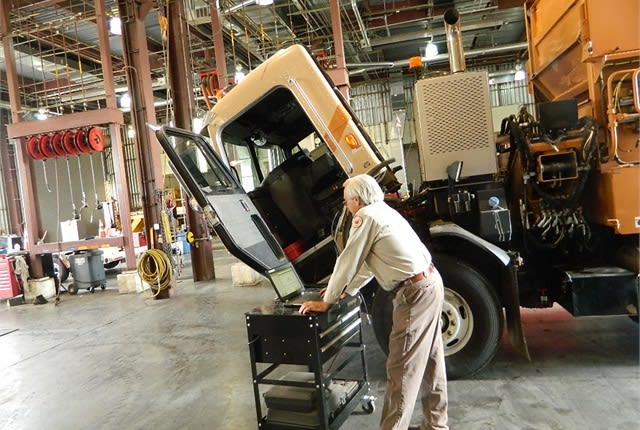
The City of Phoenix, Ariz. selected and trained 11 technicians who had the aptitude to perform diagnostics to reduce the number of trucks sent to dealerships for repairs.
Photo courtesy of the City of Phoenix, Ariz.
Increase Training
Select and Train Specialized Diagnostic Technicians
Plan: With the trend toward increasing computer controls in all classes of vehicles, especially heavy-duty diesel trucks, the City of Phoenix, Ariz., fleet was sending an increasing number of trucks to the dealership for even minor repairs. The fleet didn’t have all the diagnostic software or technician training to complete these repairs, and the outsourced jobs increased downtime and costs. Fleet management decided to focus training and investment in a few technicians who had the aptitude to perform diagnostics. The goal was to funnel the tough diagnostic jobs to them, and the less complex ones to the rest of the shop, said Dan Berlenbach, CPFP, equipment maintenance superintendent. With seven maintenance shops, this meant selecting, testing, and training 11 technicians.
Execution: Fleet management first consulted with labor and got their support for the program before soliciting volunteers. Then, they quality-checked the applicants, interviewed them, and conducted extensive hands-on evaluations. Fleet management developed an extensive training plan for the chosen technicians to get them up to the level of the OEM-certified engine technicians. Heavy-duty diagnostic technicians enrolled in the Cummins Virtual College, to be completed in one year (via CD self-study), which will allow them to attend the same classroom training as the OEM technicians. They will attend continuing education courses from OEM engine manufacturers. Light-duty diagnostic technicians have equivalent training and qualification tracks.
Challenges: “We had to justify the software and hardware needs, and we knew money was tight. Our justification was solid, however, and we got the training, software, and hardware funded,” Berlenbach said. Funding for some of the training was also built into new purchase contracts. Another challenge was finding the time for these technicians do their training. Lastly, because a pay incentive was not feasible, management instead offered a preference of shop assignment; between that and the challenge of the work, there were enough volunteers.
Results: The program has been a resounding success, Berlenbach reported. “We are halfway into it and already there are many less vehicles going to the dealer for trouble codes and diagnostic issues, and our downtime is reduced,” Berlenbach said. “Our new diagnostic techs are proud of their assignment and have worked hard to complete their training. The more they learn, the more their value increases and this idea pays off.”
Advice: Get buy-in from all concerned before going too far, Berlenbach advised. Use a rigorous selection process so you get the right people for the job.
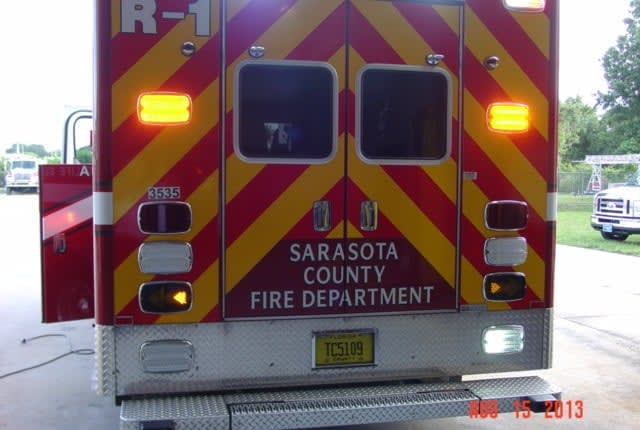
Sarasota County, Fla. focused on switching to LED lighting on rescue vehicles, fire trucks and other vehicles and equipment in order to reduce energy use on vehicles.
Photo courtesy of Sarasota County, Fla.
Reducing Operating Costs
Install LED Lighting in Vehicles to Reduce Downtime from Burned Out Bulbs
Plan:Sarasota County in Florida is switching to LED lighting in vehicles in an effort to reduce downtime from inoperable incandescent light bulbs and reduce energy use on vehicles. Staff began with trailers three years ago and has since expanded to rescue vehicles and fire trucks as well as other vehicles and equipment.
Execution: Greg Morris, CEM, fleet services manager, said he specs new emergency and fire vehicles with LED lights. Staff is also selectively replacing lights on older vehicles with LEDs when they burn out or when they come in for service. They decide which vehicle should have LED lights based on the asset’s replacement lifecycle, Morris said. The fleet now uses LED for everything ranging from strobe lights to working lights on trucks to beacon lights. Morris said about 80% of the fleet’s on-road units have LED lighting.
Challenges: LED costs have lessened for the new assets. There is little difference in the cost of an incandescent and LED light for County vehicles, especially when taking into consideration the labor and replacement cost of the incandescent lights, Morris said. However, Gerald Powers, assistant shop manager, said one challenge in changing out lights on older vehicles is time. For some trucks and newer vehicles, technicians have to change out the entire light assembly rather than just a bulb. Additionally, LEDs will not fit in every vehicle or equipment lighting socket.
Results: Use of LED lighting has resulted in reduced fleet downtime, replacement lighting parts costs, and reduced technician time, Morris said. In the past, emergency vehicles were constantly in the shop for broken lights, but LED lighting decreased the amount. LED lighting also reduced energy (voltage/amperage draw) on batteries and alternators, which translates into reduced fuel costs.
Advice: When implementing a project like this, Morris advises other fleet managers to look for the return on investment. “Look at it like a taxpayer” he said.
Sources:
Gary Lentsch, fleet services supervisor, Eugene Water and Electric Board, Ore.
J.D. Schulte, CAFM, CPFP, fleet manager, City of Moline, Ill.
Wayne Hegseth, building maintenance, City of Fargo, N.D.
Harold Pedersen, fleet services manager, City of Fargo, N.D.
Bill Burns, fleet operations manager, City of Columbus, Ohio
Kelly Reagan, fleet administrator, City of Columbus, Ohio
Wayne Corum, Equipment Services Department director, City of Fort Worth, Texas
Thomas Kuryla, director of fleet operations, Wake County, N.C.
Frank Castro, CAFM, transportation manager, Snohomish County PUD, Wash.
Terry Barton, fleet administrator, State of Delaware
Carter Dillon, fire equipment technician, City of Bellevue, Wash.
Pat Spencer, fleet supervisor, City of Bellevue, Wash.
Brian King, fleet and parking services manager, Department of Administration (DAS), State of Oregon
Eric Kaiser, equipment maintenance supervisor, City of Roseville, Calif.
Dan Berlenbach, CPFP, equipment maintenance superintendent, City of Phoenix, Ariz.
Greg Morris, CEM, manager, Fleet Services, Sarasota County, Fla.
Gerald Powers, assistant shop manager, Fleet Services, Sarasota County, Fla.
More Safety

New Partnership Aims to Expand Public Digital Hazard Alert System Statewide
The Hawai’i Department of Transportation (HDOT) is expanding advance digital hazard alerts for the public statewide.
Read More →
New York City Expands Safety Technologies Across Municipal Fleet
Executive Order 19 moves intelligent speed assistance and pedestrian alerts from pilot programs toward standard fleet equipment, offering other public fleets a look at how safety technology can be tested, measured, and scaled.
Read More →
Hidden in Plain Sight: Fleet Compliance Risks
Fleet compliance isn't just about having policies — it's about consistently enforcing them. This practical guide reveals six hidden compliance risks common in public sector and shared fleet operations and outlines proven strategies to improve visibility, accountability, and audit readiness.
Read More →
5 Days Left to Submit Your 2026 Fleet Safety Award Nomination
Know a government fleet, safety, or risk manager who deserves recognition for making fleet operations safer? Nominations are open through Aug. 15.
Read More →
How the First 24 Hours Can Shape a Fleet Crash Response
How a strong accident response process helps government fleets move from the initial report to recovery while building a clearer record for what needs to change next.
Read More →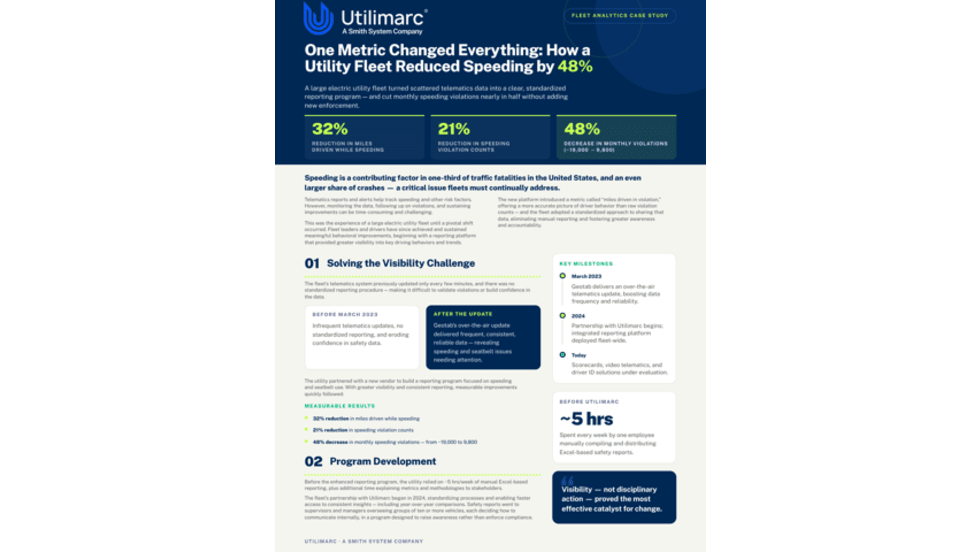
How Better Visibility Cut Speeding Violations by 48%
Fleet leaders don't need more data, they need clearer visibility into what the data is saying. This case study explores how one utility replaced speeding-event counts with a single metric — miles driven in violation — to strengthen safety and significantly reduce speeding violations.
Read More →
e-con Systems Expands AI Camera Tools for Traffic Monitoring
The systems support license plate recognition, traffic analytics, and video management for transportation agencies.
Read More →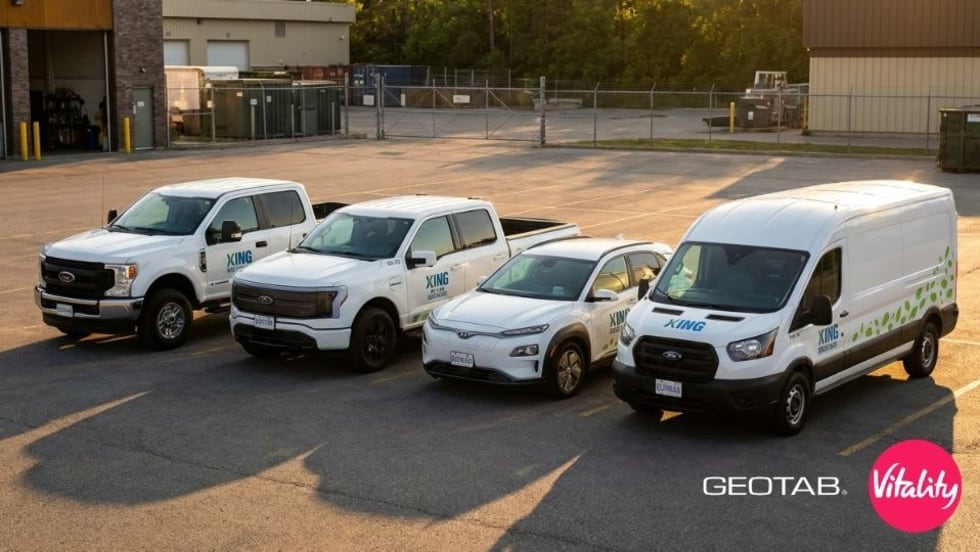
King Township Pilot Links Driver Feedback to Reduced Speeding
How King Township, a best-in-class municipal fleet, reduced speeding by 10.9% and demonstrated a projected 349% ROI by putting safety ownership directly in drivers' hands.
Read More →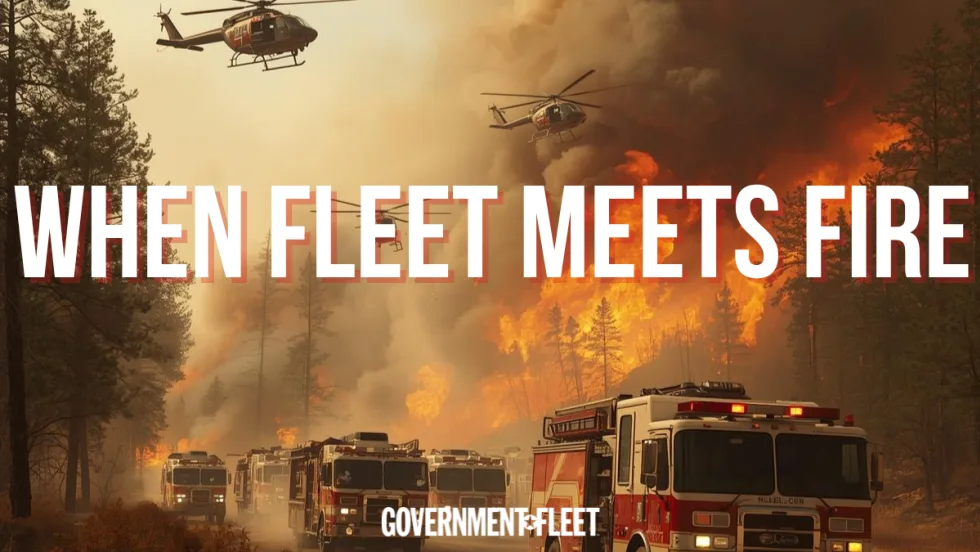
Beyond the Fireline: The Critical Role of Public Fleets in Wildfire Response
Behind every wildfire response is a complex network of vehicles, data, and decisions that must work in sync under extreme pressure. Global heating trends require strong fleet coordination and reliable communications to keep crews safe and operations running smoothly.
Read More →
How AI Is Transforming Public Fleet Safety - Part 1
AI-powered safety systems are helping public fleets tackle distracted driving by delivering real-time coaching and measurable behavior change behind the wheel. In part one of our Q&A, Nauto CEO Stefan Heck explains how agencies can improve safety, reduce costs, and navigate implementation challenges with AI-driven technology.
Read More →