Alabama College Trains Technicians with VR Technology
The school believes this digital hands-on experience will better prepare students for a career in the automotive world.
Lexi Tucker・Senior Editor
April 26, 2021
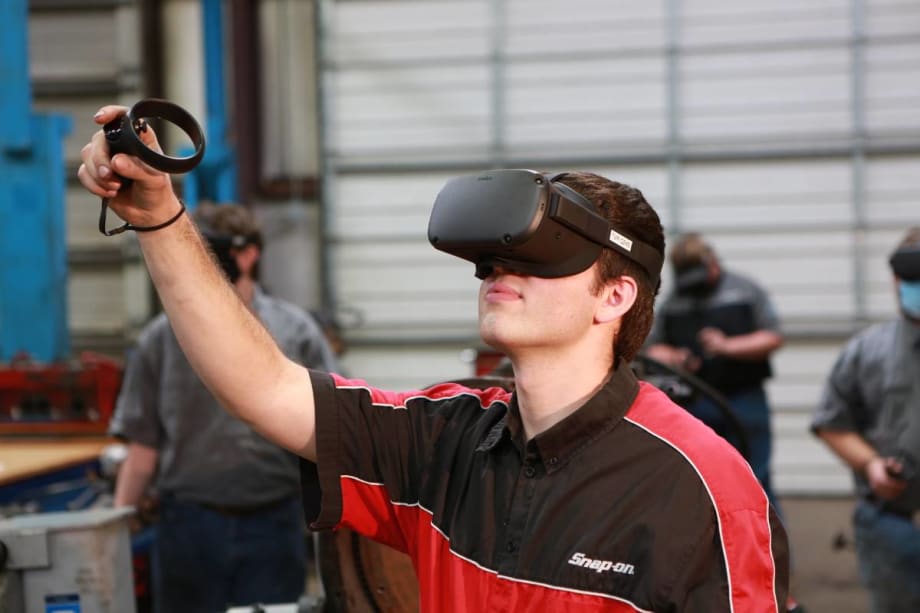
The Diesel by Distance program will now feature VR simulations that recreate the working environment of a diesel technician.
Photo: Wallace State Community College
4 min to read
Wallace State Community College in Alabama has taken a more modern approach to draw interest in technician jobs by incorporating virtual reality (VR) into its Diesel by Distance program. On April 7, the school launched a new initiative that is sure to provide a new dimension to hands-on training.
Built in collaboration with learning startup TRANSFR and the Alabama Trucking Association, and developed in part with support and funding from the U.S. Department of Labor and the National Science Foundation federal and state agencies, the program provides students the flexibility to learn through both traditional and online formats, complemented by VR labs created by TRANSFR.
Ad Loading...
Providing New Learning Methods
Diesel by Distance will now feature VR simulations that recreate the working environment of a diesel technician. In the simulations developed by TRANSFR, students learn, practice, and master skills that are essential to the construction, repair, and maintenance of diesel engine vehicles. The program helps to expand career opportunities for workers interested in pursuing diesel technology careers.
“Last March when the COVID-19 pandemic interrupted in-person instruction, the imperative to provide remote and virtual learning opportunities increased, and our goal to deliver new and flexible learning options for our students became an even greater priority,” said Suzanne Harbin, Wallace State’s vice president for Advancement and Innovation during the Diesel by Distance launch event.
VR offers numerous benefits in the context of technical training, including an immersive view of the work experience. The simulation places students in a lifelike environment that replicates the experience they would have on the job — in this case, working in a diesel engine, truck, or automotive repair shop.
The benefits are two-sided: workers can get up-close and hands-on exposure to the day-to-day work they’d be doing, setting their expectations for what the actual work will be like. It also helps hiring employers to boost retention and performance by equipping them with a pipeline of trained workers who have an educational foundation that is much closer to the on-the-job experience in an applied setting.
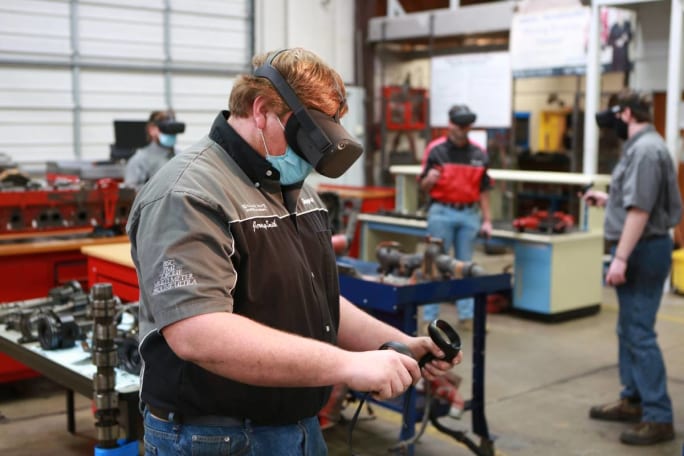
VR offers numerous benefits in the context of technical training, including an immersive view of the work experience.
Photo: Wallace State Community College
Solving the Problem of Recruiting and Retention
While some technical job roles and functions have experienced losses in recent years because of automation, diesel technology is an industry that has been resilient — and continues to experience massive demand for talent. This is in part from many older workers from the Baby Boomer generation who are slated to age out or retire.
Ad Loading...
There is also a constant demand for diesel-powered vehicles that keep logistics, transportation, distribution, farming, and public safety fleets on the road, as well as the need to continuously keep up with changes in new equipment, safety, and environmental protocols.
“Many of the working adults who could retool for roles in diesel tech may struggle to picture themselves in a new role or industry completely unfamiliar to them. They may have preconceived notions about the work environment, pay, and opportunities for advancement. By incorporating immersive learning and training into the diesel technology curriculum, we’re helping to break down some of those barriers and misconceptions that can exist. The self-paced, on-demand curriculum that only requires a headset and Wi-Fi connection helps eliminate barriers to training for rural students and working learners,” the school said in a statement.
Diesel technology has historically lacked diversity, so one of the explicit goals of this initiative is to also make the industry more attractive and inclusive for women, who have long been underrepresented in the field. The goal is to help lower-income, high-potential workers see these careers as inclusive and accessible fields that can offer pathways to stable and well-paying careers.
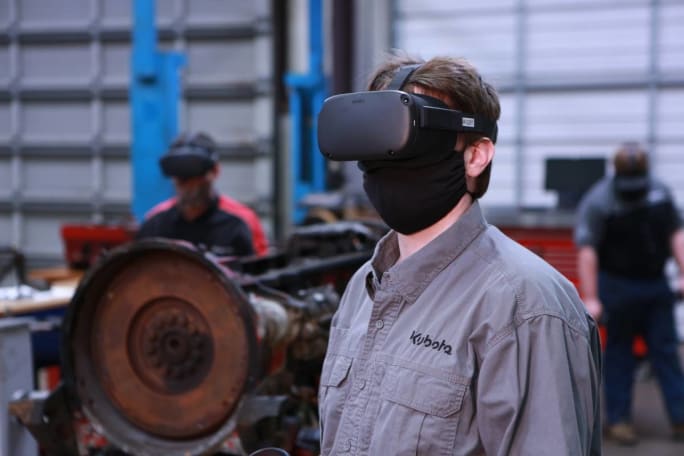
The benefits are two-sided: workers can get up-close and hands-on exposure to the day-to-day work they’d be doing, setting their expectations for what the actual work will be like.
Photo: Wallace State Community College
Receiving Support
Wallace State has not yet partnered with any local government fleets to assist newly trained technicians to find jobs after graduation. However, it has numerous industry partners — from national ones like Kubota, Caterpillar, and Snap-on, to those with offices located locally and regionally like Southland International, MyWay Transportation, and RE Garrison Trucking.
The diesel program has numerous work-based learning opportunities with industry partners, and job placement in the program is near 100%. Wallace State Diesel is National Automotive Technicians Education Foundation (NATEF) accredited and an NC3 Certified provider. Program Chairperson Jeremy Smith is an NC3 master trainer.
Students receive the following certifications as part of the program, which is NC3 certified and NATEF/ASE accredited:
Keeping a vehicle longer may ease this year’s budget, but what does it cost the next one? A closer look at fleet decisions can reveal opportunities to reduce spending while protecting essential services.
From industry news and fleet management strategies to conversations with peers, Government Fleet's LinkedIn page offers public-sector fleet professionals another way to stay informed and connected.
Five fleets were honored at RTA Connect 2026 in Chicago for excellence across resource efficiency, intentional culture, risk management, and stakeholder satisfaction.
Buying fleet management software in 2027 means looking beyond features and price. As fleet operations, technology and expectations evolve, this guide explores what today’s fleet professionals should consider when choosing a system that can deliver value now and adapt to what comes next.
St. Johns County, Florida, had fleet data, but turning it into reliable decision guidance was another matter. Instead of starting over with a new fleet management system, the county connected existing tools and built a scoring system that gives managers an objective look at fleet health.