




Balancing Refurbishment, Replacement, and Retention in Your Fleet
How fleet managers are balancing refurbishment and replacement, leveraging data for preventive maintenance, and retaining technicians with pay, tools, and flexible schedules.

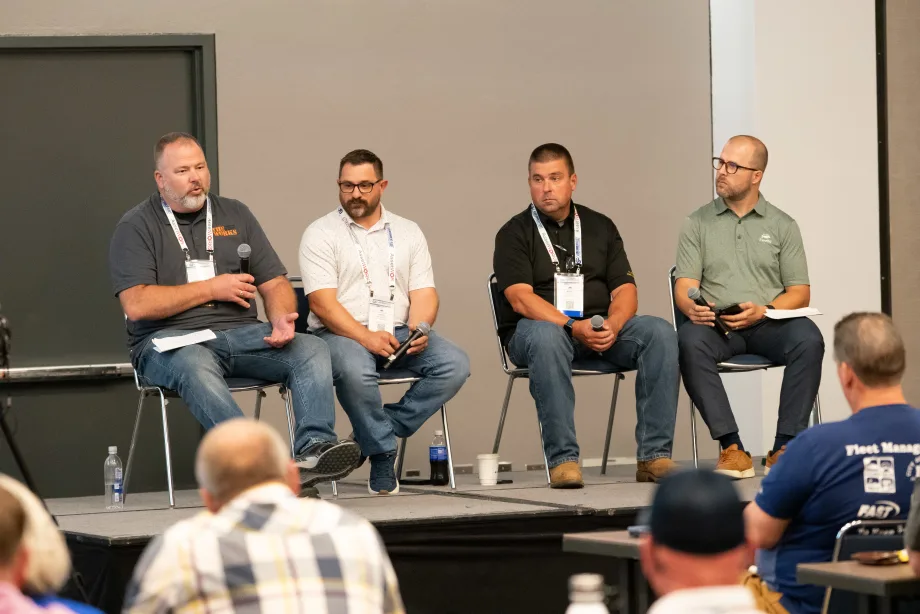
Dan Simpson with panelists Tom Rowlings, assistant fleet manager for the City of Cambridge, Massachusetts; Kevin Reinartz, CPFP, fleet operations manager for the City of Farmers Branch, Texas; and Battalion Chief Nate Hopper, logistics officer for Trussville Fire and Rescue in Alabama.
Photo: Ross Stewart Photography
Budgeting for new vehicles; refurbishing aging ones while managing expectations; addressing certification pay. Now layer on the need to provide modern tools that enhance job satisfaction, the push for data-driven decision-making, and the importance of stakeholder engagement, and it's easy to see how today's fleet managers are juggling more than ever.
So, what's a fleet manager to do?
At GFX 2025, a panel of fleet professionals—moderated by Dan Simpson, product marketing manager at Fleetio—took the stage to discuss the operational, financial, and workforce challenges facing today's public sector fleets. Panelists included Tom Rowlings, assistant fleet manager for the city of Cambridge, Massachusetts; Kevin Reinartz, CPFP, fleet operations manager for the city of Farmers Branch, Texas; and Battalion Chief Nate Hopper, logistics officer for Trussville Fire and Rescue in Alabama.
Budgets and How Aging Fleets Impact Them
To open the discussion, panelists were asked about the toughest budget-related decisions they had faced in the past year. For Battalion Chief Nate Hopper, who oversees a fleet of over 40 emergency response and support vehicles, the challenge stemmed from opening a new fire station, which required several new vehicles. His department already had a vehicle requirement plan in place, but they had to adjust it. That meant choosing not to remount an ambulance this year so that funds could be redirected to meet other vehicle needs.
When asked what factors go into making a decision like that, Hopper pointed to cost, available budget, and the time frame it takes to acquire emergency vehicles. He explained that it's a constant balancing act between planning ahead and adapting to shifting operational demands.
Refurbishment as a Long-Term Strategy
Looking at the strategies that have helped extend the service life of his fleet, Rowlings pointed to a focused investment in refurbishment. About three years ago, his team began requesting additional funding to refurbish older vehicles that were still in relatively good condition—especially larger Class A trucks and specialty vehicles with long lead times.
"This FY26 will be the third year we were approved for an additional $100,000 specifically to refurbish, versus replace a couple of vehicles," Rowlings said. "It's been a great help."
Deciding whether to invest in a refurbishment or push for a replacement depends on a few key factors: lead times for new units, the cost of new equipment, the cost of repairs, and—most importantly—the vehicle's condition.
His team uses a structured condition assessment process, made possible by four years' worth of repair data, to make informed decisions. This year, that approach led to a milestone: retiring the city's last vehicle without air conditioning—something, Rowlings joked, "people can appreciate today."
Reinartz added that his team looks at several metrics when evaluating a potential replacement, including utilization, mileage, fieldwork, and visual inspection. He also brings in technician input to assess whether the vehicle can be repaired affordably or whether replacement makes more sense.
"I'll get my technicians involved to see if this vehicle is something that is able to be fixed in a relatively affordable manner, or if it's something that can be purchased quickly," he said.
Factoring in long lead times and purchase timelines, he emphasized the importance of balancing cost and practicality while working closely with departments and stakeholders to ensure alignment. "Just averaging all those things up to make an informed decision," Reinartz said.
When it comes to making repair or replacement decisions, Reinartz emphasized the importance of involving stakeholders early in the process. He listed police and fire department leadership and their administrative staff, vehicle operators, technicians, the city manager, and finance staff among the key groups engaged.
"There's a wide variety [of people] who need to be involved in making some of these decisions," he said, noting that the financial impact can be significant. "We're potentially talking about million-dollar assets, so these are big decisions that need to be made."
Rowlings explained that in his operation, those conversations are often informal. With a fleet of around 200 vehicles, his team typically knows who operates each unit. Rather than holding formal feedback sessions, they'll ask operators for input during routine interactions—such as when a truck is brought in for service.
He described asking operators things like, "If you had one wish, what would you ask for on the next vehicle?" The responses, he said, usually focus on practical improvements rather than comfort features. "Most of them, it's not things like heated seats or...creature comforts. It's usually something to make your job easier," he said, such as a different utility body door or a lift gate.
A lot of it comes down to conversations with individuals, according to Rowlings. That emphasis on gathering input from the people using the equipment was echoed by Hopper.
"If we're requiring a new fire truck, we put firemen on that to make sure that we are getting that product that they want," Hopper said. "Normally, I'll... you know, I'll send out, like I said, a little survey of our current trucks. You know, what do they like, what do they not like about them?"
When it's time to begin building out the spec, Hopper's department takes it a step further.
"When it's time to actually start spec'ing the truck, we'll take some firefighters and officers, put them on a committee, and then... they will build the truck that they want to use," he said.
Proactive and Predictive Maintenance Strategies
Reinartz said his focus on proactive maintenance is informed by his background as a technician. He pointed out that the time between services shouldn't always be based on mileage—especially in a compact city like Farmers Branch, which spans about 15 square miles.
"Relying on miles doesn't really make a lot of sense for us," he said, noting that it takes a long time for many city vehicles to reach traditional service intervals. Instead, his team has implemented engine hour-based preventive maintenance using telematics data. That shift has been especially useful for the police department's Tahoe units.
"I don't know if you guys have had any motor issues with Tahoes, but GM recommends about 250 hours," Reinartz said. "They say about 33 miles per engine hour, the equivalency. So making that change from a mileage-based PM service to a power-based PM service really has extended the life cycle of those PMs for us."
Rowlings followed by sharing how his department has used telematics and fleet data to support both preventive and predictive maintenance efforts. One challenge they've faced is high idle time among diesel trucks, which can lead to problems with diesel particulate filters and regeneration systems.
"What has really been helpful...is a policy we have in place now," he said. "Anytime we get an alert, or if we get a phone call from a driver or supervisor, we go and we look into our fleet data to see...is there a check engine light on? Is there something we can address prior to it really becoming an issue?"
Rowlings noted that, like many fleets, his team still struggles to consistently receive daily driver vehicle inspection reports (DVIRs). That makes the use of sensor data even more critical in identifying issues before they escalate.
Reinartz gave a recent example where sensor alerts helped them catch an issue before it became worse. He said he received a check engine notification through their system, and after pulling the fault data, they discovered the engine was overheating. The operator had no idea and continued driving.
They were able to prevent engine failure simply because the alert came in early.
The Challenges of Refurbishing Older Units
Rowlings said one of the key disadvantages of refurbishment is vehicle selection. He explained that many people rely too heavily on simple metrics like mileage or hours without looking deeper into overall condition or long-term viability.
"Depending on your...executive team structure, they might look at that and say, 'Okay, well, we're giving you money for that, you're not going to approve other vehicles,'" he said. Setting expectations, he added, is one of the biggest challenges. "If they think by refurbishing, it's going to get you another... 10 years out of that truck," that can lead to misunderstandings. In his department, the goal is more modest—about five additional years—to help bridge the transition into electrification.
In his department, the goal is more modest—about five additional years—to help bridge the transition into electrification.
One example involved a vehicle used for winter plowing and summer flower watering that lacked air conditioning—something operators flagged early during FY26 planning. Rowlings said getting buy-in from operators and departments wasn't the challenge; it was finance.
"There would be a truck that, since 10, 12, 13 years old, should be replaced, but they invested in an engine and transmission," he said. "And now people felt like, yeah, well, the frame is rotted, but we just put an engine in it. So why are we going to get rid of it?"
Reinartz said his team hasn't done much full refurbishment but has taken on more expensive repairs to extend vehicle life until replacements can be funded. He cautioned that parts availability becomes a concern when keeping vehicles too long.
"If you've already got a 10-year-old vehicle, and you're going to refurbish it to get another five or 10 years out of it," he said, "you're going to start running into a parts supply issue...Some of the OEM parts are just not available after a certain amount of time."
Hopper noted that some older fire trucks are actually well-suited for refurbishment—especially because of the durability of the engines. "Those motors are worth their weight," he said. His team typically removes outdated features like strobe lights and replaces them with modern equipment, such as LEDs.
The Challenges of Refurbishing Older Units
Rowlings said one of the main disadvantages of refurbishing comes down to selecting the right vehicle. In many cases, people rely too heavily on metrics like mileage or engine hours, without considering the overall condition of the asset. He also noted that, depending on the structure of the executive team, funding a refurbishment can lead to the assumption that additional replacements won't be approved.
He emphasized that setting expectations is critical. In some cases, leadership may expect a refurbishment to extend the vehicle's life by 10 years, when the actual goal might be a shorter timeframe—such as five years—to help bridge operational needs during a transition period, like electrification.
Rowlings shared a recent example involving the city's last vehicle without air conditioning. During the FY26 vehicle planning process, operators brought up concerns about that unit, which is used for plowing in the winter and watering flowers in the summer. Because the truck sees most of its use during hot months, its lack of air conditioning became a key factor in the replacement discussion.
While gaining support from operators and department leaders was important, Rowlings said the more difficult task was convincing the finance department that the refurbishment strategy made financial sense. He pointed out that in the past, significant funds were sometimes spent repairing vehicles that were otherwise at the end of their service life—leading to situations where newer engines were installed in trucks with failing frames.
Evaluating Vehicles for Refurbishment
Rowlings explained how his team approaches the decision to refurbish. On the data side, they review vehicle age, mileage, and hours and take a deep dive into the repair history. But beyond the numbers, his shop includes technician input as a critical part of the process.
"We don't want to repair something that... has one of these electrical gremlins that only comes out on sunny days in July," he said, adding that some issues are difficult to diagnose without full replacements.
For vehicles under serious consideration, Rowlings brings every technician into the shop to inspect them firsthand. "Everybody gets a look at it while it's on the lift. Get everyone's opinion that's worked on it," he said. They also review work orders to get a clearer picture of a vehicle's history—acknowledging that not everything makes it into the documentation. This process helps identify red flags that might not be obvious in the data alone.
"We don't do that to every vehicle," Rowlings said. "We narrow it down to three or four vehicles that we're going to select one or two from, and then we go through that process."
Reinartz supported this approach, emphasizing the role of technicians. "Your technicians are going to be one of your most valuable assets to determine what vehicle needs to be replaced," he said. "They've got the historical information and what was done on that vehicle to keep it on the road." In some cases, he noted, an issue that seems recurring may already be resolved—turning it into a win.
Technician Retention and Workforce Pressure
Simpson shifted the conversation to technician recruitment and retention, citing another session where fleet managers identified it as a top concern.
Rowlings said his department has felt that pressure. "We've had two open positions for about a year and a half," he said. One of those positions was recently filled, but the other remains vacant due to a lack of qualified applicants. "We can't find these people," he said. "I remember 20 years ago, a lot of people would be lining up to get a city job...now, we can't."
To help build a pipeline, Rowlings has partnered with the Boston-area trade school he once attended to create an apprenticeship program. Through this arrangement, students gain credited hours toward graduation by working in the city's fleet shop. If they meet the 2,000-hour requirement, the program provides enough financial support to cover the second year of tuition.
"It's really a way to get them engaged, get them gainful employment," he said. If they complete the program successfully and meet department expectations, "we will...have a full-time position waiting."
Reinartz, drawing on his own experience as a former technician, said motivation often comes down to basics: "We are very motivated by money and shiny things," he said. He described tool allowance and certification pay programs that offer tangible incentives to stay, and he makes sure techs know they can earn up to $7,000 more annually if they hold ASE Master or EVT Master certifications.
His department has also adopted a 4/10 schedule, giving each employee 52 extra days off per year, something he admitted may not work for every organization but has had a major impact locally.
Reinartz also pointed to the importance of investing in shop upgrades to improve morale and retention. His fleet includes a technician who's highly skilled in welding and fabrication. Over the last three years, Reinartz has made consistent efforts to upgrade their welding area—purchasing new welders, plasma cutters, saws, and other equipment.
He said the funding has been justified by reducing outsourced work. "The money...I reallocated from the outsource repair work account in order for us to cover those costs," he said. "It has helped us both with employee retention and saving money in the long run."
More Vehicle Research
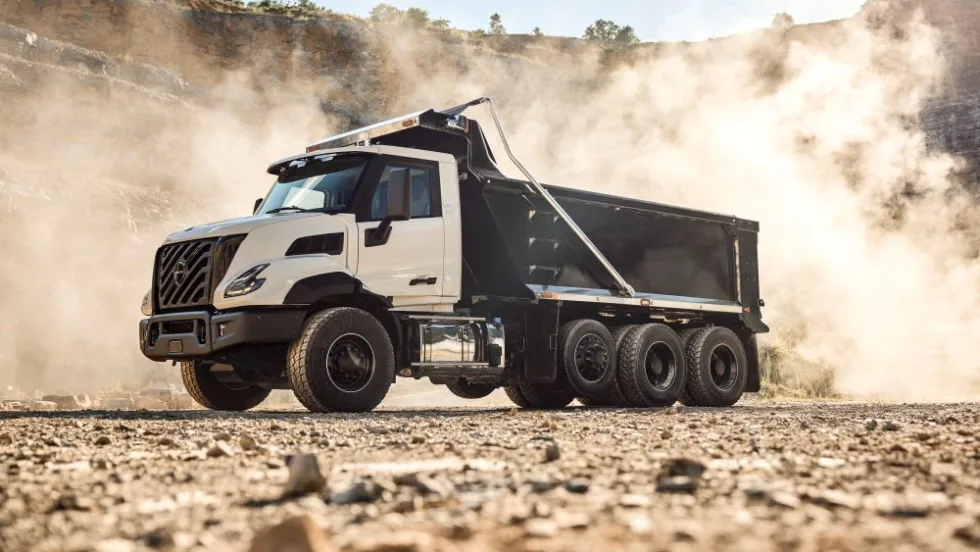
Volvo Trucks Unveils New Volvo VNX, a Vocational and Heavy-Haul Truck
The Volvo VNX features standard forward pedestrian detection that continuously scans for people in the truck's path, and optional blind-spot detection, now available on both sides.
Read More →
Government Fleet Sales Fall in August Despite Year-to-Date Gain
Government fleet sales declined in August, but stronger year-to-date truck and SUV sales kept the overall 2026 total ahead of last year.
Read More →
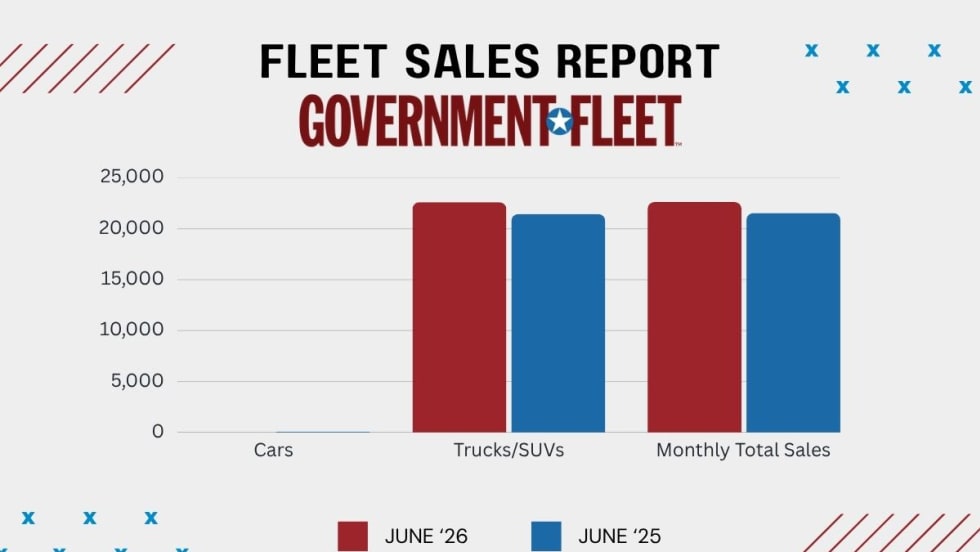
June Government Vehicle Sales See a Jump in Numbers
There were a reported 22,626 government fleet vehicles sold in June compared to 21,539 vehicles sold in June 2025.
Read More →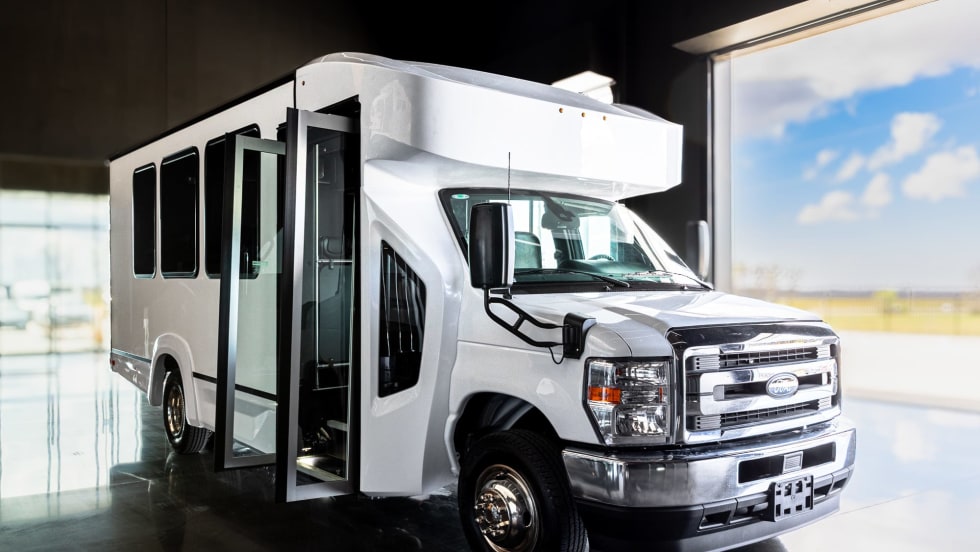
Master's Motors Introduces Shuttle Buses for Government and Commercial Fleets
Master's Motors has introduced two new shuttle bus models aimed at government and commercial fleet operators. The buses incorporate updated structural and accessibility features while offering configurable layouts for a variety of passenger transportation applications.
Read More →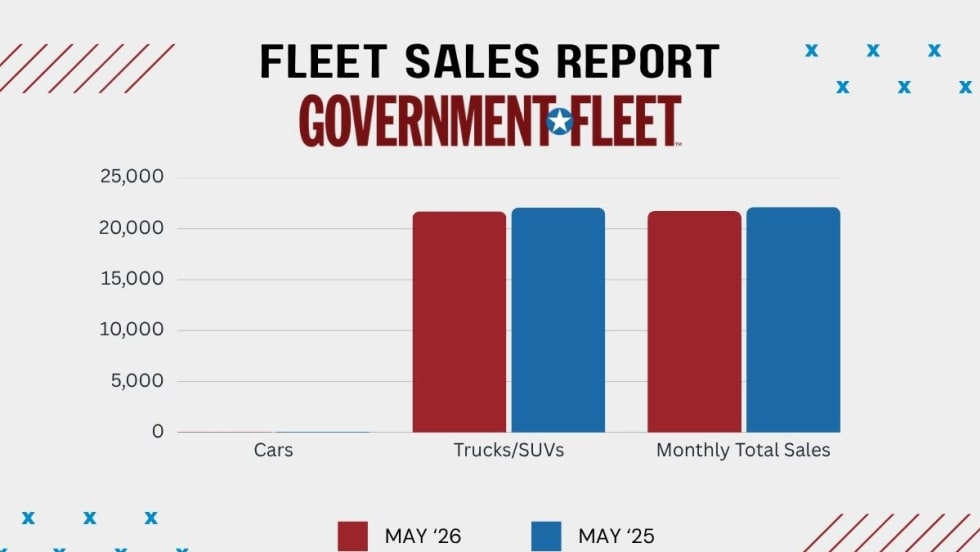
May Government Fleet Sales Slip Below 2025 Pace
Despite last month's sales increase, May vehicle numbers took a downward turn.
Read More →
April 2026 Recall Roundup: Chrysler, Lucid, & More
Are any of the vehicles in your fleet recalled? Check out the latest recalls of popular government fleet vehicles and equipment.
Read More →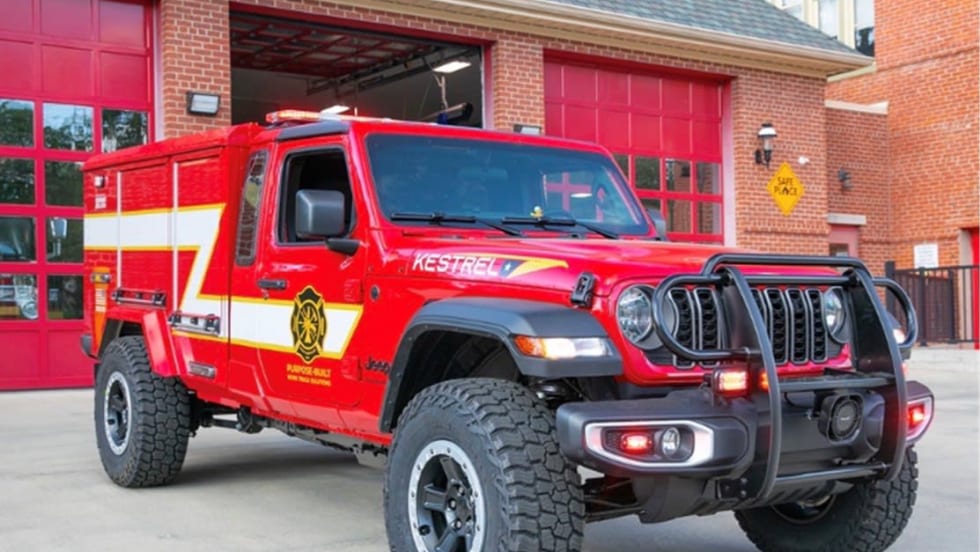
Kestrel Work Truck for First Response Debuts at FDIC 2026
Morgan Olson introduced its Kestrel platform, a compact, four-wheel-drive Class 2 work truck designed for first responders, with multiple configurations, validated safety testing, and a focus on durability and fleet lifecycle performance.
Read More →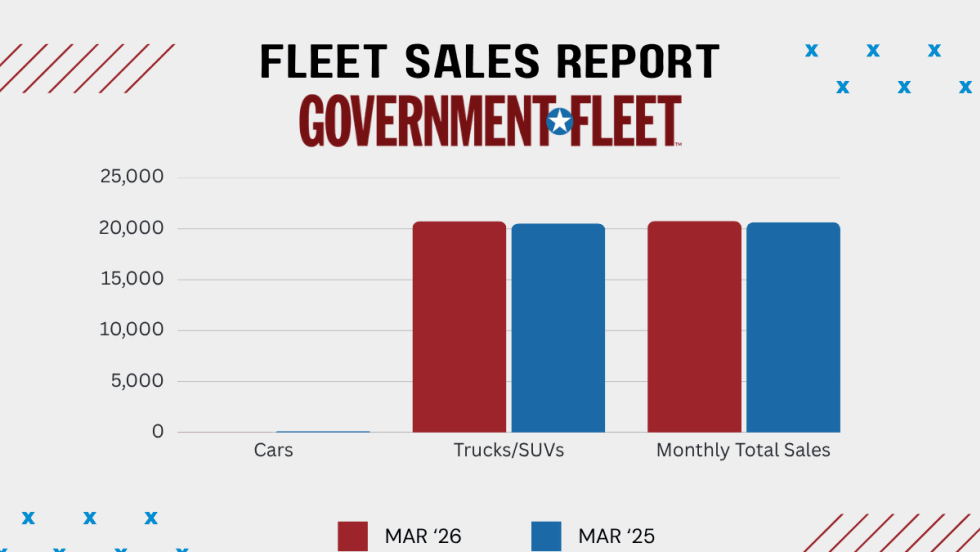
Government Fleet Vehicle Sales Rise In March
Government fleet vehicle sales increased by 1% in March, up from March 2025.
Read More →
March 2026 Recall Roundup: Ford, Kia, & More
Are any of the vehicles in your fleet recalled? Check out the latest recalls of popular government fleet vehicles and equipment.
Read More →