




Electric & Connected: Fleet Managers Face New Responsibilities
Thinking Outside the Box as a New Acquisition Manager
The year 2022 was one for growth. Many people started their careers, changed their careers, and retired. Government Fleet spoke with Ken Lett in the fleet industry who has started new roles in Alexandria, Virginia.

Hillary Weiss・Senior Editor

Ken Lett joined as acquisition manager to the city of Alexandria in June 2022.
Photo: Ken Lett/Government Fleet
3 min to read
Ken Lett joined as the acquisition manager of the city of Alexandria, Virginia, in June 2022. The city of Alexandria has a fleet size of approximately 1,040 vehicles.
With a bachelor’s in aviation/business management and a master’s in human resources, Lett started his career in several different positions such as sales, customer service, asset management, finance, operations, and project management.
He is also a member of Fleet Management Association (NAFA) and the American Public Works Association (APWA).
Because of his experience in multiple fields, he’s been called a “jack of all trades.” But what solidified his career in the fleet industry was being a fleet manager for psychotherapeutic outreach services.
“I have always had a passion for transportation in general. My first experience with fleet was with psychotherapeutic outreach services as a fleet manager and discovered that I had a passion for working with vehicles,” Lett says
During his fleet manager role, he was able to build experience in the industry. Lett’s accomplishments include standardizing the fleet and reducing overall cost and maintenance.
With the experience of multiple roles in his career, easing into the acquisition manager role has been a breeze.
Some of Lett’s current responsibilities include researching and determining specs on vehicles and equipment, establishing contracts, purchasing, registering, titling, and auctions of assets. He is also tasked with standardizing the fleet and reducing overall cost and maintenance.
He added, “I am primarily tasked with vehicle and equipment acquisition and disposal, or ‘cradle to grave’ requirements.”
Thinking Outside the Box
Hobbies outside of work and “thinking outside the box” can not only benefit your career but also your personal life.
One past role of Lett’s really changed how he viewed the industry and helped him think outside the box in his career — project manager at Metropolitan Washington Airport Authority.
“This position allowed me to be innovative daily and create ideas to generate revenue and cut costs,” he says.
The constant need to create ideas set the tone for his future roles. “Innovative thinking is a constant in everything I plan to do, as it ensures that I am providing the best service daily.”
Becoming a jack of all trades didn’t stop with his career. What really helped him grow in the transportation industry and his personal life are his hobbies.
Like his past roles, he also has a diverse range of hobbies such as writing, creating music, poetry, video games, sports, fishing, carpentry, and of course, working and modifying his vehicles.
“I have many hobbies that encourage me to be continuously innovative. I believe in having diverse interests, continuously learning, and self-reflecting,” he states.
Overcoming Challenges
Last year brought challenges for every industry, including transportation. We witnessed supply chain restraints, parts shortages, labor shortages, and more.
When it came to Lett’s role as acquisition manager, one of his challenges throughout 2022 was the acquisition of vehicles and equipment from supply chain constraints.
Luckily for Lett, he loves thinking of innovative solutions, problem-solving, and learning more about vehicles and equipment.
To combat these challenges, he increased the time spent on researching more than usual to locate the best and most efficient equipment for the City of Alexandria employees to perform their duties.
As for 2023 and beyond, electrification and reducing emissions are in his future.
Lett states, “I’m very excited about some of the changes we are working on. We are very close to expanding our charging infrastructure and purchasing more electric and hybrid vehicles that will reduce the city’s fleet carbon output.”
When it comes to starting out as a fleet manager in the industry, Lett advises, “Learn from those who have years of experience to share and network as much as possible. Attend as many conferences as you possibly can continuously share information and learn from others what may make your fleet more efficient and productive.”
Subscribe to Our Newsletter
More Operations

How St. Johns County Turned Fleet Data Into Better Replacement Decisions
St. Johns County, Florida, had fleet data, but turning it into reliable decision guidance was another matter. Instead of starting over with a new fleet management system, the county connected existing tools and built a scoring system that gives managers an objective look at fleet health.
Read More →
Fleet Forward Conference Introduces One-Day Passes for 2026
New one-day registration lets fleet professionals attend Tuesday, Wednesday, or Thursday, with passes available for $249.
Read More →
ENC Unveils its ZAVIR Medium-Duty Shuttle
Two variants of the concept shuttles were revealed: a low-floor configuration and a high-floor configuration.
Read More →
Could Your Next Fleet Technician Start as an Intern?
What if your next technician hasn’t worked in a fleet shop yet? What fleets are doing to free up time.
Read More →
How Phoenix Is Building Its Next Generation of Fleet Technicians
With more than 8,000 vehicles and pieces of equipment to maintain, the City of Phoenix could not afford to wait for fully trained technicians to walk through the door. Instead, they revamped their entire workforce strategy and showed how public fleets can create their own talent pipeline while preparing existing employees for increasingly complex vehicles.
Read More →
What’s Slowing Your Fleet Down?
Could a change in how work gets done help your fleet return vehicles to service sooner?
Read More →
Can Public Fleets Trust the Data Driving Their Decisions?
Public fleets have more data than ever, but inconsistent records and missing information can still undermine maintenance, replacement, and cost decisions.
Read More →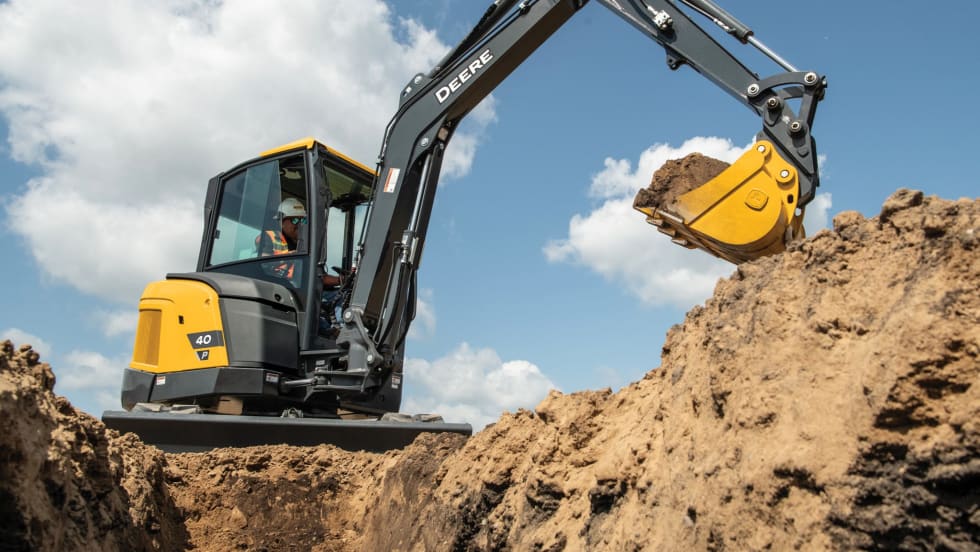
John Deere Introduces 40 P-Tier Compact Excavator
John Deere is adding a compact excavator designed for crews that need to move equipment between jobsites and handle multiple types of work with one machine. The 40 P-Tier weighs less than 10,000 pounds and offers configurable hydraulics, attachment options, and connected fleet-management capabilities.
Read More →
How Leading Fleets Improve and Why Business Plans Matter
This week, we look at what past Leading Fleet winners can teach us about making progress, plus how to build a business plan your fleet will actually use.
Read More →
Nominate a Fleet Leader for the 2027 Public Fleet Hall of Fame
Do you know a fleet leader who has made a lasting impact on the industry? Nominate this fleet professional for the 2027 Public Fleet Hall of Fame.
Read More →