





Related: Ohio Launches Statewide Drone First Responder Program
Ohio Advances Nation’s First Statewide Drone First Responder Program with Selection of Nine Public Safety Agencies
Ohio is moving forward with a first-of-its-kind statewide Drone First Responder pilot, giving nine public safety agencies new tools to improve emergency response times and situational awareness.
February 25, 2026
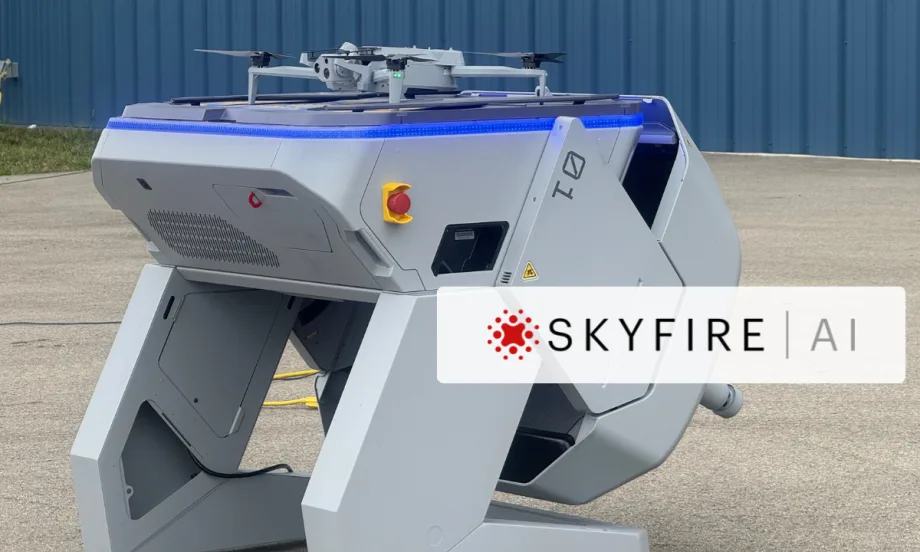
A drone-in-a-box system used in Ohio’s Drone First Responder pilot program enables rapid launch and remote response for public safety agencies.
Photo: Skyfire AI
2 min to read
Ohio has selected nine public safety agencies to participate in the Ohio Statewide Drone First Responder (DFR) Pilot Program, an initiative aimed at expanding rapid aerial response capabilities across communities statewide. The program is led by the Ohio Department of Transportation and DriveOhio, with program management support from SkyfireAI.
The pilot is intended to improve situational awareness, support responder safety, and reduce emergency response times by allowing agencies to deploy drones quickly during emergencies.
Agencies Selected for the Pilot
The following agencies will take part in the program:
City of Springfield Police/Fire/EMS
Athens Police Department
Lima Police Department
Toledo Police Department
Violet Township Fire/EMS
Austintown Fire Department
City of Hamilton Police/Fire/EMS
Amherst Police Department
Village of Kelleys Island Fire/EMS
State officials said the group represents a mix of urban, suburban, and rural jurisdictions. Several agencies have also committed to sharing drone resources with neighboring communities.
Gov. Mike DeWine said the program is designed to provide first responders with additional tools to protect lives and improve public safety across Ohio.
Program Framework and Technology
Created under Ohio House Bill 96, the statewide DFR pilot allows participating agencies to deploy state-approved, NDAA-compliant drone systems capable of rapid launch, real-time video streaming, and integration into Ohio’s developing uncrewed aircraft traffic management framework.
The pilot will use drone-in-a-box technology, allowing drones to launch from permanent docking sites and be flown remotely to emergency scenes. These systems can provide real-time visual information to incident commanders, and some may also be able to deliver critical medical supplies.
DriveOhio officials emphasized the program’s focus on standardized training, operational readiness, and responsible deployment.
“This program is about thoughtful implementation, not experimentation,” said Richard Fox, director of the DriveOhio UAS Center.
SkyfireAI is supporting the initiative as program manager, working with state agencies and local departments to ensure consistent standards.
Timeline and Evaluation
Selected agencies will begin onboarding in early 2026, including vendor demonstrations and training. Operations are expected to start in spring 2026 and continue for about one year.
The pilot will evaluate response outcomes, operational effectiveness, and opportunities for future expansion. State officials said the program is drawing national attention as a possible model for other states exploring drone first responder systems.
More Operations

Is Keeping Older Fleet Vehicles Really Saving Money?
Is keeping vehicles longer saving money, and what happens when a diagnostic test points to the wrong fix?
Read More →
How Smart Fleet Strategy Can Help Local Government Agencies Do More with Less
Keeping a vehicle longer may ease this year’s budget, but what does it cost the next one? A closer look at fleet decisions can reveal opportunities to reduce spending while protecting essential services.
Read More →
Connect with Government Fleet on LinkedIn
From industry news and fleet management strategies to conversations with peers, Government Fleet's LinkedIn page offers public-sector fleet professionals another way to stay informed and connected.
Read More →
Town of Queen Creek Named Most Successful Fleet Award Winner of Inaugural RTA Fleet Success Awards
Five fleets were honored at RTA Connect 2026 in Chicago for excellence across resource efficiency, intentional culture, risk management, and stakeholder satisfaction.
Read More →
Sponsored•October 14, 2026
A buyer's guide to fleet management software in 2027
Buying fleet management software in 2027 means looking beyond features and price. As fleet operations, technology and expectations evolve, this guide explores what today’s fleet professionals should consider when choosing a system that can deliver value now and adapt to what comes next.
Read More →
Hazard Alerts, Fleet Car Sales Rise and a New Shuttle Concept
Fleet car sales doubled, but the bigger picture tells a different story in this week’s roundup.
Read More →
How St. Johns County Turned Fleet Data Into Better Replacement Decisions
St. Johns County, Florida, had fleet data, but turning it into reliable decision guidance was another matter. Instead of starting over with a new fleet management system, the county connected existing tools and built a scoring system that gives managers an objective look at fleet health.
Read More →
Fleet Forward Conference Introduces One-Day Passes for 2026
New one-day registration lets fleet professionals attend Tuesday, Wednesday, or Thursday, with passes available for $249.
Read More →
ENC Unveils its ZAVIR Medium-Duty Shuttle
Two variants of the concept shuttles were revealed: a low-floor configuration and a high-floor configuration.
Read More →
Could Your Next Fleet Technician Start as an Intern?
What if your next technician hasn’t worked in a fleet shop yet? What fleets are doing to free up time.
Read More →