





Similar Content: Fine-Tuning Telematics: Four Case Studies of Effective Use
NYC Mayor Announces Intelligent Speed Assist Initiative
The intelligent speed assistance pilot program utilizes technology to prevent speeding and adjust vehicles' max speeds based on the changing speed limits.
August 15, 2022
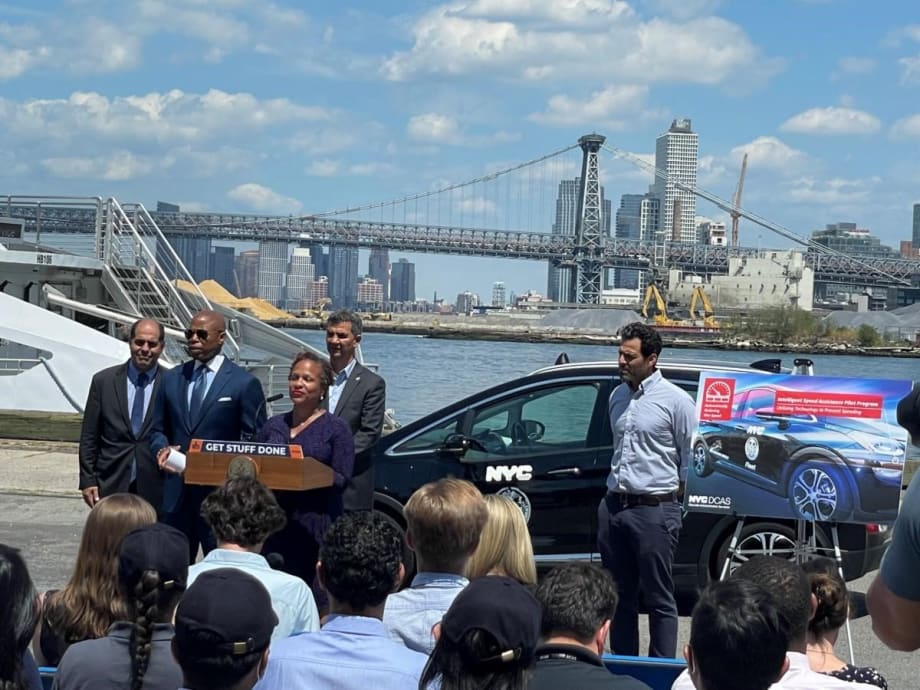
NYC Mayor Eric Adams, DCAS Commissioner Dawn Pinnock, Deputy Commissioner and Chief Fleet Officer Keith Kerman, DOT Commissioner Ydanis Rodriguez, and Transportation Alternatives Executive Director Danny Harris announce the launch of the ISA pilot.
Photo: DCAS
2 min to read
On August 11, Mayor Eric Adams and Department of Citywide Administrative Services (DCAS) Commissioner Dawn Pinnock announced a pilot initiative in intelligent speed assist (ISA) for 50 city vehicles from nine agencies. This is the latest initiative in the DCAS Vision Zero Safe Fleet Transition Plan.
Participating agencies include DCAS, the Department of Transportation, the Business Integrity Initiative, the Department of Parks and Recreation, the Taxi and Limousine Commission, the Department of Correction, the Department of Housing Preservation and Development, the Department of Environmental Protection, and the mayor’s Street Conditions Observation Unit. DOT Commissioner Ydanis Rodriguez and Executive Director of Transportation Alternatives Danny Harris, joined the announcement, along with NYC Chief Fleet Officer and DCAS Deputy Commissioner Keith Kerman.
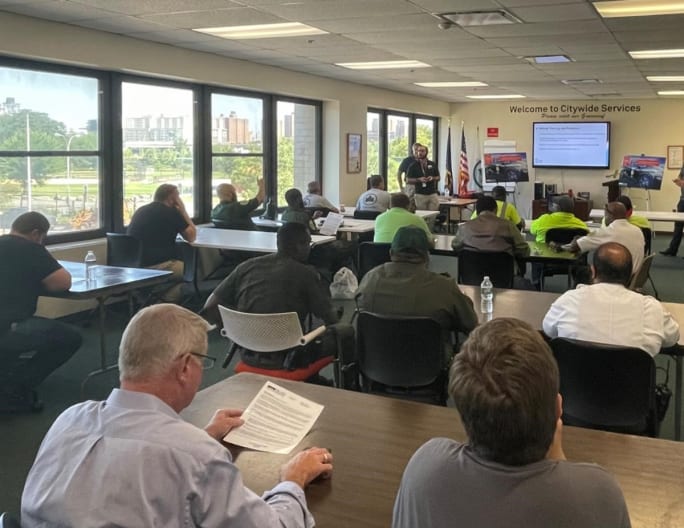
DCAS Fleet Safety Supervisor Nate Koszer teaches class consisting of DCAS, DEP, DOT, and Parks staff about the new intelligent speed assistance pilot program system.
Photo: DCAS
The most basic function of ISA is to prevent a vehicle from speeding. Most existing speed governors set a maximum speed that a vehicle can go. ISA takes it further, combining the speed governor with vehicle telematics to adjust the maximum vehicle speed to match changing speed limits as the vehicle travels. In Europe, ISA is now required, as of July 2022, for all new light-duty vehicles.
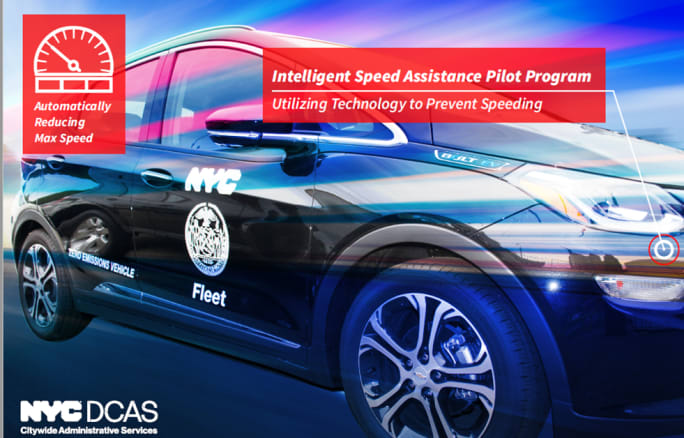
The intelligent speed assistance pilot program utilizes technology to prevent speeding and adjust vehicles' max speeds based on the changing speed limits.
Photo: DCAS
DCAS has begun the implementation of this initiative by retrofitting 50 city vehicles including 16 different makes ranging from sedans and pickups to box trucks and dump trucks with the SafeSpeed system from MAGTEC. The technology includes a 15-second release button to help drivers address unexpected driving situations.
DCAS will partner with U.S. Department of Transportation Volpe Center to conduct a six-month assessment of the technology including tracking speeds, hard braking and accelerating, and crash rates through telematics. Volpe will also interview participating drivers. DCAS conducted pre-launch training at the Parks Department in July and will host additional operator training on August 22. DCAS plans to discuss initial program results at the Vision Zero Forum on October 25. If successful, DCAS plans to expand the initiative starting in 2023.
More Safety
New Partnership Aims to Expand Public Digital Hazard Alert System Statewide
The Hawai’i Department of Transportation (HDOT) is expanding advance digital hazard alerts for the public statewide.
Read More →
New York City Expands Safety Technologies Across Municipal Fleet
Executive Order 19 moves intelligent speed assistance and pedestrian alerts from pilot programs toward standard fleet equipment, offering other public fleets a look at how safety technology can be tested, measured, and scaled.
Read More →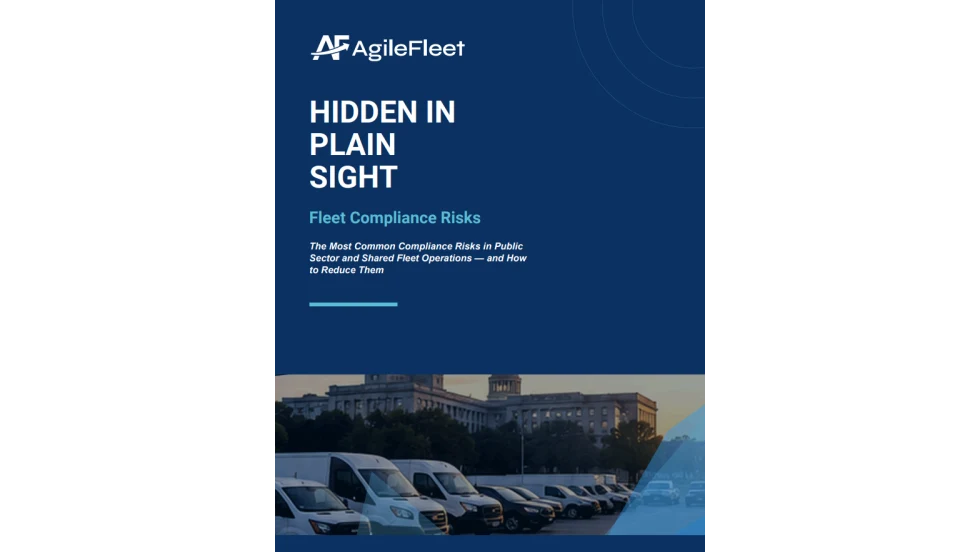
Sponsored•August 10, 2026
Hidden in Plain Sight: Fleet Compliance Risks
Fleet compliance isn't just about having policies — it's about consistently enforcing them. This practical guide reveals six hidden compliance risks common in public sector and shared fleet operations and outlines proven strategies to improve visibility, accountability, and audit readiness.
Read More →
5 Days Left to Submit Your 2026 Fleet Safety Award Nomination
Know a government fleet, safety, or risk manager who deserves recognition for making fleet operations safer? Nominations are open through Aug. 15.
Read More →
How the First 24 Hours Can Shape a Fleet Crash Response
How a strong accident response process helps government fleets move from the initial report to recovery while building a clearer record for what needs to change next.
Read More →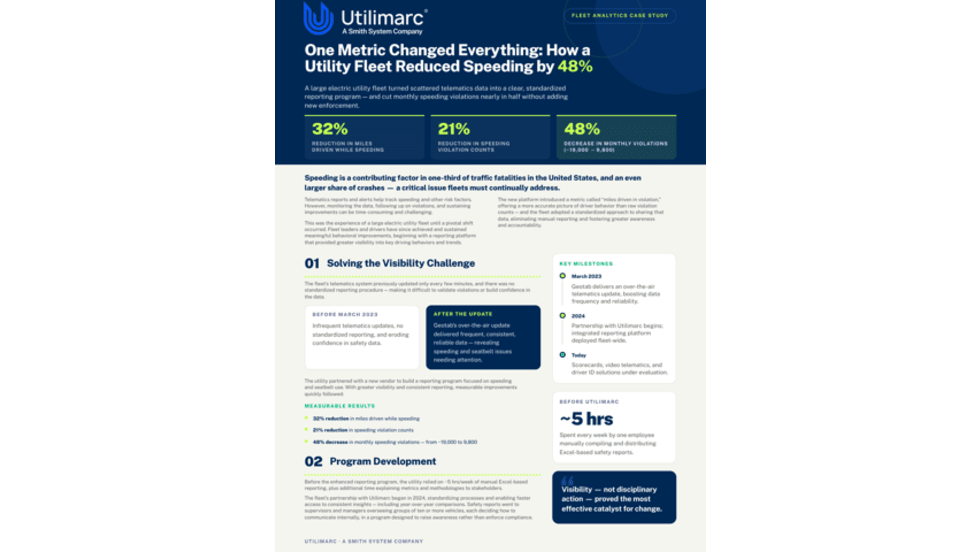
Sponsored•July 17, 2026
How Better Visibility Cut Speeding Violations by 48%
Fleet leaders don't need more data, they need clearer visibility into what the data is saying. This case study explores how one utility replaced speeding-event counts with a single metric — miles driven in violation — to strengthen safety and significantly reduce speeding violations.
Read More →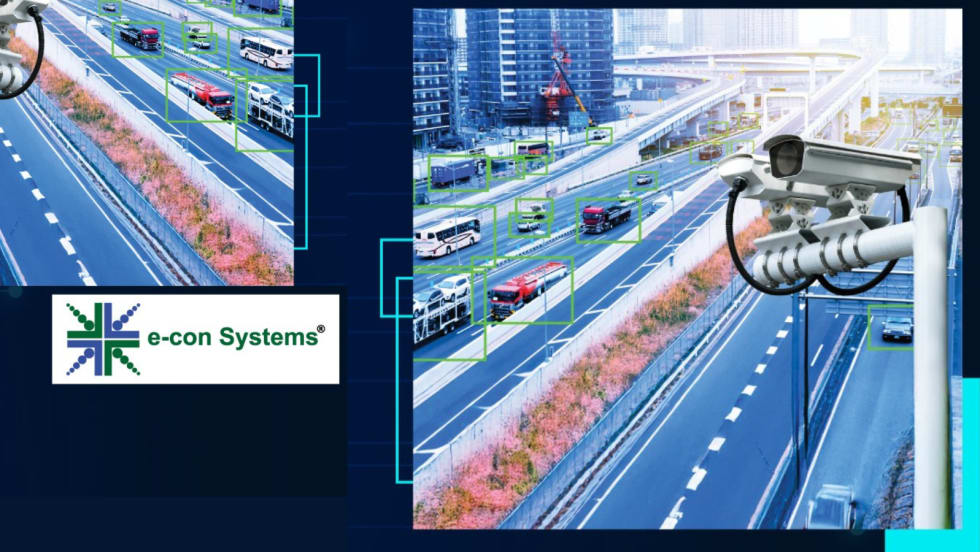
e-con Systems Expands AI Camera Tools for Traffic Monitoring
The systems support license plate recognition, traffic analytics, and video management for transportation agencies.
Read More →
King Township Pilot Links Driver Feedback to Reduced Speeding
How King Township, a best-in-class municipal fleet, reduced speeding by 10.9% and demonstrated a projected 349% ROI by putting safety ownership directly in drivers' hands.
Read More →
Beyond the Fireline: The Critical Role of Public Fleets in Wildfire Response
Behind every wildfire response is a complex network of vehicles, data, and decisions that must work in sync under extreme pressure. Global heating trends require strong fleet coordination and reliable communications to keep crews safe and operations running smoothly.
Read More →
How AI Is Transforming Public Fleet Safety - Part 1
AI-powered safety systems are helping public fleets tackle distracted driving by delivering real-time coaching and measurable behavior change behind the wheel. In part one of our Q&A, Nauto CEO Stefan Heck explains how agencies can improve safety, reduce costs, and navigate implementation challenges with AI-driven technology.
Read More →