




Washington County, Ore., Running Chevrolet Caprice PPV and Tahoe Pilot Program
HILLSBORO, OR - Government Fleet magazine spoke with Tom Baylis, fleet manager for the County, about the pilot and how the County is making the switch from the Ford Crown Victoria to the new police vehicles on the market.
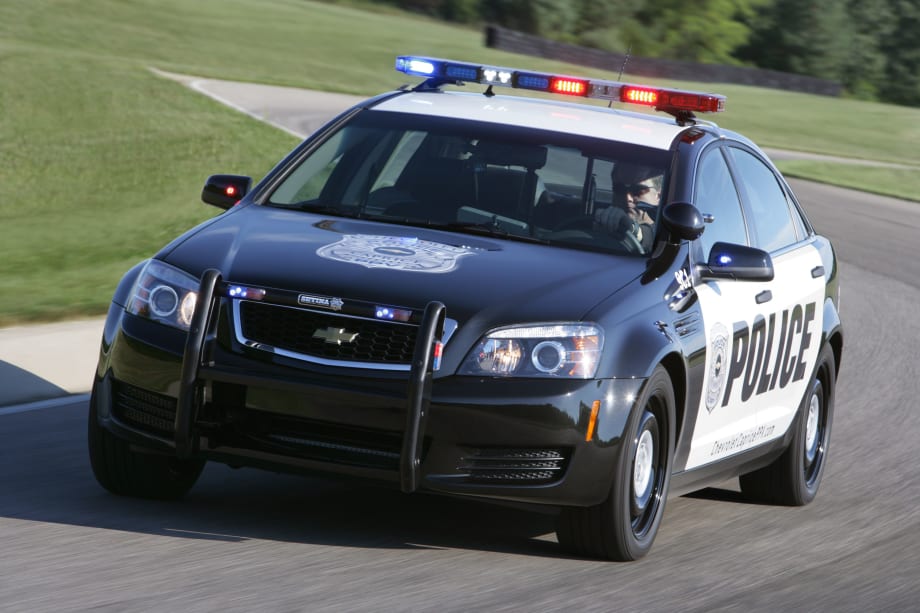
The 2012-MY Chevrolet Caprice PPV. Photo courtesy General Motors.
The 2012-MY Chevrolet Caprice PPV. Photo courtesy General Motors.
HILLSBORO, OR - Washington County Sheriff’s Office in Hillsboro, Ore., is running a pilot program with the new Caprice PPV and Tahoe PPV. Government Fleet spoke with Tom Baylis, fleet manager for the County, about the pilot and how the County is making the switch from the Ford Crown Victoria to the new police vehicles on the market. The County currently operates 534 units. Out of that total, 200 are with the sheriff’s office.
So far, County sheriff’s office deputies have tested all three vehicles, the Chevrolet Caprice PPV, Dodge Charger Pursuit, and Ford Police Interceptor. Recently, the County purchased one Caprice PPV and one Tahoe PPV and plans to put them into service in a few weeks for the long-term pilot.
“We had earlier been given an opportunity for extended evaluations of the Chevrolet and Dodge products. Then five deputies, including our lead EVOC instructor, recently participated in a Ride & Drive event held by Ford in Seattle, Wash.,” Baylis said. “Following that opportunity, the sheriff's office and fleet services transition team got back together and again discussed our perceptions of the relative merits of each vehicle. The majority of the team agreed that the Chevrolet Caprice PPV will most likely be our new primary patrol vehicle, and the Chevrolet Tahoe will also be used in certain specific patrol applications. Any of them would probably be acceptable, but Caprice is the vehicle they felt the most comfortable with from a size, handling and performance standpoint. They also liked the utility vehicle.”
Baylis said the County plans to drive the vehicles for at least a year before deciding on which vehicle to eventually go with. He added that because the County has two precincts, the vehicles will be circulated between them. The County will make a formal decision about which vehicles to go with, in large numbers, for the 2014/2015 fiscal year, according to Baylis. The County plans to use the Tahoe PPV in more rural areas, for specific command assignments, and for its K9 unit.
The upfitting process is fairly straightforward, Baylis explained. The County worked with Kerr Industries to install customized wiring harnesses, prisoner seats, rear door/window protection and ballistic panels in the two pilot vehicles. The remaining upfit process will be performed by county fleet staff.
“Because we’re able to recycle the light bar, communications console and prisoner screen, it’s just a matter of adapting it to fit,” Baylis said. “So now we’re just dealing with screen, emergency lighting, radios, laptops and gun locks. So it’s a little bit different.
An important aspect of upfitting the vehicles is bringing deputies into the process.
“We’re asking for their input where the prisoner screen partition should sit, etc.,” Baylis said. “Those types of small variances can make a deputy’s life comfortable or not.”
Finding the money to replace the patrol cars and utility vehicles currently in service isn’t a major issue for the County at this time, largely due to sound fiscal management, Baylis said. In addition, funding for vehicle replacement comes from three sources, he added, the general fund, a local option levy, and a third similar fund specific to the sheriff’s patrol district in Washington County's urban unincorporated area.
“[Multiple funding sources] add some budgeting challenges for fleet and the sheriff’s office, and for determining mileage projections, but it does give taxpayers some flexibility on choosing desired service levels,” Baylis said.
For the time being, the County is still running Ford Crown Victoria patrol cars. The County ordered 25 extra Crown Victoria models to insure a steady flow of replacement vehicles during the transition process through fiscal-year 2011/2012 and part of FY-2012/2013, and to help mitigate the eventual added expenses associated with the transition.
By Greg Basich
More Operations

How St. Johns County Turned Fleet Data Into Better Replacement Decisions
St. Johns County, Florida, had fleet data, but turning it into reliable decision guidance was another matter. Instead of starting over with a new fleet management system, the county connected existing tools and built a scoring system that gives managers an objective look at fleet health.
Read More →
Fleet Forward Conference Introduces One-Day Passes for 2026
New one-day registration lets fleet professionals attend Tuesday, Wednesday, or Thursday, with passes available for $249.
Read More →
ENC Unveils its ZAVIR Medium-Duty Shuttle
Two variants of the concept shuttles were revealed: a low-floor configuration and a high-floor configuration.
Read More →
Could Your Next Fleet Technician Start as an Intern?
What if your next technician hasn’t worked in a fleet shop yet? What fleets are doing to free up time.
Read More →
How Phoenix Is Building Its Next Generation of Fleet Technicians
With more than 8,000 vehicles and pieces of equipment to maintain, the City of Phoenix could not afford to wait for fully trained technicians to walk through the door. Instead, they revamped their entire workforce strategy and showed how public fleets can create their own talent pipeline while preparing existing employees for increasingly complex vehicles.
Read More →
What’s Slowing Your Fleet Down?
Could a change in how work gets done help your fleet return vehicles to service sooner?
Read More →
Can Public Fleets Trust the Data Driving Their Decisions?
Public fleets have more data than ever, but inconsistent records and missing information can still undermine maintenance, replacement, and cost decisions.
Read More →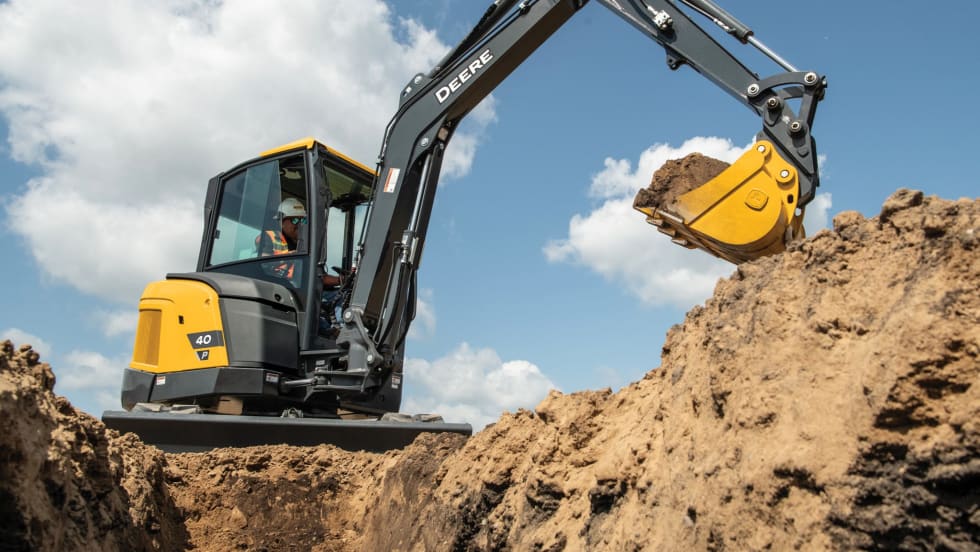
John Deere Introduces 40 P-Tier Compact Excavator
John Deere is adding a compact excavator designed for crews that need to move equipment between jobsites and handle multiple types of work with one machine. The 40 P-Tier weighs less than 10,000 pounds and offers configurable hydraulics, attachment options, and connected fleet-management capabilities.
Read More →
How Leading Fleets Improve and Why Business Plans Matter
This week, we look at what past Leading Fleet winners can teach us about making progress, plus how to build a business plan your fleet will actually use.
Read More →
Nominate a Fleet Leader for the 2027 Public Fleet Hall of Fame
Do you know a fleet leader who has made a lasting impact on the industry? Nominate this fleet professional for the 2027 Public Fleet Hall of Fame.
Read More →