





Achieving EPA Compliance with Automated Wastewater Treatment
Virginia City Fleet Adds Camera Truck to Assist with Sewer Inspections
The CUES Camera Truck will help city of Alexandria crews to identify locations of defects faster, giving residents valuable information on their lateral connection pipes.
February 10, 2023
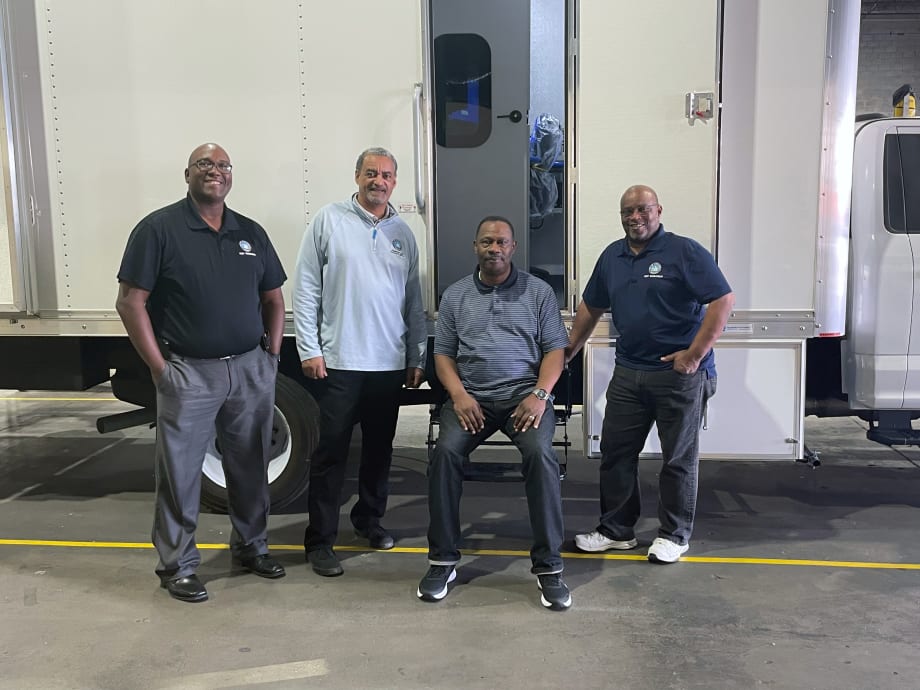
(Left to right) Ken Lett, Derek Claytor, Raymond Monk and Duane Shorter, from the city of Alexandria, pose for a photo with the mainline and lateral line inspection truck purchased by the city. Lett and Shorter, from Fleet Services, will be responsible for the truck’s maintenance; Claytor and Monk, from Public Works Services Division, will operate the truck.
Photo: City of Alexandria
2 min to read
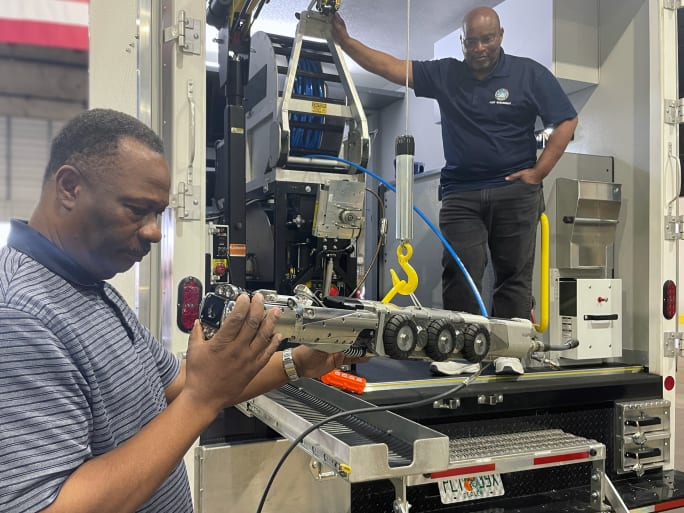
Raymond Monk (left), a Public Works Division laborer, checks out a robot camera as Duane Shorter (right), shop supervisor for Fleet Services, looks on from the back of the lateral launch camera truck at the manufacturer garage on Jan. 24. The City purchased the truck and is expected to receive it later this year.
Photo: City of Alexandria
Alexandria, Virginia Fleet Management recently acquired a lateral launch CUES Camera Truck that will help city crews inspect sanitary sewer infrastructure to identify locations of defects faster, giving residents valuable information on their lateral connection pipes.
The city is replacing its closed-circuit television inspection vehicle, which is limited to
mainline sanitary sewer inspections, with an inspection vehicle with lateral launch
camera capabilities.
The new technology allows crews to drop the robot camera into the main sanitary sewer line and deploy a second camera from its side to inspect lateral lines that connect homes and businesses to the city’s sanitary sewer infrastructure.
“Some of the repairs we make are where the lateral and mainlines meet,” said Derek
Claytor, superintendent of sewers and hydrant maintenance. “The lateral launch
technology will help enhance our maintenance response to protect our residents’
properties.”
The truck will be operated by staff from the Public Works Division in coordination with the Sanitary Infrastructure Division and maintained by staff in Fleet Management.
Since the older mainline truck doesn’t have the technology to inspect lateral lines, city staff have previously coordinated with on-call contractors for inspections, which can
take several days.
The new truck will fast-track inspections by removing the need to coordinate with the on-call contractor so that crews can instantly respond and drop the lateral launch camera for the inspection. Depending on the location of the defect, the responsibility for repair will either be the property owner or the city.
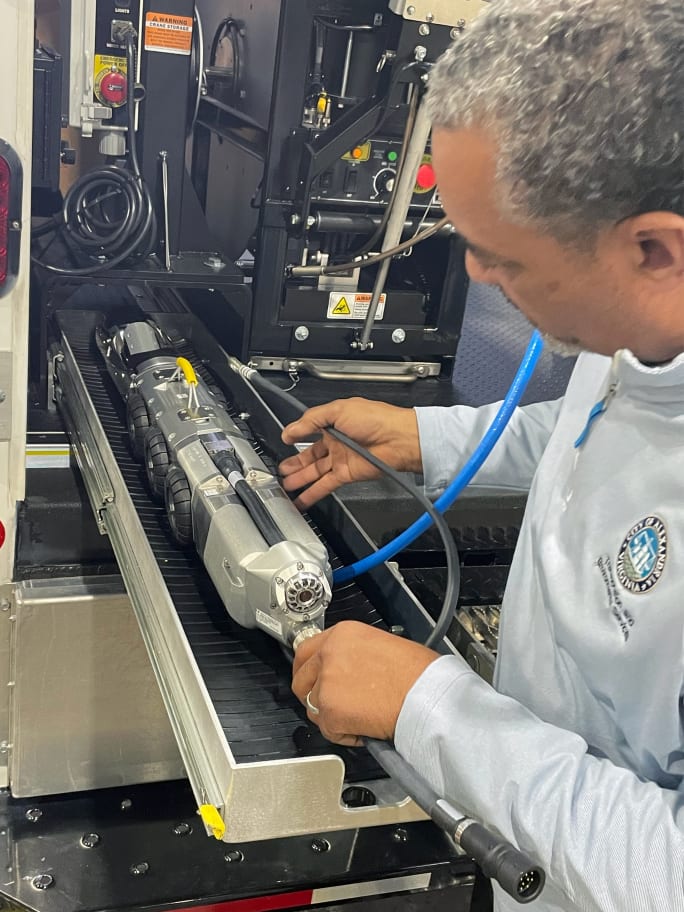
Derek Claytor, superintendent for hydrant and sewer maintenance for the city of Alexandria, checks out the robot camera on the mainline and lateral line inspection truck purchased by the city of Alexandria.
Photo: City of Alexandria
The city proactively inspects sections of sanitary infrastructure throughout the year. Over the past 10 years, Claytor said he recalls two inspection initiatives that covered the entirety of the city's 240 miles of sanitary and combined sewers.
More Operations

Is Keeping Older Fleet Vehicles Really Saving Money?
Is keeping vehicles longer saving money, and what happens when a diagnostic test points to the wrong fix?
Read More →
How Smart Fleet Strategy Can Help Local Government Agencies Do More with Less
Keeping a vehicle longer may ease this year’s budget, but what does it cost the next one? A closer look at fleet decisions can reveal opportunities to reduce spending while protecting essential services.
Read More →
Connect with Government Fleet on LinkedIn
From industry news and fleet management strategies to conversations with peers, Government Fleet's LinkedIn page offers public-sector fleet professionals another way to stay informed and connected.
Read More →
Town of Queen Creek Named Most Successful Fleet Award Winner of Inaugural RTA Fleet Success Awards
Five fleets were honored at RTA Connect 2026 in Chicago for excellence across resource efficiency, intentional culture, risk management, and stakeholder satisfaction.
Read More →
Sponsored•October 14, 2026
A buyer's guide to fleet management software in 2027
Buying fleet management software in 2027 means looking beyond features and price. As fleet operations, technology and expectations evolve, this guide explores what today’s fleet professionals should consider when choosing a system that can deliver value now and adapt to what comes next.
Read More →
Hazard Alerts, Fleet Car Sales Rise and a New Shuttle Concept
Fleet car sales doubled, but the bigger picture tells a different story in this week’s roundup.
Read More →
How St. Johns County Turned Fleet Data Into Better Replacement Decisions
St. Johns County, Florida, had fleet data, but turning it into reliable decision guidance was another matter. Instead of starting over with a new fleet management system, the county connected existing tools and built a scoring system that gives managers an objective look at fleet health.
Read More →
Fleet Forward Conference Introduces One-Day Passes for 2026
New one-day registration lets fleet professionals attend Tuesday, Wednesday, or Thursday, with passes available for $249.
Read More →
ENC Unveils its ZAVIR Medium-Duty Shuttle
Two variants of the concept shuttles were revealed: a low-floor configuration and a high-floor configuration.
Read More →
Could Your Next Fleet Technician Start as an Intern?
What if your next technician hasn’t worked in a fleet shop yet? What fleets are doing to free up time.
Read More →