




Terex Rolls Out Utility Truck Spec'ing Standards
Terex has developed a new process to assist customers with spec’ing utility trucks, including aerial devices and digger derricks, that complies with bid specs, costs less to purchase and takes less time to produce.
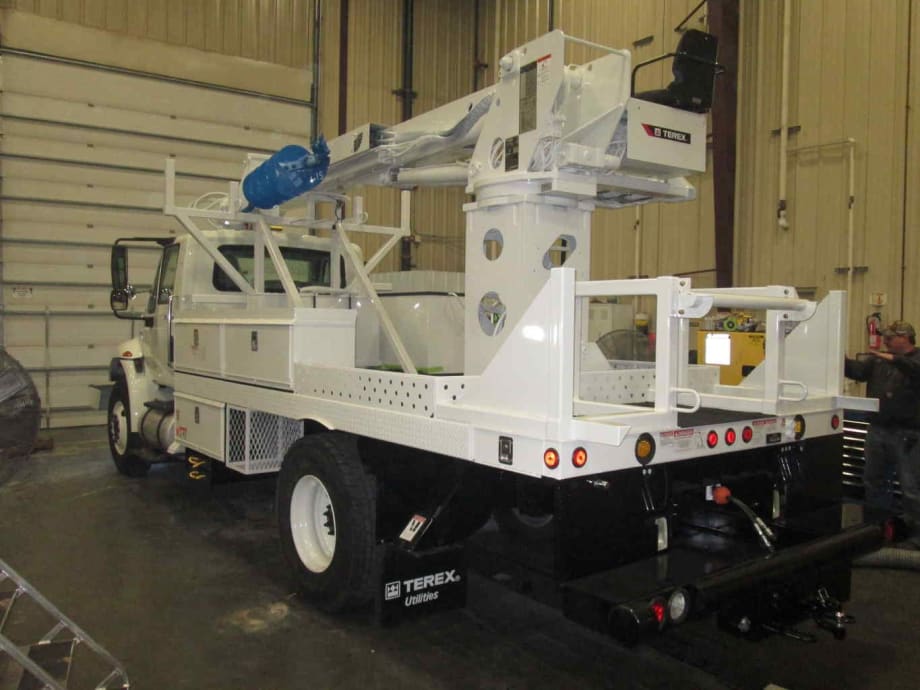
Photo courtesy of Terex Utilities.
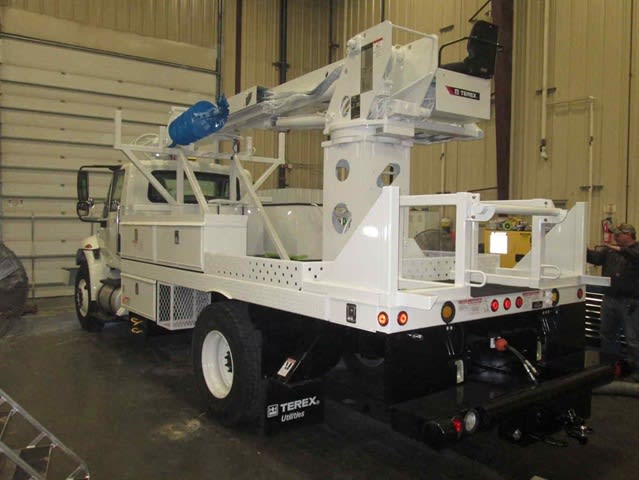
Photo courtesy of Terex Utilities.
To help fleet managers balance equipment value with user requirements, Terex has developed a new process to assist customers with spec’ing utility trucks, including aerial devices and digger derricks, that complies with bid specs, costs less to purchase and takes less time to produce.
"Over the years, work practices and requirements have been adopted, adapted and evolved to the point where many of today’s utility truck fleets have become extremely customized," said Joe Caywood, Terex Utilities' director of marketing. "With this new approach, Terex is proactively working to find synergies in customers’ truck specs, work practices and requirements to meet those custom requirements with more cost-efficient and time-effective solutions."
Under the new approach works, Terex meets with a utility customer to better understand what equipment is needed and how it will be used, what parts and service would be needed to support that equipment, as well as the capital structure that best fits the organization as it considers filling its fleet needs. Terex said it shares information on its line of utility truck offerings, as well as the latest technology and innovations.
If a customer does require a customized configuration for their equipment fleet, Terex uses the truck’s standard options and accessories as building blocks. This allows Terex to engineer, produce and place the parts unique to the customer requirements during the installation process where the unit and body are mounted on the truck chassis.
Standard equipment includes tools and accessories designed to perform a particular function, in a specific application, and with the intent of repeated production. Standard equipment, such as strobe lights, pintle hitches, winches, material handling brackets (wire reels, pole racks, and transformer holders) generators, ladder racks, storage boxes and cone holders, are often available in differing sizes or configurations, or offered with various optional features, but the core function of these components remain the same.
More Operations

Is Keeping Older Fleet Vehicles Really Saving Money?
Is keeping vehicles longer saving money, and what happens when a diagnostic test points to the wrong fix?
Read More →
How Smart Fleet Strategy Can Help Local Government Agencies Do More with Less
Keeping a vehicle longer may ease this year’s budget, but what does it cost the next one? A closer look at fleet decisions can reveal opportunities to reduce spending while protecting essential services.
Read More →
Connect with Government Fleet on LinkedIn
From industry news and fleet management strategies to conversations with peers, Government Fleet's LinkedIn page offers public-sector fleet professionals another way to stay informed and connected.
Read More →
Town of Queen Creek Named Most Successful Fleet Award Winner of Inaugural RTA Fleet Success Awards
Five fleets were honored at RTA Connect 2026 in Chicago for excellence across resource efficiency, intentional culture, risk management, and stakeholder satisfaction.
Read More →
A buyer's guide to fleet management software in 2027
Buying fleet management software in 2027 means looking beyond features and price. As fleet operations, technology and expectations evolve, this guide explores what today’s fleet professionals should consider when choosing a system that can deliver value now and adapt to what comes next.
Read More →
Hazard Alerts, Fleet Car Sales Rise and a New Shuttle Concept
Fleet car sales doubled, but the bigger picture tells a different story in this week’s roundup.
Read More →
How St. Johns County Turned Fleet Data Into Better Replacement Decisions
St. Johns County, Florida, had fleet data, but turning it into reliable decision guidance was another matter. Instead of starting over with a new fleet management system, the county connected existing tools and built a scoring system that gives managers an objective look at fleet health.
Read More →
Fleet Forward Conference Introduces One-Day Passes for 2026
New one-day registration lets fleet professionals attend Tuesday, Wednesday, or Thursday, with passes available for $249.
Read More →
ENC Unveils its ZAVIR Medium-Duty Shuttle
Two variants of the concept shuttles were revealed: a low-floor configuration and a high-floor configuration.
Read More →
Could Your Next Fleet Technician Start as an Intern?
What if your next technician hasn’t worked in a fleet shop yet? What fleets are doing to free up time.
Read More →