





Related: Preparing for the Next 10 Years in Public Fleet Management
State Fleet Benchmarking Survey Results Released
The National Conference of State Fleet Administrators (NCSFA) has released its 2018 Benchmarking Survey, covering topics ranging from utilization to safety.
November 20, 2018
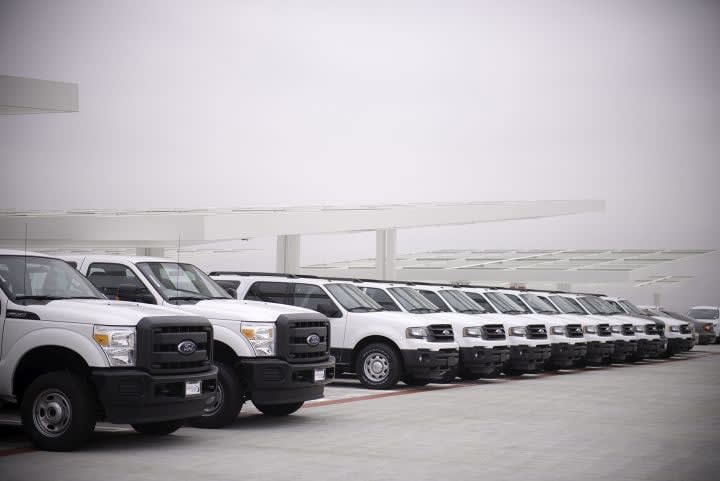
File photo
2 min to read
Government fleets can make various improvements to their operations, the National Conference of State Fleet Administrators (NCSFA) found in its recently completed 2018 Benchmarking Survey. The survey’s purpose was to identify and establish consensus standards of measurement relevant to government fleets; it 44 state and university fleet participants.
Recommendations include institutionalizing robust fleet management policies and procedures, possessing an effective replacement program to guard against the next economic downturn, creating a well-designed cost charge-back system to increase costs transparency, and accelerating the implementation of technology to measure the efficiency and effectiveness of fleet management practices.
Scott Edwards, NCSFA President and Fleet Manager for the State of Colorado stated, “NCSFA continues to create a better understanding of the industry in which our membership severs each day. With the rapidly changing industry disruptors it becomes more important to understand how to gather the correct data to inform our members. This survey represents our most in-depth review of the membership and their needs. We envision this information will continue to be the building blocks of the future for NCSFA training and strategic leadership.”
The survey addressed 10 topics that included utilization management, procurement and disposal, safety, maintenance and repair, fueling, replacement, and technology use. Key observations include: most minimum utilization standards rely on mileage, which may not be entirely accurate; about 50% of fleets do not use cooperative purchasing; 30% fleets report that remarketing funds are returned to the fleet replacement reserve fund; more than 75% do not measure the effectiveness of their safety programs; more than 75% have an in-house maintenance and repair program; most have a minimum purchase requirement for alternative fuel vehicles; and one-third are not replacing their vehicles in accordance with established guidelines.
The NCSFA partnered with Mercury Associates to conduct the survey. The full report is currently available to NCSFA members. A report sample and summary slide deck are available to nonmembers.
More Operations

Is Keeping Older Fleet Vehicles Really Saving Money?
Is keeping vehicles longer saving money, and what happens when a diagnostic test points to the wrong fix?
Read More →
How Smart Fleet Strategy Can Help Local Government Agencies Do More with Less
Keeping a vehicle longer may ease this year’s budget, but what does it cost the next one? A closer look at fleet decisions can reveal opportunities to reduce spending while protecting essential services.
Read More →
Connect with Government Fleet on LinkedIn
From industry news and fleet management strategies to conversations with peers, Government Fleet's LinkedIn page offers public-sector fleet professionals another way to stay informed and connected.
Read More →
Town of Queen Creek Named Most Successful Fleet Award Winner of Inaugural RTA Fleet Success Awards
Five fleets were honored at RTA Connect 2026 in Chicago for excellence across resource efficiency, intentional culture, risk management, and stakeholder satisfaction.
Read More →
Sponsored•October 14, 2026
A buyer's guide to fleet management software in 2027
Buying fleet management software in 2027 means looking beyond features and price. As fleet operations, technology and expectations evolve, this guide explores what today’s fleet professionals should consider when choosing a system that can deliver value now and adapt to what comes next.
Read More →
Hazard Alerts, Fleet Car Sales Rise and a New Shuttle Concept
Fleet car sales doubled, but the bigger picture tells a different story in this week’s roundup.
Read More →
How St. Johns County Turned Fleet Data Into Better Replacement Decisions
St. Johns County, Florida, had fleet data, but turning it into reliable decision guidance was another matter. Instead of starting over with a new fleet management system, the county connected existing tools and built a scoring system that gives managers an objective look at fleet health.
Read More →
Fleet Forward Conference Introduces One-Day Passes for 2026
New one-day registration lets fleet professionals attend Tuesday, Wednesday, or Thursday, with passes available for $249.
Read More →
ENC Unveils its ZAVIR Medium-Duty Shuttle
Two variants of the concept shuttles were revealed: a low-floor configuration and a high-floor configuration.
Read More →
Could Your Next Fleet Technician Start as an Intern?
What if your next technician hasn’t worked in a fleet shop yet? What fleets are doing to free up time.
Read More →