




Snohomish County Receives Grant Funding From Department of Ecology to Reduce Toxic Diesel Fumes
EVERETT, WA – Snohomish County recently hosted a Washington State Department of Ecology (DOE) Grant Awards Ceremony
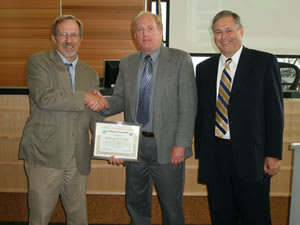
Snohomish County Public Works Director Steve Thomsen (left) and Snohomish County Fleet Manager Allen Mitchell (right) accept the Department of Ecology's Local Government Diesel Retrofit Grant Program
EVERETT, WA – Snohomish County recently hosted a Washington State Department of Ecology (DOE) Grant Awards Ceremony, where Snohomish County and six other local jurisdictions from Snohomish, King, Island, and San Juan counties received a combined $424,500 to retrofit existing diesel vehicles for greater pollution control. “This grant of approximately $127,500 will allow us to dramatically lower toxic emissions from at least another 85 diesel vehicles,” said Snohomish County Executive Aaron Reardon. Last year, Snohomish County received nearly $40,000 in grant funding from the Puget Sound Clean Air Agency. These funds were used to install diesel oxidation catalysts on 18 of the County’s Solid Waste Division’s long haul truck tractors and six Road Maintenance street sweepers. The State Legislature appropriated $2 million for this program in the 2005-2007 biennium. Altogether, DOE has issued $2 million in grants to 28 local governments across the state to purchase and install devices that decrease pollution. These funds are expected to be used to retrofit more than 300 diesel vehicles across the state, including 187 in the seven local jurisdictions receiving the award today. This technology, which is easy to install and relatively maintenance free, is being used to eliminate between 40 to 90% of the toxic and visible emissions generated by diesel vehicles. The specific pollution-control device necessary depends on the technology suitable for each vehicle considering its age, type, and usage. Beginning January 2006, Snohomish County has been running biodiesel in its diesel fleet vehicles in north Snohomish County. Currently, the County is using between 10,000 and 12,000 gallons of B-20 biodiesel per month in 30 percent of its diesel fleet. The conversion to biodiesel has not caused any difficulties with the equipment. After a competitive call for interested parties earlier this year, Snohomish County has partnered with SeaPort Biofuels to sell B-99 biodiesel to the public one day a week at the County Transfer Station at Paine Field. Customers pay between $3.090 and $3.179 per gallon. In addition, Snohomish County is working with a group of farmers to grow varieties of mustard and canola crops for seeds that can potentially be harvested and processed into biodiesel fuel. There are five different farms in six different soil types growing four varieties of seed. By the end of the year, sufficient data will be available to determine whether any of these seed variants are economically viable for farmers to grow in Snohomish County. Success in this project could mean locally grown fuel for Snohomish County vehicles and a new crop that can be grown by County farmers. Snohomish County has also been hosting a forum for biofuel entrepreneurs who are looking at the County as a potential place where they could do business. This group, known as the Biofuel Infrastructure Development committee (BID), brings together interested parties to discuss obstacles for developing biofuel infrastructure in Snohomish County and seek solutions to overcome those challenges.
More Operations
Is Your Fleet Ready Before the Storm Hits? | GovCast Cheat Sheet
Could better preparation before a storm and new vehicle technology help fleets recover faster while improving safety?
Read More →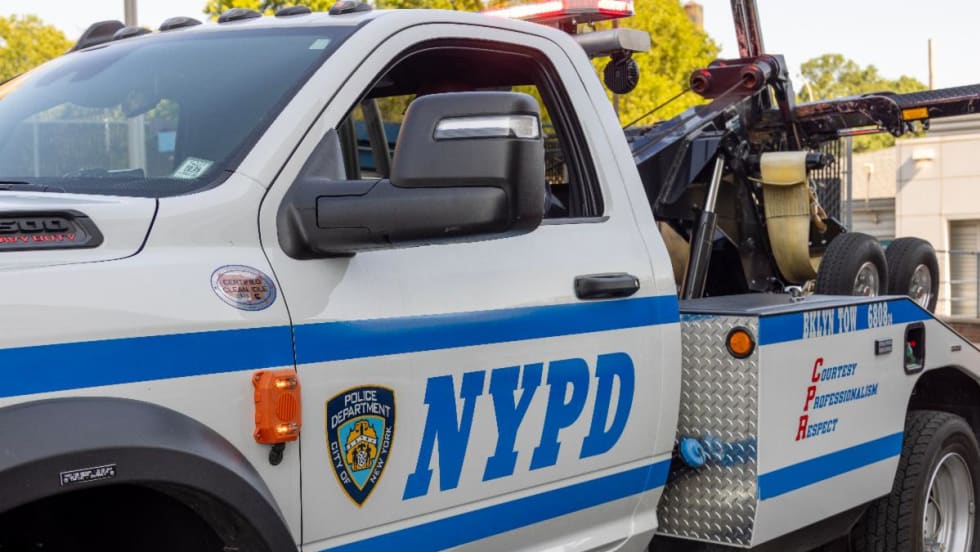
New York City Orders Safety Technology for Municipal Fleet
New York City is expanding the use of pedestrian alerts and intelligent speed assistance across its non-emergency fleet. The executive order establishes new technology requirements for future vehicle purchases while accelerating retrofits on thousands of existing municipal trucks.
Read More →
The Network Behind Better Government Fleet Decisions
A discussion on why relationships across the government fleet community have played such an important role and what shapes the leadership response.
Read More →
Ford, BlackRock, Google and Carhartt Form Skilled Trades Workforce Alliance
The alliance plans to develop a stronger pipeline between training programs and available jobs while examining workforce efforts already underway across the country.
Read More →
The Network Behind Better Government Fleet Decisions
A discussion on why relationships across the government fleet community have played such an important role and what shapes the leadership response.
Read More →
What Makes Fleet Technicians Stay? | GovCast Cheat Sheet
The technician hiring and retention discussion is not new, but the way fleets respond to it continues to matter.
Read More →

On the Road with Government Fleet: Essential Podcasts for Professionals
Let's celebrate listening! Check out a GovCast podcast and discover the insights and strategies that can transform your fleet management approach.
Read More →
How Real-World Vehicle Use Guides Replacement And Budgets
Three public fleet leaders explain how they use real-world vehicle data and long-term planning to keep aging assets in service and make more informed replacement and budgeting decisions in a high-cost environment.
Read More →
When Fleet Data Has to Actually Mean Something | GovCast Cheat Sheet
Better fleet technology only works when the information behind it can actually support decisions.
Read More →