





Similar Content: Gordon Receives Legendary Lifetime Achievement Award
Public Fleet Hall of Fame 2021 Inductees Honored
This year's inductees carry a combined 115 years of fleet experience.
November 17, 2021
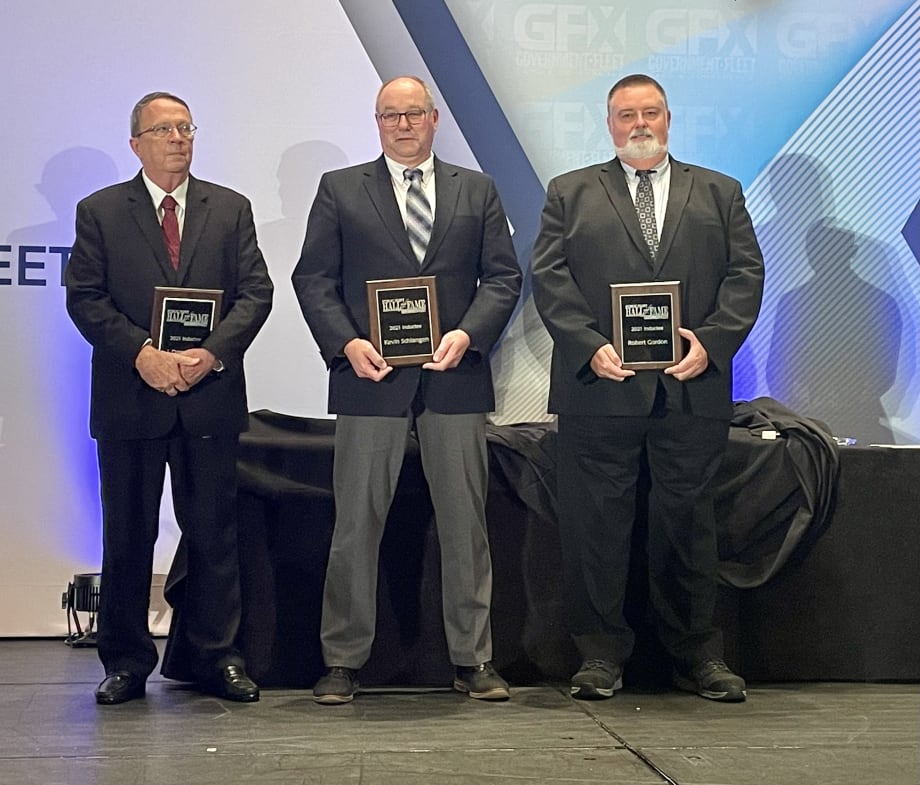
(L to R) New Hall of Fame inductees J. Darryl Syler, CPFP, state fleet administrator, State of Ohio; Kevin Schlangen, CAFM, CEM, CPFP, fleet manager, Dakota County, Minnesota; and Robert Gordon, deputy director, fleet management, DeKalb County, Georgia.
Photo: Lexi Tucker
2 min to read
Three public fleet industry veterans were honored at the 2021 Government Fleet Expo & Conference in Orlando. The newest members of the Public Fleet Hall of Fame were recognized at the Honors Celebration on Tuesday evening.
The Public Fleet Hall of Fame is comprised of industry leaders and pioneers who have significantly contributed to the public fleet profession, as chosen by members of the industry via online voting. The award is sponsored by Sourcewell.
This year's inductees are:
Robert Gordon, deputy director, fleet management, DeKalb County, Georgia
Years in fleet: 34Kevin Schlangen, CAFM, CEM, CPFP, fleet manager, Dakota County, Minnesota
Years in fleet: 40J. Darryl Syler, CPFP, state fleet administrator, State of Ohio
Years in fleet: 41
Each new inductee was given time to share remarks with the audience. "Make sure you come to events like GFX to learn. We need to learn what we can and pass it on to the young up-and-comers," Gordon advised. "It's all about faith and family. You need to have faith in your programs, because if you don't, who else will? Try to establish a true family at work. Look at the hours you spend there with them," Schlangen stated. Syler said, "Something I learned early on was ask questions. Also, give back. Pass it on and pay it forward."
The full list of Hall of Fame honorees can be found here.
More Operations

Fleet Forward Conference Introduces One-Day Passes for 2026
New one-day registration lets fleet professionals attend Tuesday, Wednesday, or Thursday, with passes available for $249.
Read More →
ENC Unveils its ZAVIR Medium-Duty Shuttle
Two variants of the concept shuttles were revealed: a low-floor configuration and a high-floor configuration.
Read More →
Could Your Next Fleet Technician Start as an Intern?
What if your next technician hasn’t worked in a fleet shop yet? What fleets are doing to free up time.
Read More →
How Phoenix Is Building Its Next Generation of Fleet Technicians
With more than 8,000 vehicles and pieces of equipment to maintain, the City of Phoenix could not afford to wait for fully trained technicians to walk through the door. Instead, they revamped their entire workforce strategy and showed how public fleets can create their own talent pipeline while preparing existing employees for increasingly complex vehicles.
Read More →
What’s Slowing Your Fleet Down?
Could a change in how work gets done help your fleet return vehicles to service sooner?
Read More →
Can Public Fleets Trust the Data Driving Their Decisions?
Public fleets have more data than ever, but inconsistent records and missing information can still undermine maintenance, replacement, and cost decisions.
Read More →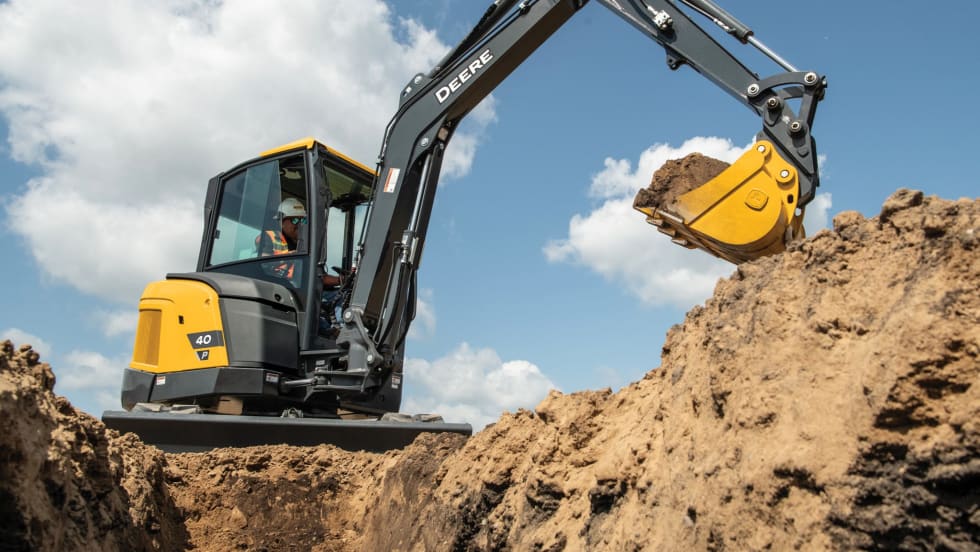
John Deere Introduces 40 P-Tier Compact Excavator
John Deere is adding a compact excavator designed for crews that need to move equipment between jobsites and handle multiple types of work with one machine. The 40 P-Tier weighs less than 10,000 pounds and offers configurable hydraulics, attachment options, and connected fleet-management capabilities.
Read More →
How Leading Fleets Improve and Why Business Plans Matter
This week, we look at what past Leading Fleet winners can teach us about making progress, plus how to build a business plan your fleet will actually use.
Read More →
Nominate a Fleet Leader for the 2027 Public Fleet Hall of Fame
Do you know a fleet leader who has made a lasting impact on the industry? Nominate this fleet professional for the 2027 Public Fleet Hall of Fame.
Read More →
Why Fleet Business Plans Need Three Perspectives
A fleet business plan should help agency leaders understand the fleet’s value, give the organization a clear direction, and establish shared expectations with customer departments.
Read More →