





Related: Oregon City Adds Zero-Emissions Refuse Vehicle to Fleet
Portland Adds Daimler eM2 Electric Medium-Duty Truck to City Fleet
Portland officials took delivery of the city’s first fully electric medium-duty truck, a Freightliner eM2, for Portland Water Bureau operations.
December 15, 2025
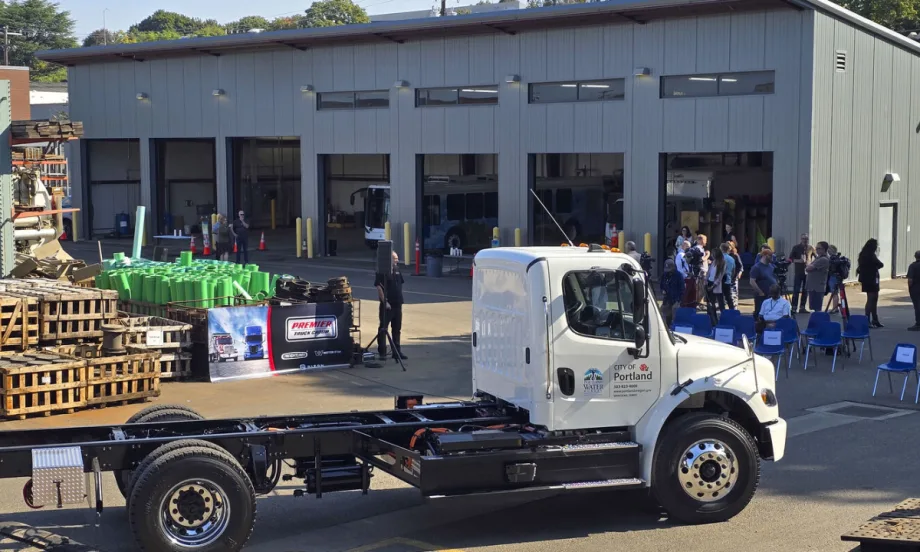
A Freightliner eM2 electric medium-duty truck sits at the Portland Water Bureau yard during a key handoff event for the city’s first unit.
Photo: City of Portland
2 min to read
Officials received keys to the city’s first fully electric medium-duty truck at the Portland Water Bureau Maintenance and Operations yard.
“Transportation has always been close to my heart,” Mayor Keith Wilson said before taking the first drive in the Freightliner eM2. “By powering essential services with electricity, we improve air quality in every neighborhood and strengthen our resilience to climate change.”
The event included Wilson, Deputy City Administrators Donnie Oliviera and Priya Dhanapal, CityFleet Director Mike Roy, and representatives from Daimler Truck North America, which worked with the city on the build.
“This first unit will be a catalyst for future EV builds for the City of Portland fleet,” Roy said.
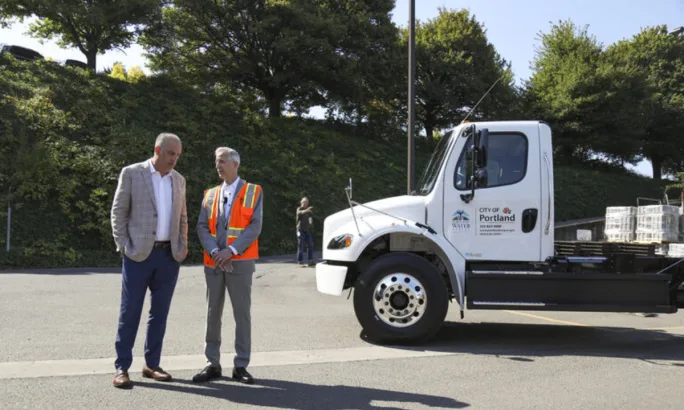
Truck Will Replace Diesel Unit For Saw Cutting Work
The truck will be fitted with the Water Bureau’s existing saw-cutting body, replacing a diesel-powered unit and reducing emissions and noise in Portland neighborhoods. The city said the vehicle was designed with Daimler Truck engineers to meet operational needs, including a shorter wheelbase for a tighter turning radius and higher visibility for urban work.
Funding for the purchase came from a Clean Diesel Emissions Mitigation grant from the Oregon Department of Environmental Quality and the Portland Clean Energy Community Benefits Fund.
“When the City purchases an electric vehicle, we are investing in clean energy jobs—from those designing and manufacturing these vehicles to those installing charging infrastructure to those training and hiring specialty technicians to work on these vehicles,” Oliviera said.
“Innovation matters most at street level, where our crews are maintaining pipes and serving Portlanders directly,” Dhanapal said. “This electric truck cuts pollution in our neighborhoods and shows electric vehicles can meet the day-to-day needs of municipal operations.”
More Operations
Is Keeping Older Fleet Vehicles Really Saving Money?
Is keeping vehicles longer saving money, and what happens when a diagnostic test points to the wrong fix?
Read More →
How Smart Fleet Strategy Can Help Local Government Agencies Do More with Less
Keeping a vehicle longer may ease this year’s budget, but what does it cost the next one? A closer look at fleet decisions can reveal opportunities to reduce spending while protecting essential services.
Read More →
Connect with Government Fleet on LinkedIn
From industry news and fleet management strategies to conversations with peers, Government Fleet's LinkedIn page offers public-sector fleet professionals another way to stay informed and connected.
Read More →
Town of Queen Creek Named Most Successful Fleet Award Winner of Inaugural RTA Fleet Success Awards
Five fleets were honored at RTA Connect 2026 in Chicago for excellence across resource efficiency, intentional culture, risk management, and stakeholder satisfaction.
Read More →
Sponsored•October 14, 2026
A buyer's guide to fleet management software in 2027
Buying fleet management software in 2027 means looking beyond features and price. As fleet operations, technology and expectations evolve, this guide explores what today’s fleet professionals should consider when choosing a system that can deliver value now and adapt to what comes next.
Read More →
Hazard Alerts, Fleet Car Sales Rise and a New Shuttle Concept
Fleet car sales doubled, but the bigger picture tells a different story in this week’s roundup.
Read More →
How St. Johns County Turned Fleet Data Into Better Replacement Decisions
St. Johns County, Florida, had fleet data, but turning it into reliable decision guidance was another matter. Instead of starting over with a new fleet management system, the county connected existing tools and built a scoring system that gives managers an objective look at fleet health.
Read More →
Fleet Forward Conference Introduces One-Day Passes for 2026
New one-day registration lets fleet professionals attend Tuesday, Wednesday, or Thursday, with passes available for $249.
Read More →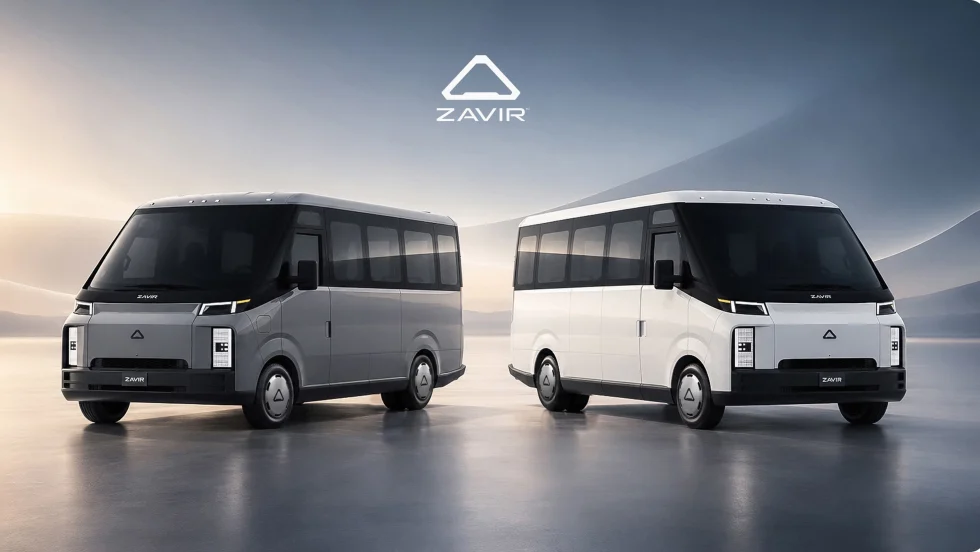
ENC Unveils its ZAVIR Medium-Duty Shuttle
Two variants of the concept shuttles were revealed: a low-floor configuration and a high-floor configuration.
Read More →
Could Your Next Fleet Technician Start as an Intern?
What if your next technician hasn’t worked in a fleet shop yet? What fleets are doing to free up time.
Read More →