




Phoenix Pays Millions in Vehicle-Related Claims
PHOENIX - City of Phoenix vehicles are involved in at least one accident a day on average, and the city paid claims for 2,339 accidents in the past five years involving police cars, fire trucks, buses and other city vehicles, costing taxpayers about $15.7 million.
PHOENIX - City of Phoenix vehicles are involved in at least one accident a day on average, according to an Arizona Republic analysis of liability claims paid by the city in the past five years.
From 2005 to 2009, Phoenix paid claims for 2,339 accidents involving police cars, fire trucks, buses and other city vehicles, costing taxpayers about $15.7 million. That works out to roughly 1.3 accidents per day, including weekends, TheArizona Republicreports.
Figures for 2009 covered only part of the year, meaning the total number of claims likely will be higher when the full year's claims are tallied.
Vehicle-related accidents have proven to be the most costly type of claim for the cash-strapped city, which this week cut $64 million in services and eliminated nearly 520 positions from the general fund budget.
But city officials say the large number of accidents is not surprising given the massive fleet of more than 7,800 vehicles Phoenix puts on the road each day.
"One accident is too many. But it's the nature of the business we're in. We have (thousands of) transit, police and fire vehicles running on the streets 24/7," said Sam Pignato, Phoenix's deputy finance director, who manages claims filed against the city. "It is the single largest exposure to liability for the city, and that is pretty common with any public agency with a large fleet."
Taxpayer Money
During the same five-year period, Dallas, Tex., paid claims for 2,414 accidents, at a total cost of about $5 million. Seattle, Tex., paid claims for 1,200 accidents, costing about $3.1 million.
By contrast, during the past three years, Philadelphia spent more on accident claims than Phoenix did in the past five years, paying about $16.6 million for 960 accidents from 2007 to 2009. Philadelphia officials said their 6,000-vehicle fleet had been involved in 6,881 crashes since 2005.
In Phoenix, taxpayers ultimately pick up the tab for these accident claims. That's because the city is self-insured for all operations except Phoenix Sky Harbor International Airport, which is required by federal law to carry outside insurance.
Each year, most Phoenix departments are required to dedicate a certain percentage of their budget toward the citywide insurance-reserve fund instead of an outside insurance company.
The Republic's analysis also found that:
Accidents in which vehicles were in the process of turning proved to be the most costly, totaling about $3.9 million over the five-year period. Failure-to-yield accidents were next at a cost of nearly $3.2 million, followed by rear-end accidents at $3.1 million.
Accidents in which vehicles struck a fixed object were the most prevalent during that same period, with 621 incidents.
The Public Works Department was responsible for the largest number of incidents: 639. Police were next with 582, followed by Public Transit with 573.
The 22 instances in which a vehicle hit a pedestrian were the most expensive per claim. On average, each of those payouts cost taxpayers nearly $70,000.
Records show that the number of incidents over the past five years has remained flat, at slightly more than 500 a year. That is down from about 650 accidents a year in 2000, when Phoenix had fewer vehicles driving fewer miles, Pignato said.
"The accident rate has gone down significantly as we have ramped up training," he said.
Training as Usual
Rules have been in place for decades to ensure that Phoenix-employed drivers follow federal, state and local laws and that city liabilities are minimized. Drivers must have a valid license, and driving records are reviewed at least once a year, The Republic reports.
All drivers also are required to pass a training course, and most civilian drivers must brush up on their skills every three to four years.
City officials said 4,950 drivers had taken the city's Safe Driving Awareness class in the past five years. About 100 drivers at fault in crashes had taken an "accident reduction" course since 2008.
But officials said there is no citywide regulation mandating drivers in accidents to take the class. Officials also said they didn't know how many drivers involved in accidents had been disciplined or fired, according to The Republic.
More Safety
New Partnership Aims to Expand Public Digital Hazard Alert System Statewide
The Hawai’i Department of Transportation (HDOT) is expanding advance digital hazard alerts for the public statewide.
Read More →
New York City Expands Safety Technologies Across Municipal Fleet
Executive Order 19 moves intelligent speed assistance and pedestrian alerts from pilot programs toward standard fleet equipment, offering other public fleets a look at how safety technology can be tested, measured, and scaled.
Read More →
Hidden in Plain Sight: Fleet Compliance Risks
Fleet compliance isn't just about having policies — it's about consistently enforcing them. This practical guide reveals six hidden compliance risks common in public sector and shared fleet operations and outlines proven strategies to improve visibility, accountability, and audit readiness.
Read More →
5 Days Left to Submit Your 2026 Fleet Safety Award Nomination
Know a government fleet, safety, or risk manager who deserves recognition for making fleet operations safer? Nominations are open through Aug. 15.
Read More →
How the First 24 Hours Can Shape a Fleet Crash Response
How a strong accident response process helps government fleets move from the initial report to recovery while building a clearer record for what needs to change next.
Read More →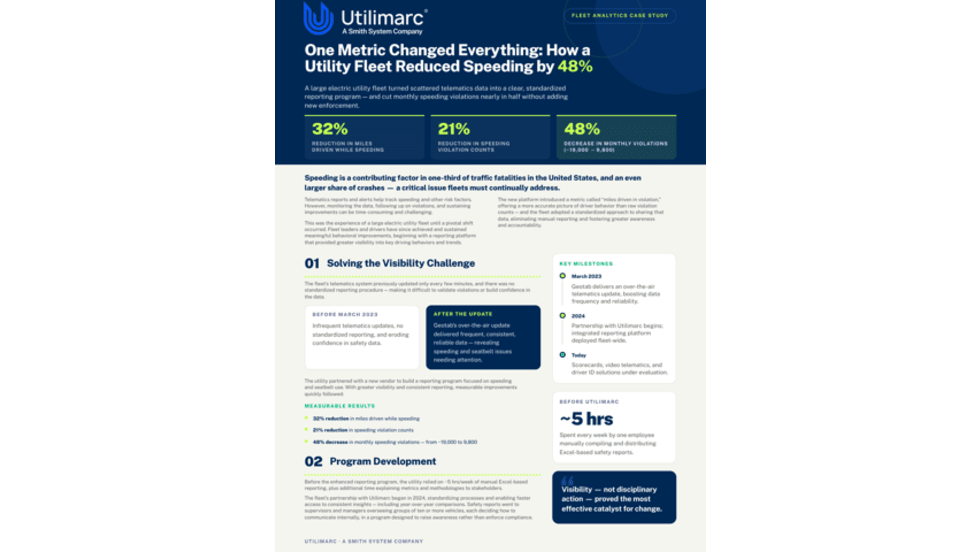
How Better Visibility Cut Speeding Violations by 48%
Fleet leaders don't need more data, they need clearer visibility into what the data is saying. This case study explores how one utility replaced speeding-event counts with a single metric — miles driven in violation — to strengthen safety and significantly reduce speeding violations.
Read More →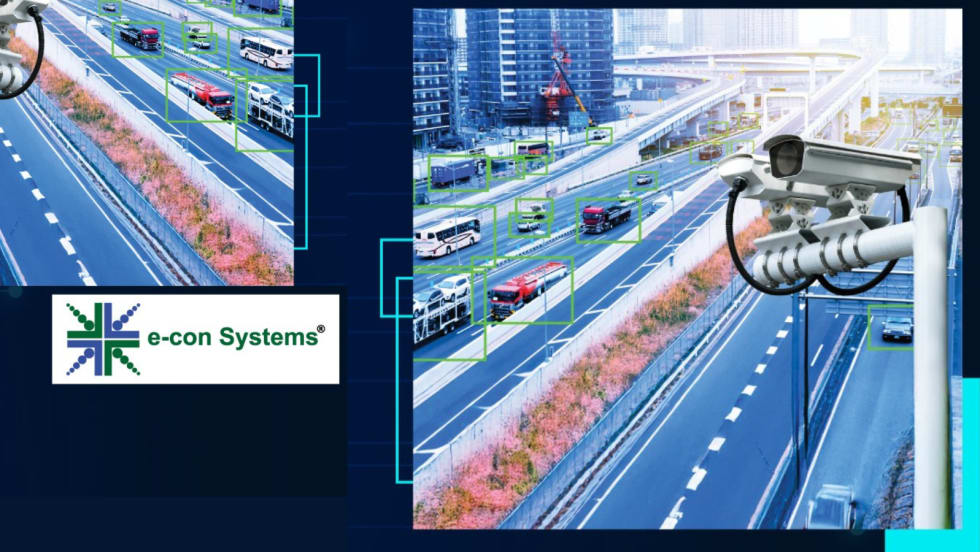
e-con Systems Expands AI Camera Tools for Traffic Monitoring
The systems support license plate recognition, traffic analytics, and video management for transportation agencies.
Read More →
King Township Pilot Links Driver Feedback to Reduced Speeding
How King Township, a best-in-class municipal fleet, reduced speeding by 10.9% and demonstrated a projected 349% ROI by putting safety ownership directly in drivers' hands.
Read More →
Beyond the Fireline: The Critical Role of Public Fleets in Wildfire Response
Behind every wildfire response is a complex network of vehicles, data, and decisions that must work in sync under extreme pressure. Global heating trends require strong fleet coordination and reliable communications to keep crews safe and operations running smoothly.
Read More →
How AI Is Transforming Public Fleet Safety - Part 1
AI-powered safety systems are helping public fleets tackle distracted driving by delivering real-time coaching and measurable behavior change behind the wheel. In part one of our Q&A, Nauto CEO Stefan Heck explains how agencies can improve safety, reduce costs, and navigate implementation challenges with AI-driven technology.
Read More →