





Related Content: New Benchmarks in Fleet Safety
NTSB Calls for Technology to Reduce Speeding in All New Cars
The board highlighted the need for intelligent speed assistance technology and countermeasures after a deadly crash in North Las Vegas.
November 17, 2023
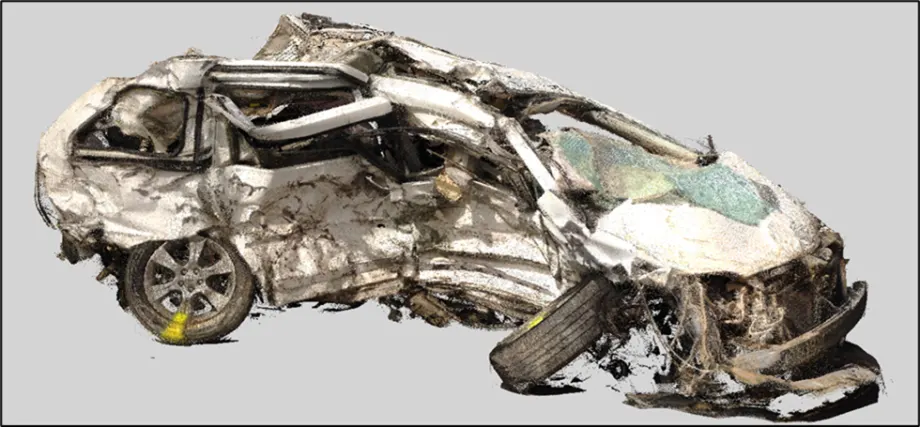
3D laser scan showing damage to the minivan. The view is from the passenger side.
Photo: NTSB
3 min to read
The National Transportation Safety Board (NTSB) investigation into a multivehicle collision in North Las Vegas, Nevada, last year that resulted in nine fatalities has led the board to recommend a requirement for intelligent speed assistance technology in all new cars. The board issued the recommendations Tuesday at a public board meeting after determining the crash was caused by excessive speed, drug-impaired driving and Nevada’s failure to deter the driver’s speeding recidivism due to systemic deficiencies, despite numerous speeding citations.
Intelligent speed assistance technology, or ISA, uses a car’s GPS location compared with a database of posted speed limits and its onboard cameras to help ensure safe and legal speeds. Passive ISA systems warn a driver when the vehicle exceeds the speed limit through visual, sound, or haptic alerts, and the driver is responsible for slowing the car.
Active systems include mechanisms that make it more difficult, but not impossible, to increase the speed of a vehicle above the posted speed limit and those that electronically limit the speed of the vehicle to fully prevent drivers from exceeding the speed limit.
“This crash is the latest in a long line of tragedies we’ve investigated where speeding and impairment led to catastrophe, but it doesn’t have to be this way,” said NTSB Chair Jennifer Homendy. “We know the key to saving lives is redundancy, which can protect all of us from human error that occurs on our roads. What we lack is the collective will to act on NTSB safety recommendations.”
Implementing Regulations Around Speed Limits
Eliminating speeding through the implementation of a comprehensive strategy is a priority for the NTSB. In 2021, speeding-related crashes resulted in 12,330 fatalities—about one-third of all traffic fatalities in the United States. In addition to ISA, the NTSB has previously called on regulators to revise regulations around speed limit guidance and increase the use of speed safety cameras. NTSB has also highlighted the need to improve data, laws, and enforcement to address drug-impaired driving.
On Jan. 29, 2022, a 2018 Dodge Challenger entered an intersection near North Las Vegas, Nevada, against a red traffic signal with a vehicle recorded speed of 103 mph, causing a multivehicle collision with five other vehicles. Seven occupants of a minivan and the Challenger’s driver and passenger died as a result of the crash. The driver of the Challenger was determined to have been impaired by cocaine and PCP and had a history of multiple speeding offenses.
As a result of the investigation, the NTSB is issuing eight new and one reiterated recommendation to the National Highway Traffic Safety Administration, one new recommendation to states and one new recommendation to manufacturers:
To NHTSA:
Require ISA systems that, at a minimum, warn a driver a vehicle is speeding.
Educate the public about the benefits of ISA.
Update the guidelines for state highway safety programs to include identification and tracking of repeat speeding offenders.
Develop countermeasures to reduce repeat speeding offenses.
Conduct research and develop guidelines to assist states in implementing ISA interlock programs for repeat speeding offenders.
Incentivize the adoption of ISA through, for example, the New Car Assessment Program. This recommendation is reiterated from a 2017 recommendation.
To 50 states, the Commonwealth of Puerto Rico and the District of Columbia:
Implement programs to identify repeat speeding offenders and measurably reduce speeding recidivism.
To 17 car manufacturers:
Install ISA in all new passenger vehicles that, at a minimum, warns drivers when a vehicle is speeding.
To the Insurance Institute of Highway Safety:
Evaluate the safety outcomes of marketing by auto manufacturers that emphasizes risky behavior, including speeding. The evaluation should compare vehicles based on engine size, power and performance and international approaches to marketing. Make the report publicly available.
More Safety

New York City Expands Safety Technologies Across Municipal Fleet
Executive Order 19 moves intelligent speed assistance and pedestrian alerts from pilot programs toward standard fleet equipment, offering other public fleets a look at how safety technology can be tested, measured, and scaled.
Read More →
Sponsored•August 10, 2026
Hidden in Plain Sight: Fleet Compliance Risks
Fleet compliance isn't just about having policies — it's about consistently enforcing them. This practical guide reveals six hidden compliance risks common in public sector and shared fleet operations and outlines proven strategies to improve visibility, accountability, and audit readiness.
Read More →
5 Days Left to Submit Your 2026 Fleet Safety Award Nomination
Know a government fleet, safety, or risk manager who deserves recognition for making fleet operations safer? Nominations are open through Aug. 15.
Read More →
How the First 24 Hours Can Shape a Fleet Crash Response
How a strong accident response process helps government fleets move from the initial report to recovery while building a clearer record for what needs to change next.
Read More →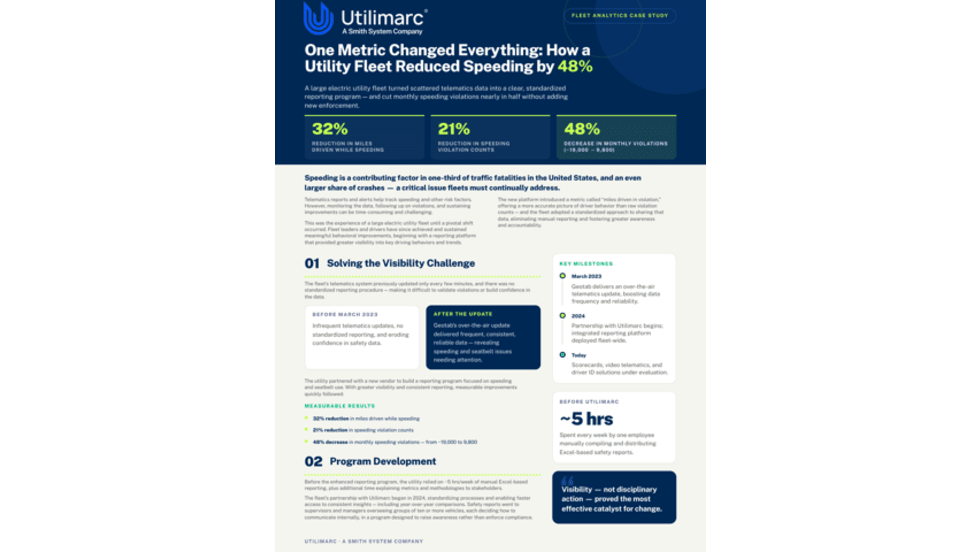
Sponsored•July 17, 2026
How Better Visibility Cut Speeding Violations by 48%
Fleet leaders don't need more data, they need clearer visibility into what the data is saying. This case study explores how one utility replaced speeding-event counts with a single metric — miles driven in violation — to strengthen safety and significantly reduce speeding violations.
Read More →
e-con Systems Expands AI Camera Tools for Traffic Monitoring
The systems support license plate recognition, traffic analytics, and video management for transportation agencies.
Read More →
King Township Pilot Links Driver Feedback to Reduced Speeding
How King Township, a best-in-class municipal fleet, reduced speeding by 10.9% and demonstrated a projected 349% ROI by putting safety ownership directly in drivers' hands.
Read More →
Beyond the Fireline: The Critical Role of Public Fleets in Wildfire Response
Behind every wildfire response is a complex network of vehicles, data, and decisions that must work in sync under extreme pressure. Global heating trends require strong fleet coordination and reliable communications to keep crews safe and operations running smoothly.
Read More →
How AI Is Transforming Public Fleet Safety - Part 1
AI-powered safety systems are helping public fleets tackle distracted driving by delivering real-time coaching and measurable behavior change behind the wheel. In part one of our Q&A, Nauto CEO Stefan Heck explains how agencies can improve safety, reduce costs, and navigate implementation challenges with AI-driven technology.
Read More →
Reducing Risk and Improving Safety in Public Sector Fleets with Advanced Driver-Assist Technology
Public sector fleets face increasing pressure to improve safety, reduce liability, and operate efficiently. See how advanced vehicle technologies are helping agencies protect drivers, the public, and their budgets.
Read More →