




New Mexico State University Goes Green With On-Campus Vehicles
LAS CRUCES, NM – The latest “green machine” on the New Mexico State University (NMSU) campus is the newly acquired Global Electric Motorcar (GME).
LAS CRUCES, NM – The latest “green machine” on the New Mexico State University (NMSU) campus is actually white, according to the Las Cruces Sun-News. In fact, the newly acquired Global Electric Motorcar (GME) is the latest in a series of ongoing efforts to reduce the university community’s dependence on traditional fuels for vehicles and make as small an impact on the environment as possible, said Barry Law, director of transportation services for NMSU.
With a base cost of around $9,600, it’s the latest addition in the campus’ alternative-fuel vehicle fleet. A charge will power the vehicle for roughly 30 miles, and can be recharged overnight. With the addition of the GEM, the fleet is roughly 14 percent alternative-fuel vehicles.
The university plans to purchasing more GEM electric cars in the future. Classified as a low-speed vehicle, the GEM plugs into a standard electrical outlet each night to charge. It has a maximum speed of 25 miles an hour, with a range of 30 miles.
The transition of NMSU’s vehicle fleet to more environmentally friendly cars and trucks and the increase in shuttle routes coincide with President Michael Martin’s recent pledge to neutralize the university’s global warming emissions.
The three new bus routes will make it easier for students and employees to get to work and class from campus housing and the university’s outer parking lots near the Pan American Center. The goal is to reduce carbon emissions from vehicles by reducing the amount of traffic through campus, according to the Las Cruces Sun-News.
The university will soon switch to blend of gasoline made of 15 percent ethanol and 85 percent traditional gasoline. The university is also working toward using a blend of diesel, with 20 percent of the mixture coming from biodiesel.
More Operations
Is Delaying Fleet Replacement Really Saving Money?
Could delaying replacement cost your fleet more than it saves? This week’s recap takes a closer look, plus an update on GFX 2027.
Read More →
What Government Fleets Are Missing About Their True Costs
What are fleet budgets missing, and how can agencies use the data they already collect to make a stronger case for change?
Read More →
Rethinking Fleet Decisions From the Budget Office to the Shop
This October we looked back at how public fleets are reconsidering familiar processes and using what they learn to make better decisions.
Read More →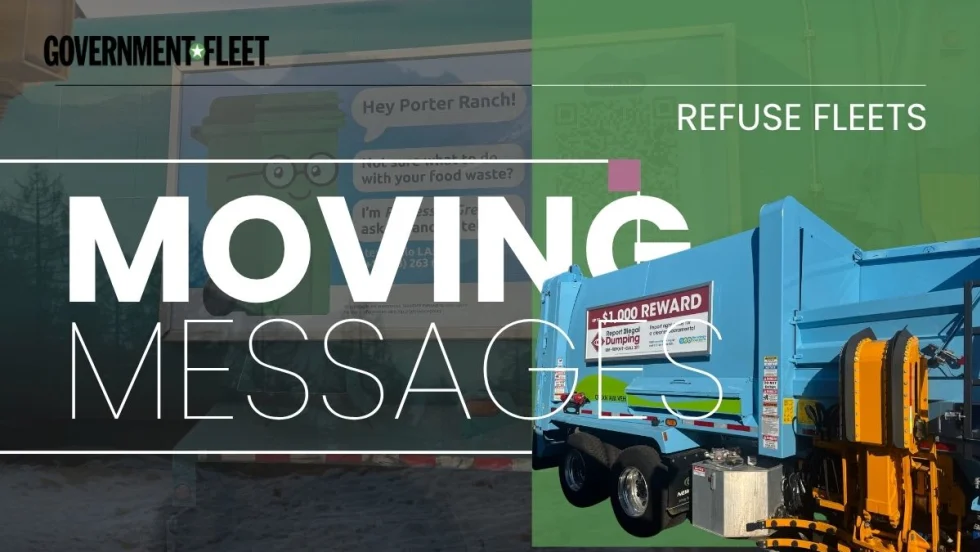
Who Owns the Message on a Refuse Truck?
Refuse trucks can carry public messages into neighborhoods, but keeping those messages current takes planning and clear responsibility.
Read More →
Who Deserves Fleet Recognition and What Could You Teach at GFX?
Who helped shape your fleet career, and what have you learned that could help someone else?
Read More →
What’s Haunting Public Sector Fleets?
Public sector fleet challenges rarely happen in isolation, and addressing one often means understanding how it connects to another.
Read More →
Is Keeping Older Fleet Vehicles Really Saving Money?
Is keeping vehicles longer saving money, and what happens when a diagnostic test points to the wrong fix?
Read More →
How Smart Fleet Strategy Can Help Local Government Agencies Do More with Less
Keeping a vehicle longer may ease this year’s budget, but what does it cost the next one? A closer look at fleet decisions can reveal opportunities to reduce spending while protecting essential services.
Read More →
Connect with Government Fleet on LinkedIn
From industry news and fleet management strategies to conversations with peers, Government Fleet's LinkedIn page offers public-sector fleet professionals another way to stay informed and connected.
Read More →
Town of Queen Creek Named Most Successful Fleet Award Winner of Inaugural RTA Fleet Success Awards
Five fleets were honored at RTA Connect 2026 in Chicago for excellence across resource efficiency, intentional culture, risk management, and stakeholder satisfaction.
Read More →