





Read More: Building a Solid Fleet Management Strategy for the Future
Modernizing for Efficiency: Meeting the Demands of Rapid Equipment Deployment
Discover how one city is streamlining emergency response operations, leveraging cooperative purchasing, and modernizing equipment to tackle increasing demands with efficiency and precision.
January 7, 2025
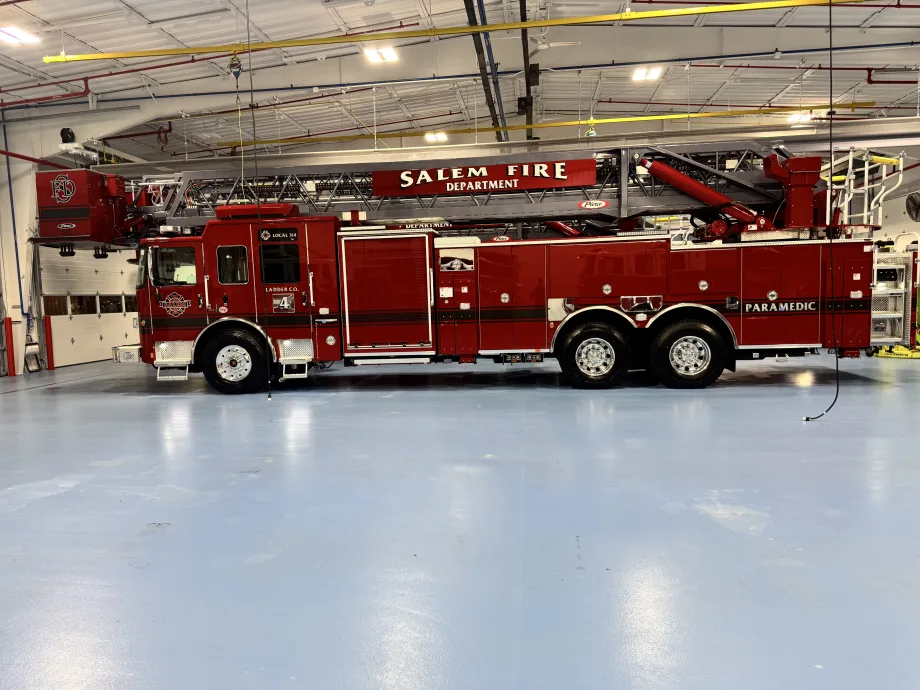
The fleet is working to get unit numbers assigned, profiles set up, and telematics installed.
Photo: City of Salem
5 min to read
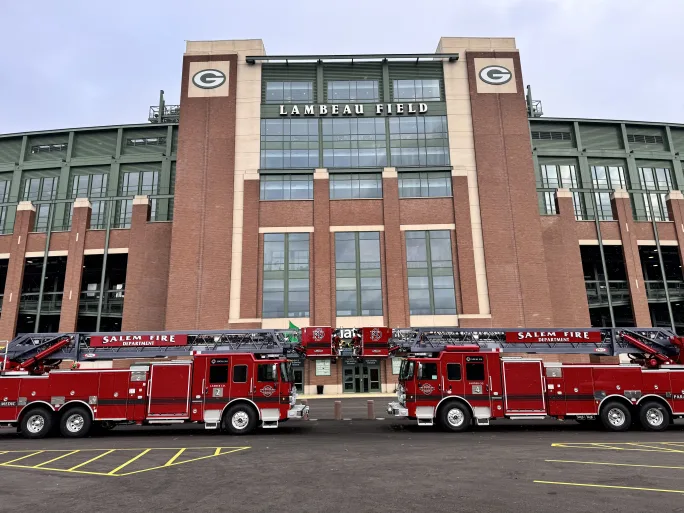
The city of Salem is bringing in 16 Pierce Pumpers, 10 Medix Ambulances, two Lifeline Ambulances, and two Pierce Ladder Trucks.
Photo: City of Salem
The city of Salem, Oregon, is gearing up for a major overhaul of its emergency fleet, bringing in 16 Pierce Pumpers, 10 Medix Ambulances, two Lifeline Ambulances, and two Pierce Ladder Trucks. Alongside this, the city is taking on medical transport services starting July 2025—a big shift for the fleet team.
With tight deadlines and a need for fast action, Salem relied on cooperative purchasing agreements to streamline procurement and is focused on integrating these new assets into the operation as efficiently as possible.
This effort isn’t just about adding vehicles; it’s about modernizing the fleet to better serve the community and handle increasing demands.
The Procurement Process, New Vehicle Features
The city of Salem took advantage of cooperative purchasing agreements, such as H-GAC Buys for ambulances and a Sourcewell contract for the Pierce units. The remainder of the equipment was on the Ford state contract. The city had roughly 14 months to supply medic units, so fast-tracking the purchasing process was a must.
The new units have much-needed, up-to-date safety and technology features. According to Gabriel Grooms, Salem’s fleet supervisor, the city’s existing fleet has units that are almost 20 years old lacking power options for windows or locks, old lighting, and mechanical pump operations.
The new fleet will include features such as Blindside safety when turning, Power windows, Power locks, Pump and Roll, which allows units to travel five mph while operating the turret (spraying water), and Tak4 Suspension, which makes for a much softer ride. The pump operation and mechanical operations are now integrated into a touchscreen infotainment panel on the side of the truck.
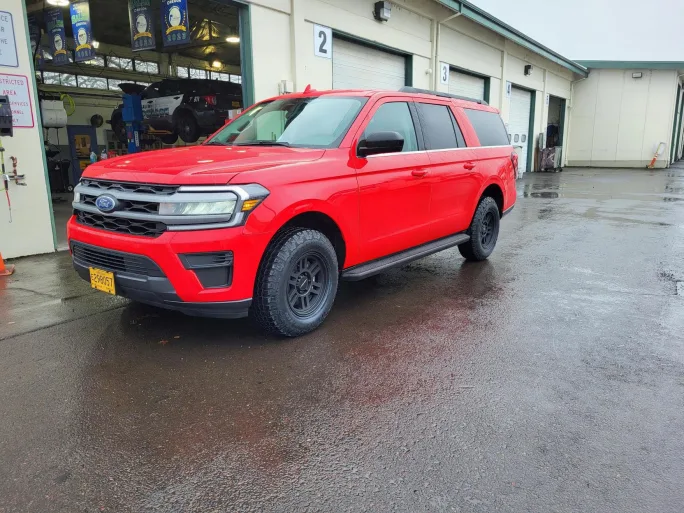
The fleet is looking for another technician position as the operation moves forward with new units.
Photo: City of Salem
Integrating Vehicles Into the Existing Fleet
Much of the equipment will arrive in the spring and, as Grooms pointed out, will need to be implemented quickly. The fleet has already started the data processing side, entering as much information from the spec sheets as possible and building unit profiles/assigning equipment numbers before the units even arrive. The fitting vendor, Hughes Fire Equipment (HFE), will install all the necessary equipment before arrival.
Right now, the fleet’s main responsibility is getting unit numbers assigned, profiles set up in AssetWorks and FuelCloud, and telematics (through Geotab) installed and operational.
“The new equipment will come fully equipped,” said Grooms. “As we bring each new unit online, we will be retiring an old unit in a 1 for 1 trade.”
Modifications Before Vehicle Deployment
Special brackets and tool holders, along with a graphic design, will be needed. In 2023, the city leased a Pierce pumper and ladder truck before buying them so they could work out all the kinks. Zephyr Engineering designed all of the brackets and specially designed tool holders in a 3D CAD file, so any fabrication/engineering company can take that file and create what the fleet needs.
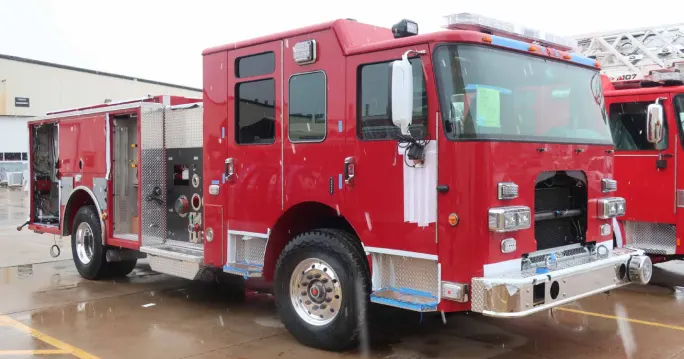
The city will be adding 16 Pierce Pumpers to its fleet.
Photo: City of Salem
Training to Maintain and Operate New Vehicles
The fire department has been training for the last year on a leased Pierce Pumper and ladder truck, which are identical to the ones ordered. Throughout the year, each station had a chance to use the new pumper for one month for day-to-day call-outs and routine training. The fleet receives training through Emergency Vehicle Technician (EVT) conferences.
“Our shop is a part of Oregon Fire Apparatus & Equipment Mechanics Association, which holds a one-week training conference in Oregon and in Washington, which we partake in,” said Grooms. “These conferences go over ambulance operation, fire apparatus pumps, and accessories.”
In addition to these conferences, Grooms scheduled a trainer from Hughes Fire Equipment to come out and perform a walk-through and training with the technicians. Fleet also sent a technician to the East Coast with the fire department to perform the final walk-through and inspections on the ladder, pumpers, and medic units, which allowed the fire technician to ask any needed questions and bring information back to the department.
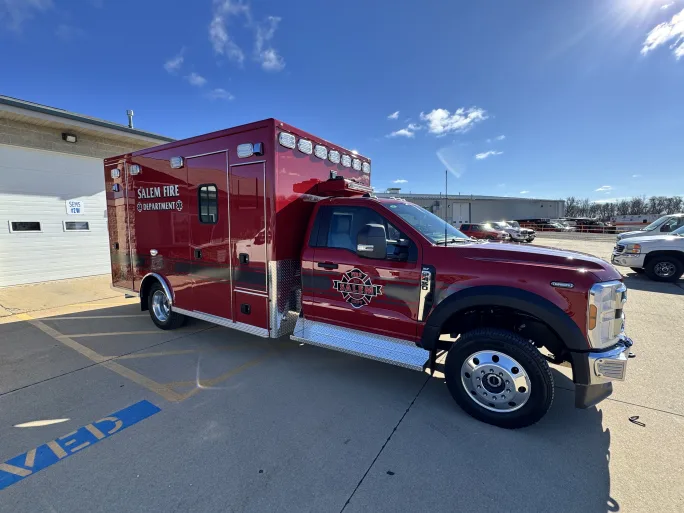
The Salem fleet is prepping to take on on medical transport services starting July 2025.
Photo: City of Salem
“The only concern now is manpower,” Grooms explained. “I have proposed to HR that fleet needs another mechanic position as we are at max capacity with nine technicians, and the city will take that proposal to city council for that request.”
The additional position will be funded by the fire department and will allow the fleet to get its first lead fire technician. This will let Grooms auto-promote the current technician who works on fire equipment to lead fire tech status. He will eventually have a technician who works under him, raising staff to 10 technicians, with two dedicated to fire equipment.
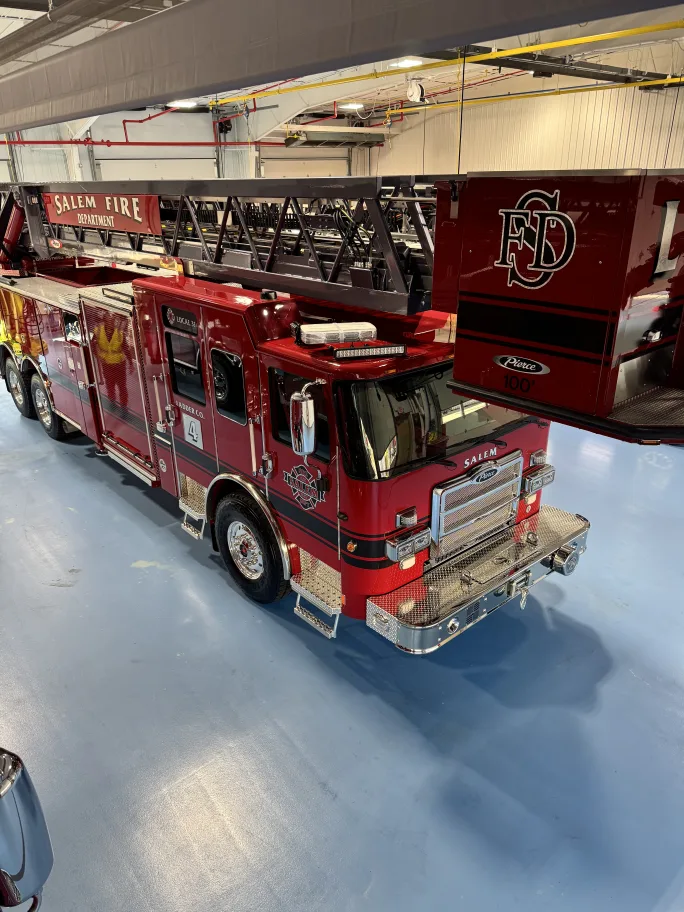
The fleet has already started the data processing side, entering as much information from the spec sheets as possible and building unit profiles/assigning equipment numbers before the units even arrive.
Photo: City of Salem
Managing Demand for Parts, Maintenance, and Storage
The fleet uses NAPA IBS for our parts department, which Grooms pointed out has been a “great partnership.” The fleet has slowly been dwindling its current KME-specific parts inventory and will be gearing up to store parts for the new Pierce units.
“Using the build spec sheet and final inspection information, we were able to get filter part numbers for pm maintenance,” Grooms added. “Using the knowledge gathered from our current fire fleet, we have ordered a small inventory of commonly replaced parts that we know of for the new Pierce fleet — seatbelts, seat covers, door latches, lighting lens covers, and flashlight holders, to name a few.
Taking Over Medical Transport Services
The push to take on medical transport services initially came from the fire department, prompted by challenges the medical service provider faced in meeting the community's increasing call volume and ensuring consistent delivery of essential services under the existing arrangement.
Salem Fire spent roughly $2.2 million filling staffing shortages. By moving medical transport services to the Salem fleet, the city is estimated to profit $16 million to $17 million dollars.
“The Salem Fire Department being able to do medical transport also allows for an entirely new in-house program to be developed where you can start as a driver/EMT and get hands-on training and work your way up to a paramedic and become a firefighter through a program the city is currently putting together,” Grooms noted. “This will create a pathway for the community and the fire department to help recruit firefighters.”
In addition to cost savings and new hires, starting in July of this year, the fleet will also be looking forward to replacing one lift a year, for a total of three new Stertil Koni in-ground ECO 90 scissor lifts.
This replacement will cost about $330,000 a year and take roughly three months to accomplish. A lift will be replaced in 2025, 2026 and 2027.
“These lifts will be replacing in-ground lifts that are more than 30 years old,” explained Grooms. “Over the last couple of years we have heavily invested in our shop from the most up-to-date scan tools and software, new epoxy floors, lifts, and lighting.”
More Operations

Hazard Alerts, Fleet Car Sales Rise and a New Shuttle Concept
Fleet car sales doubled, but the bigger picture tells a different story in this week’s roundup.
Read More →
How St. Johns County Turned Fleet Data Into Better Replacement Decisions
St. Johns County, Florida, had fleet data, but turning it into reliable decision guidance was another matter. Instead of starting over with a new fleet management system, the county connected existing tools and built a scoring system that gives managers an objective look at fleet health.
Read More →
Fleet Forward Conference Introduces One-Day Passes for 2026
New one-day registration lets fleet professionals attend Tuesday, Wednesday, or Thursday, with passes available for $249.
Read More →
ENC Unveils its ZAVIR Medium-Duty Shuttle
Two variants of the concept shuttles were revealed: a low-floor configuration and a high-floor configuration.
Read More →
Could Your Next Fleet Technician Start as an Intern?
What if your next technician hasn’t worked in a fleet shop yet? What fleets are doing to free up time.
Read More →
How Phoenix Is Building Its Next Generation of Fleet Technicians
With more than 8,000 vehicles and pieces of equipment to maintain, the City of Phoenix could not afford to wait for fully trained technicians to walk through the door. Instead, they revamped their entire workforce strategy and showed how public fleets can create their own talent pipeline while preparing existing employees for increasingly complex vehicles.
Read More →
What’s Slowing Your Fleet Down?
Could a change in how work gets done help your fleet return vehicles to service sooner?
Read More →
Can Public Fleets Trust the Data Driving Their Decisions?
Public fleets have more data than ever, but inconsistent records and missing information can still undermine maintenance, replacement, and cost decisions.
Read More →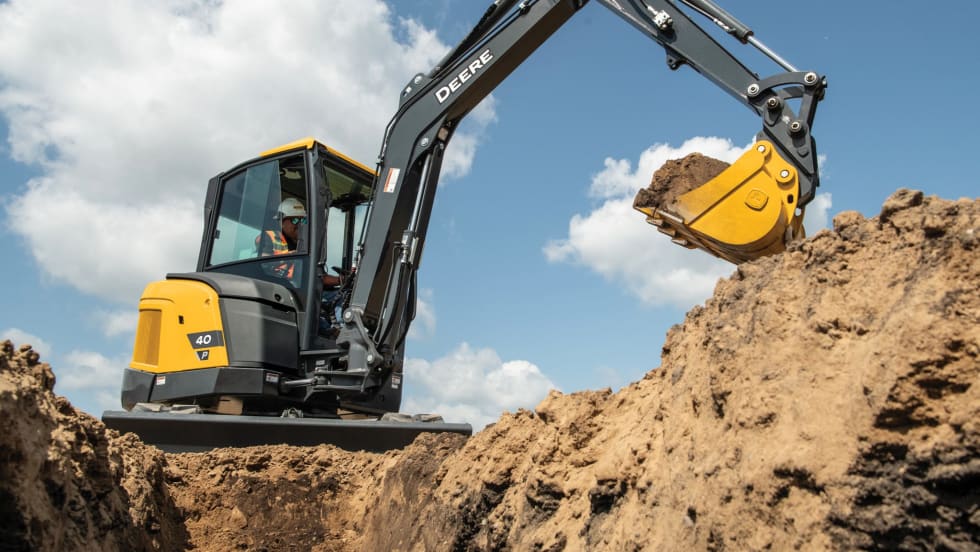
John Deere Introduces 40 P-Tier Compact Excavator
John Deere is adding a compact excavator designed for crews that need to move equipment between jobsites and handle multiple types of work with one machine. The 40 P-Tier weighs less than 10,000 pounds and offers configurable hydraulics, attachment options, and connected fleet-management capabilities.
Read More →
How Leading Fleets Improve and Why Business Plans Matter
This week, we look at what past Leading Fleet winners can teach us about making progress, plus how to build a business plan your fleet will actually use.
Read More →