





Want More? Maintaining Roadways in One of America’s Snowiest States
LYT Connected Traffic Solution Optimizes Snow Plow Jobs
LYT.snow allows snow plows to remove snow and ice quicker than before without the need to stop for red lights as they plow streets. See how the solution differs from signal priority technology.
January 12, 2024
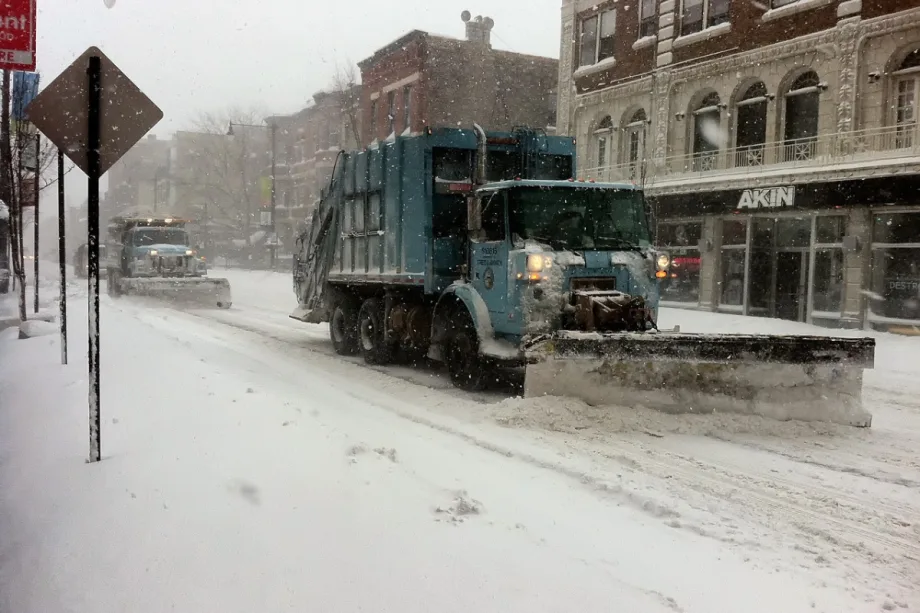
LYT's NextGen Transit Signal Priority technology leverages Artificial Intelligence and Machine Learning powered by advanced algorithms and real-time data to optimize traffic signal timings, particularly during inclement weather.
Photo: 12019 via Pixabay
4 min to read
LYT, a provider of NextGen intelligent connected traffic technology solutions, hopes to make snow plow routes more efficient and safer with the launch of a new solution called LYT.snow.
The technology is an advanced snow plow signal priority solution that enables snow plows to travel through intersections safely and efficiently to clear snow quickly so travelers can continue to safely move through their community.
How the Technology Works
LYT's NextGen Transit Signal Priority (TSP) technology leverages Artificial Intelligence and Machine Learning (AI/ML) powered by advanced algorithms and real-time data to optimize traffic signal timings, particularly during inclement weather, ensuring the efficient movement of emergency vehicles, public transportation, and now snow removal equipment.
The company’s algorithms analyze real-time incoming data to make informed decisions about adjusting traffic signal timings. These algorithms consider factors such as:
Road conditions.
The urgency of emergency services.
The need for snow removal in a particular area.
LYT’s cloud-based communication infrastructure facilitates seamless information exchange between snow plows, traffic management centers, and signal controllers. This allows for quick and coordinated adjustments to traffic signal timings based on the real-time needs of the city.
Essentially, the solution allows snow plows to remove snow and ice quicker than before without the need to stop for red lights as they plow streets.
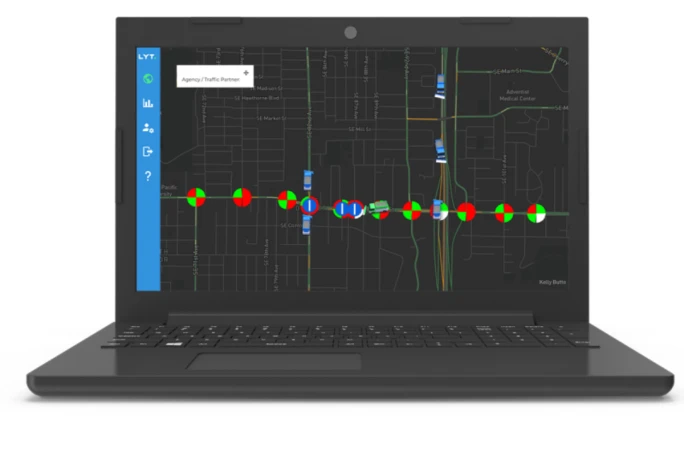
LYT’s cloud-based communication infrastructure facilitates seamless information exchange between snow plows, traffic management centers, and signal controllers. This allows for quick and coordinated adjustments to traffic signal timings based on the real-time needs of the city.
Photo: LYT
Evaluating the Need for the Technology
A recent study out of Brigham Young University showed that with snow plow preemption, operators are more efficient and safer with less stops and fewer cars trying to pass by them.
The study revealed commuters benefited from the preemption. The routes with snow plow preemption had significantly higher speed.
How the Solution Differs from Signal Priority Technology
The technology is similar to signal priority in that it is meant to prioritize certain vehicles. However, as the study points out, when a vehicle like a transit bus requests signal priority, it requests the the signal controller to change to benefit them.
But since the request is only priority, depending on the phase the signal is on, the signal controller can choose if it will grant the priority, based on a number of factors. The signal controller is not required to always grant the request, so the request is only honored a portion of the time.
With signal preemption, when a vehicle sends a signal request message to the signal controller, the controller logic begins the safe process of adjusting the signal phasing to grant the preemption.
If the traffic signal is not green as the vehicle approaches the intersection, it should change to green as quickly as is safely possible. When the traffic signal transitions into preemption, there are safety features that allow for the signal to transition in a safe manner.
For example, the yellow and all-red vehicle clearance intervals are not shortened or omitted. But the pedestrian clearance interval may be shortened or omitted, depending on if there was a call from a pedestrian push button or based on average pedestrian counts.
This is the same system used by emergency vehicles.
“Our snow plow traffic signal prioritization technology represents a significant advancement in urban mobility and emergency response systems,” LYT CEO and Founder Tim Menard said. “As cities face the challenges posed by changing weather patterns, our NextGen technology offers a proactive and adaptive approach to managing traffic flow and ensuring public safety. By harnessing the power of real-time data, AI/ML and advanced algorithms, municipalities can create resilient and efficient transportation systems that benefit both residents and the city's infrastructure in the face of adverse weather conditions.”
Benefits to the Environment
Faster, more efficient removal of snow also means a safer, cleaner environment.
Snow removal chemicals, such as salt, calcium chloride, magnesium chloride, and sand, are commonly used to melt ice and snow on city streets during winter.
While these chemicals effectively improve road safety, they can have various impacts on both infrastructure and the environment, LYT stated in a press release.
Reducing idle times at red lights for municipal snow plows also results in less concentration of chemicals distributed to one area while the machine waits for a green light.
Offering Traffic Tech Solutions in Canada
LYT also announced its expansion of the NextGen TSP into Canada and the Toronto region. The decision to expand internationally comes as a strategic move to address the growing challenges of traffic congestion and enhance transportation efficiency in major cities across North America, LYT stated.
"As we expand into the Canadian market, we are excited to bring our innovative traffic prioritization system to help address the challenges associated with urban congestion,” Menard said. “Our technology is not just about managing traffic; it's about creating smarter, more responsive transportation networks that benefit both cities and their residents.”
More Operations

Is Keeping Older Fleet Vehicles Really Saving Money?
Is keeping vehicles longer saving money, and what happens when a diagnostic test points to the wrong fix?
Read More →
How Smart Fleet Strategy Can Help Local Government Agencies Do More with Less
Keeping a vehicle longer may ease this year’s budget, but what does it cost the next one? A closer look at fleet decisions can reveal opportunities to reduce spending while protecting essential services.
Read More →
Connect with Government Fleet on LinkedIn
From industry news and fleet management strategies to conversations with peers, Government Fleet's LinkedIn page offers public-sector fleet professionals another way to stay informed and connected.
Read More →
Town of Queen Creek Named Most Successful Fleet Award Winner of Inaugural RTA Fleet Success Awards
Five fleets were honored at RTA Connect 2026 in Chicago for excellence across resource efficiency, intentional culture, risk management, and stakeholder satisfaction.
Read More →
Sponsored•October 14, 2026
A buyer's guide to fleet management software in 2027
Buying fleet management software in 2027 means looking beyond features and price. As fleet operations, technology and expectations evolve, this guide explores what today’s fleet professionals should consider when choosing a system that can deliver value now and adapt to what comes next.
Read More →
Hazard Alerts, Fleet Car Sales Rise and a New Shuttle Concept
Fleet car sales doubled, but the bigger picture tells a different story in this week’s roundup.
Read More →
How St. Johns County Turned Fleet Data Into Better Replacement Decisions
St. Johns County, Florida, had fleet data, but turning it into reliable decision guidance was another matter. Instead of starting over with a new fleet management system, the county connected existing tools and built a scoring system that gives managers an objective look at fleet health.
Read More →
Fleet Forward Conference Introduces One-Day Passes for 2026
New one-day registration lets fleet professionals attend Tuesday, Wednesday, or Thursday, with passes available for $249.
Read More →
ENC Unveils its ZAVIR Medium-Duty Shuttle
Two variants of the concept shuttles were revealed: a low-floor configuration and a high-floor configuration.
Read More →
Could Your Next Fleet Technician Start as an Intern?
What if your next technician hasn’t worked in a fleet shop yet? What fleets are doing to free up time.
Read More →