




Lessons From An (Almost) Retired Fleet Manager
Jeffrey Tews has learned a lot over the years and shares his words of wisdom here.

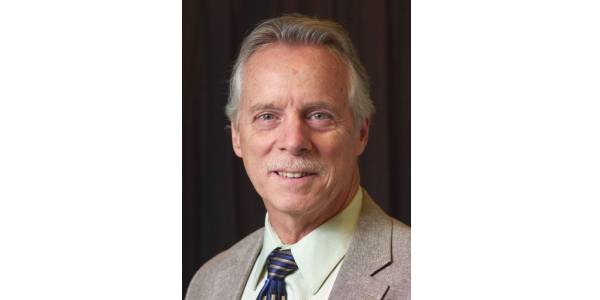
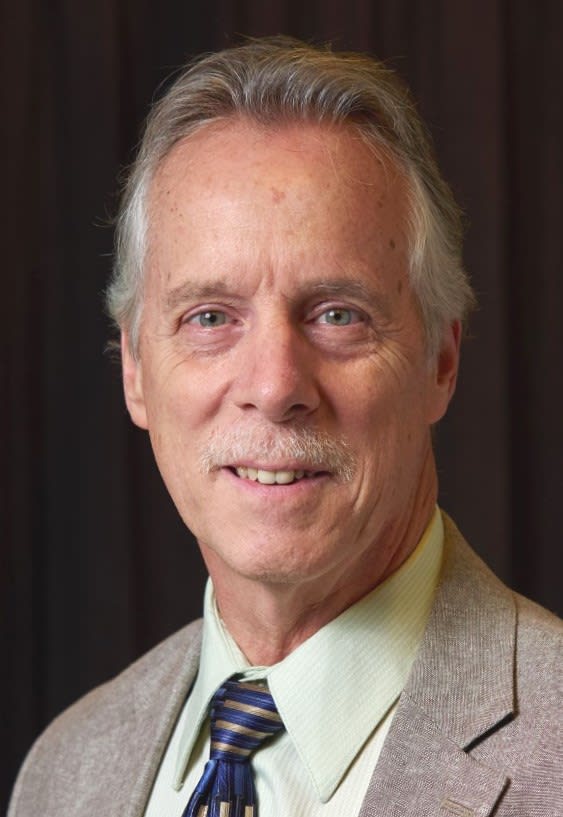
Jeffrey Tews, CPFP, fleet services manager City of Milwaukee, Wis.
As a child, Jeffrey Tews, CPFP, fleet services manager City of Milwaukee, Wis., used to love watching city trucks go by his window. He admired the power the large vehicles had, and was completely enraptured with transportation. It only makes sense he’d follow his dream to work with them someday, and he now looks back on 42 years of making positive changes and accomplishing what he was destined to do.
Pursuing a Natural Progression
After receiving a degree in combustion engines, he took a job with city of Milwaukee as a garage attendant. He swept up, changed oil, and did minor repairs, then became a mechanic within a year. Four years passed and he was promoted to a supervisor position. He moved on to write specifications for vehicles and did that for 23 years.
When he finished night school with a bachelor’s degree in business administration 12 years ago, he became a fleet manager.
“I just love the details, people, and chaos of it all,” he says. “It gets kind of crazy, but I’ve enjoyed every second.”
He says there’s not a set path to becoming a fleet manager, because it’s not the kind of situation where you can take courses and have that position be the next step.
“Once you get into the industry, you start seeing the endless possibilities of what you can do in transportation. If you observe people, you can learn something from everybody, especially those who were in your position before you. You discover what to do and what not to do, and it strengthens your resolve to do the right thing when it’s your time to step up to the plate.”
Overcoming Pay Obstacles
Tews says the biggest challenge he has faced during his time as fleet manager was convincing the department they needed to overhaul the pay system in a way that would reward people for the work they do.
“There was a time when we were among the lowest paying entities for vehicle service techs. They would come here, get trained, and leave because there were so many other people paying more than we could,” he explains. The continuous revolving door started to hurt productivity.
Over the years, benefits started to be reduced, what was a full pension became a 401k, and health insurance plans started to cost more.
“After a while, you’re not able to retain the people doing the best work because they move on to places that will pay them more. We were finally able to craft a pay plan with the help and backing of the city decision makers that compensates people not only for experience they bring to the table, but also the certifications they go out and earn or already have,” he says.
When someone would start at the fleet department, they’d begin at the bottom of the pay range regardless of their experience, moving a step up every year. Now they are started at a much better pay scale which takes into account any ASE or specialty certifications. This allows the department to bring in experienced people and put them where they need to be.
“This is the best thing we’ve done and the hardest to accomplish. It’s going to set us up where we can worry less about having to retain great people. Other departments have noticed and are climbing on board.”
One other project Tews has taken on is combining support functions like heavy equipment lubricators and tire repair workers and rolling them into a single title: fleet maintenance technician.
This encompasses six different job titles. The department is currently working on building a program to recognize these kinds of individuals for the certifications they have or can earn, and then pay them accordingly.
Leading During Tough Times
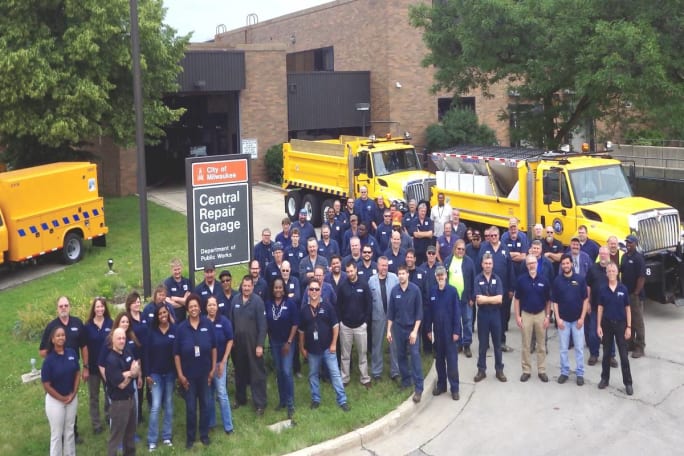
Tews is happy to have gotten the chance to work with a great group of people.
No one could deny working in the time of COVID-19 is an unprecedented experience in just about every industry. He says it has been fun watching the creativity some people are bringing to the table to solve problems.
Much is learned by trial and error. For example, one of his team members suggested they install plexiglass in truck cabs to isolate the driver from passengers.
“We discovered it creates an unbelievable amount of glare for the driver, especially at night with headlights bouncing off it. It became more dangerous than helpful.”
Aside from being interested in the equipment itself, one aspect of being a fleet manager Tews thoroughly enjoys is the people he gets the chance to work with.
“You get to experience so many different types of personalities and backgrounds. I like teaching, coaching, and pointing people in the direction we need to go as an operation. I say, ‘this is where we’d like to be and here’s how we are going to get there,’ and I’m counting on them and all their knowledge and experience to do so.”
Dolling Out Wisdom Before Retirement
Tews plans to retire at the end of August, and likes to think the operation is in a much better place and secure to move forward into the future after he’s gone.
“I’m not taking credit for it; I just helped steer the ship toward where I thought we needed to go. It’s the people who are here and who will be put in place that will keep things going and moving toward bigger and better things in an efficient way when I’m gone.”
His words for fleet manager newbies are, “Get to know the operation, people, and big picture before you start making wholesale changes; everything happens for a reason, and one little change can trigger further changes down the road that may have been unplanned and not desired.”
More Operations

Is Keeping Older Fleet Vehicles Really Saving Money?
Is keeping vehicles longer saving money, and what happens when a diagnostic test points to the wrong fix?
Read More →
How Smart Fleet Strategy Can Help Local Government Agencies Do More with Less
Keeping a vehicle longer may ease this year’s budget, but what does it cost the next one? A closer look at fleet decisions can reveal opportunities to reduce spending while protecting essential services.
Read More →
Connect with Government Fleet on LinkedIn
From industry news and fleet management strategies to conversations with peers, Government Fleet's LinkedIn page offers public-sector fleet professionals another way to stay informed and connected.
Read More →
Town of Queen Creek Named Most Successful Fleet Award Winner of Inaugural RTA Fleet Success Awards
Five fleets were honored at RTA Connect 2026 in Chicago for excellence across resource efficiency, intentional culture, risk management, and stakeholder satisfaction.
Read More →
A buyer's guide to fleet management software in 2027
Buying fleet management software in 2027 means looking beyond features and price. As fleet operations, technology and expectations evolve, this guide explores what today’s fleet professionals should consider when choosing a system that can deliver value now and adapt to what comes next.
Read More →
Hazard Alerts, Fleet Car Sales Rise and a New Shuttle Concept
Fleet car sales doubled, but the bigger picture tells a different story in this week’s roundup.
Read More →
How St. Johns County Turned Fleet Data Into Better Replacement Decisions
St. Johns County, Florida, had fleet data, but turning it into reliable decision guidance was another matter. Instead of starting over with a new fleet management system, the county connected existing tools and built a scoring system that gives managers an objective look at fleet health.
Read More →
Fleet Forward Conference Introduces One-Day Passes for 2026
New one-day registration lets fleet professionals attend Tuesday, Wednesday, or Thursday, with passes available for $249.
Read More →
ENC Unveils its ZAVIR Medium-Duty Shuttle
Two variants of the concept shuttles were revealed: a low-floor configuration and a high-floor configuration.
Read More →
Could Your Next Fleet Technician Start as an Intern?
What if your next technician hasn’t worked in a fleet shop yet? What fleets are doing to free up time.
Read More →