





Want More? Check out The Future of Vehicles Through the Lense of Research
Hyzon Trial Offers Insights Into Hydrogen Fuel Cells’ Potential for Waste Fleets
Hyzon’s hydrogen fuel cell systems demonstrated consistent power over an expected range of at least 125 miles.
November 20, 2024
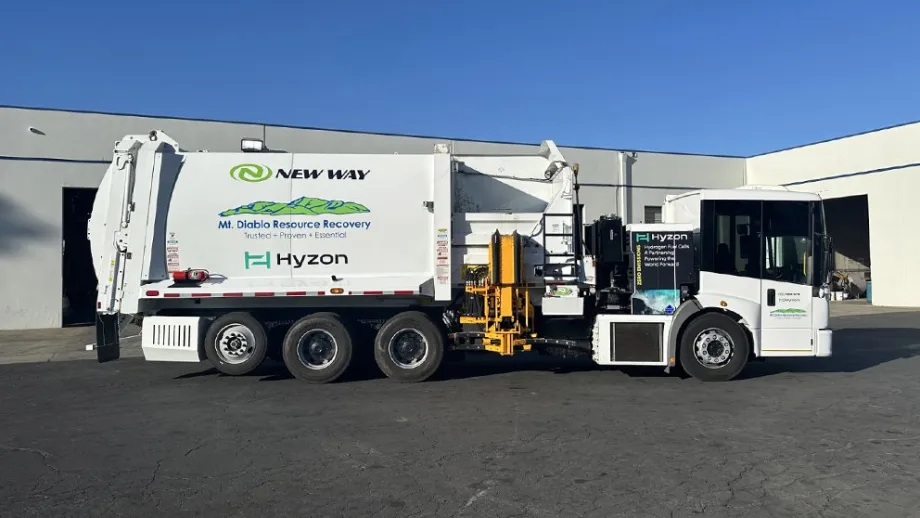
Hyzon’s refuse collection Fuel Cell Electric Truck is built in partnership between Hyzon and New Way Trucks, a privately held, industry-leading refuse truck body manufacturer.
Photo: Hyzon
2 min to read
Hyzon announced the completion of a successful trial of its refuse collection Fuel Cell Electric Truck (FCET)
— developed in partnership with New Way Trucks
— with Mt. Diablo Resource Recovery (MDRR).
The trial tested the hydrogen-powered vehicle on routes in parts of California including Concord, Pittsburg, Oakley, Rio Vista, and parts of unincorporated Contra Costa.
Working to Drive Decarbonization, Without Sacrificing Performance
Hyzon’s hydrogen fuel cell systems demonstrated consistent power over an expected range of at least 125 miles, including at least 1,300 cart lifts along with trips to the transfer station, at up to 300% increased fuel efficiency over traditional diesel trucks. Hyzon’s trial program has shown range that in some route structures projects to over 1,500 cart lifts on a single fill of hydrogen.
Alongside trials of its refuse collection FCETs, Hyzon is advancing its Class 8 200kW FCET trial program. The company remains on track to complete customer trials with over 30 major fleets across both platforms between July 2024 and February 2025.
A Milestone in Zero-Emission Technology for Waste and Recycling Fleets
This was Hyzon’s tenth trial since July 2024 across both of its Class 8 and refuse collection FCETs, all of which have been successful in meeting or exceeding the expectations set forth by the potential customer, according to the company.
“We are proud to partner with Mt. Diablo Resource Recovery in pioneering the use of hydrogen fuel cell technology for heavy-duty waste management,” said Hyzon Chief Executive Officer (CEO) Parker Meeks. “This successful trial showcases the potential for hydrogen to drive meaningful decarbonization, without sacrificing performance, in challenging sectors like waste and recycling. We are excited to be driving forward hydrogen-powered solutions in collaboration with our customers that deliver both environmental and operational benefits,” added Meeks.
Hyzon’s refuse collection FCET is built in partnership between Hyzon and New Way Trucks, a privately held, refuse truck body manufacturer.
More Operations

Is Keeping Older Fleet Vehicles Really Saving Money?
Is keeping vehicles longer saving money, and what happens when a diagnostic test points to the wrong fix?
Read More →
How Smart Fleet Strategy Can Help Local Government Agencies Do More with Less
Keeping a vehicle longer may ease this year’s budget, but what does it cost the next one? A closer look at fleet decisions can reveal opportunities to reduce spending while protecting essential services.
Read More →
Connect with Government Fleet on LinkedIn
From industry news and fleet management strategies to conversations with peers, Government Fleet's LinkedIn page offers public-sector fleet professionals another way to stay informed and connected.
Read More →
Town of Queen Creek Named Most Successful Fleet Award Winner of Inaugural RTA Fleet Success Awards
Five fleets were honored at RTA Connect 2026 in Chicago for excellence across resource efficiency, intentional culture, risk management, and stakeholder satisfaction.
Read More →
Sponsored•October 14, 2026
A buyer's guide to fleet management software in 2027
Buying fleet management software in 2027 means looking beyond features and price. As fleet operations, technology and expectations evolve, this guide explores what today’s fleet professionals should consider when choosing a system that can deliver value now and adapt to what comes next.
Read More →
Hazard Alerts, Fleet Car Sales Rise and a New Shuttle Concept
Fleet car sales doubled, but the bigger picture tells a different story in this week’s roundup.
Read More →
How St. Johns County Turned Fleet Data Into Better Replacement Decisions
St. Johns County, Florida, had fleet data, but turning it into reliable decision guidance was another matter. Instead of starting over with a new fleet management system, the county connected existing tools and built a scoring system that gives managers an objective look at fleet health.
Read More →
Fleet Forward Conference Introduces One-Day Passes for 2026
New one-day registration lets fleet professionals attend Tuesday, Wednesday, or Thursday, with passes available for $249.
Read More →
ENC Unveils its ZAVIR Medium-Duty Shuttle
Two variants of the concept shuttles were revealed: a low-floor configuration and a high-floor configuration.
Read More →
Could Your Next Fleet Technician Start as an Intern?
What if your next technician hasn’t worked in a fleet shop yet? What fleets are doing to free up time.
Read More →