




Related: Harvey & Irma: The Fleet Impact
Hurricane Florence & the Impact on Fleet Fueling
Hurricane Florence swept through several parts of the eastern U.S. last week, causing extensive damage and flooding. And when natural disasters hit, fuel is a common concern.
by Sadiah Thompson
September 19, 2018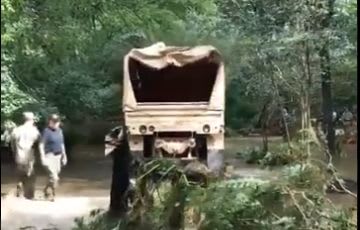
Photo via S.C. National Guard/twitter
3 min to read
#SCGuard Soldiers from 4-118 Combined Arms Battalion remove debris from a driveway that had trapped local residents during high water evacuation in Chesterfield #SC (📹courtesy of 1st Sgt. Eric Gallman, 4-118 CAB) #TeamSCpic.twitter.com/1DptBLSVk1
— S.C. National Guard (@SCNationalGuard) September 17, 2018
Hurricane Florence swept through several parts of the eastern U.S. last week, causing extensive damage and flooding — resulting in the deaths of at least 35 people, according to CBS News. The hurricane — re-categorized as a post-tropical cyclone as of Tuesday — also left many without power, with outages reported across the region.
Ahead of the storm, crews in North Carolina readied hurricane response equipment, topped off fuel sites, and prepped additional response vehicles. Public agencies from nearby states began sending vehicles and crew. Still, when natural disasters hit, fuel is a common concern.
North Carolina, South Carolina, Virginia, and Georgia were granted fuel waiver requests by the Environmental Protection Agency to have better access to fuel before, during, and after the hurricane.
“For the last week or so, we’ve been talking about the storm, so we kind of had a little advanced warning to see that it was starting to build, and the track it seemed to be going on,” said Bernie Kavanagh, senior vice president and general manager of large fleet at WEX Inc.
This is key to ensuring a fleet’s hurricane preparedness, which Kavanagh said should be broken up into three categories: pre-hurricane, during the storm, and post-hurricane.
“I think the government, state folks, are really good on the pre-side. They typically will have some sort of emergency fueling plan in place,” Kavanagh said. “So in the middle of a storm you’re not going to call someone and say can I get some bulk fuel delivered. You missed the window there, so you need to plan for that stuff ahead.”
However, not all fleets are this prepared, and the amount of preparation required may vary based on the fleet’s location.
“Most of them will have some sort of emergency plan in place, where days ahead of the event they’ll start to move vehicles, bring fuel in, they’ll fill up private tanks that they have, they’ll make sure they can house vehicles in non-impacted areas, move vehicles to higher ground. They kind of have a routine that they go through to prepare as best they can,” Kavanagh said.
Wilmington, one of the coastal cities hit hardest by Florence in North Carolina, has since been cut off from the rest of state due to heavy flooding and limited access to roads.
Cape Fear Public Utility in the area issued a statement on Sunday that it was in critical need of fuel to keep water treatment plants running. The utility warned that if it did not receive the needed fuel within the next 48 hours, it would be forced to halt water service, leaving many without drinking water. The New Hanover Emergency Operations Center, however, identified a reliable source of fuel for the utility within hours and worked to supply enough generators and equipment to last through the duration of the recovery process.
[Update 9/19] WEX confirmed that, as of Wednesday morning, its fleet cards are working and fleets are using them in several Southeast states, including North and South Carolina. Fuel transactions in Wilmington, NC, were confirmed based on real-time data collected by WEX Connect software.
More Operations

How St. Johns County Turned Fleet Data Into Better Replacement Decisions
St. Johns County, Florida, had fleet data, but turning it into reliable decision guidance was another matter. Instead of starting over with a new fleet management system, the county connected existing tools and built a scoring system that gives managers an objective look at fleet health.
Read More →
Fleet Forward Conference Introduces One-Day Passes for 2026
New one-day registration lets fleet professionals attend Tuesday, Wednesday, or Thursday, with passes available for $249.
Read More →
ENC Unveils its ZAVIR Medium-Duty Shuttle
Two variants of the concept shuttles were revealed: a low-floor configuration and a high-floor configuration.
Read More →
Could Your Next Fleet Technician Start as an Intern?
What if your next technician hasn’t worked in a fleet shop yet? What fleets are doing to free up time.
Read More →
How Phoenix Is Building Its Next Generation of Fleet Technicians
With more than 8,000 vehicles and pieces of equipment to maintain, the City of Phoenix could not afford to wait for fully trained technicians to walk through the door. Instead, they revamped their entire workforce strategy and showed how public fleets can create their own talent pipeline while preparing existing employees for increasingly complex vehicles.
Read More →
What’s Slowing Your Fleet Down?
Could a change in how work gets done help your fleet return vehicles to service sooner?
Read More →
Can Public Fleets Trust the Data Driving Their Decisions?
Public fleets have more data than ever, but inconsistent records and missing information can still undermine maintenance, replacement, and cost decisions.
Read More →
John Deere Introduces 40 P-Tier Compact Excavator
John Deere is adding a compact excavator designed for crews that need to move equipment between jobsites and handle multiple types of work with one machine. The 40 P-Tier weighs less than 10,000 pounds and offers configurable hydraulics, attachment options, and connected fleet-management capabilities.
Read More →
How Leading Fleets Improve and Why Business Plans Matter
This week, we look at what past Leading Fleet winners can teach us about making progress, plus how to build a business plan your fleet will actually use.
Read More →
Nominate a Fleet Leader for the 2027 Public Fleet Hall of Fame
Do you know a fleet leader who has made a lasting impact on the industry? Nominate this fleet professional for the 2027 Public Fleet Hall of Fame.
Read More →