





Women in Public Fleet Management: The State of the Industry
Highlighting NYC DCAS' New Dep. Chief Fleet Management Officer
Tamika Johnson manages Fleet Acquisitions and Administration for the City fleet and oversees the division’s hiring and human capital efforts.
February 15, 2024
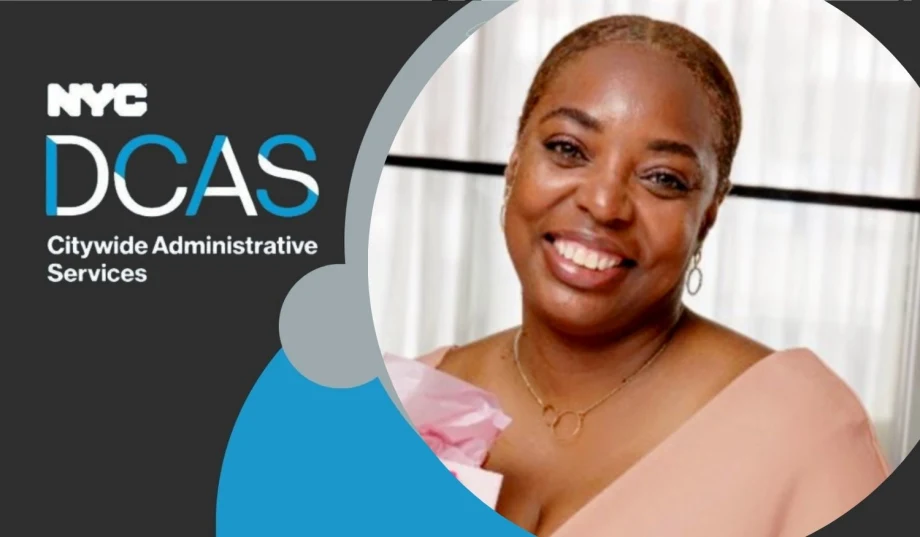
Tamika Johnson manages Fleet Acquisitions and Administration for the City fleet and oversees the division’s hiring and human capital efforts.
Photo: NYC DCAS | Government Fleet
3 min to read
In October 2023, New York City Department of Citywide Administrative Services (DCAS) promoted then-Director of Fleet Acquisitions and Administration Tamika Johson to deputy chief fleet management officer. Now, Johnson manages Fleet Acquisitions and Administration for the city fleet and oversees the division’s hiring and human capital efforts.
Before joining the city, Johnson worked as a management trainee for Budget Rental, ran the shop, and rented out cars. Johnson began her city career as a contract monitoring supervisor in 1998 at the Human Resources Administration (HRA).
After seven years at HRA, Johnson started working for DCAS in the Office of Fleet Administration (OFA) in 2005. Johnson was a senior fleet analyst in this position and helped coordinate DCAS auctions.
Through Mayoral Executive Order 161 of 2012, the NYC Fleet replaced OFA. Johnson assumed the role of executive assistant to the chief fleet officer and was promoted to director of Fleet Acquisitions and Administration in 2014 before receiving her promotion to deputy chief fleet officer last year.
According to Chief Fleet Officer and DCAS Deputy Commissioner Keith Kerman explained, DCAS has had up to two deputy chief fleet management officers in the past. Eric Richardson is the deputy chief for Fleet Systems and Safety. Tamika Johnson is the newly-appointed deputy chief for Fleet Acquisitions and Administration
Manging One of the Most Critical and Challenging Areas of Fleet Policy
Since FY14, an average of $328 million has been spent annually procuring fleet units for the city’s fifty agencies, according to DCAS. The specialized emergency trucks for DSNY, FDNY, DOT, DEP, and NYPD are the most expensive. Since FY14, Johnson has helped coordinate over $3.3 billion in fleet replacements and renewals, over 28,000 vehicles.
With every purchase, Johnson must ensure that agencies stay within their allowed fleet counts, and Johnson enforces our environmental policies on electric and most fuel-efficient vehicles. Johnson checks that replacements or new needs are needed and reviews all requests for SUVs and fleet upsizes.
Johnson also monitors all requests for rentals and leases. Each week, Johnson, Chief of Staff Sherry Lee, and the Chief Fleet Officer meet to plan out the fleet of NYC’s future, providing agencies with what they need but not always what they initially request or want. Johnson has played a vital role in NYC building one of the largest electric and alternative fuel fleets in the United States.
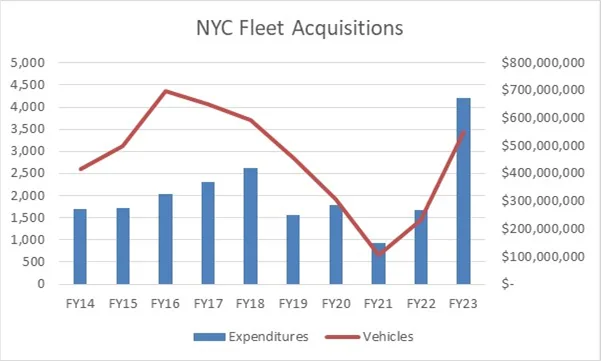
Since FY14, an average of $328 million has been spent annually procuring fleet units for the city’s fifty agencies.
Photo: NYC DCAS
Driving Equity Initiatives and Workforce Development
Johnson also leads the Human Capital work for NYC Fleet. She coordinates the hiring and promotions process and ensures employees are current on required training.
Recently, Johnson has served as an REI Champion as part of DCAS’ Race Equity Initiative. She led and taught Bystander Training, which teaches employees to engage and assist in ensuring respectful and appropriate interactions in the workplace, to be upstanders and not bystanders.
Johnson took on a new challenge of public speaking and was part of a team that trained over 1,200 DCAS staff members. Johnson is also leading DCAS Automotive Internships initiatives, supporting students on the path to employment.
“Congratulations to Tamika Johnson for her recent promotion to Deputy Chief Fleet Officer for Acquisitions and Administration and today’s spotlight. I have been Johnson’s work colleague for more than 15 years, and her dedication to her city career, family, friends, and the people of the City of New York is unparalleled,” said Deputy Chief Fleet Officer Eric Richardson.
More Operations

Is Keeping Older Fleet Vehicles Really Saving Money?
Is keeping vehicles longer saving money, and what happens when a diagnostic test points to the wrong fix?
Read More →
How Smart Fleet Strategy Can Help Local Government Agencies Do More with Less
Keeping a vehicle longer may ease this year’s budget, but what does it cost the next one? A closer look at fleet decisions can reveal opportunities to reduce spending while protecting essential services.
Read More →
Connect with Government Fleet on LinkedIn
From industry news and fleet management strategies to conversations with peers, Government Fleet's LinkedIn page offers public-sector fleet professionals another way to stay informed and connected.
Read More →
Town of Queen Creek Named Most Successful Fleet Award Winner of Inaugural RTA Fleet Success Awards
Five fleets were honored at RTA Connect 2026 in Chicago for excellence across resource efficiency, intentional culture, risk management, and stakeholder satisfaction.
Read More →
Sponsored•October 14, 2026
A buyer's guide to fleet management software in 2027
Buying fleet management software in 2027 means looking beyond features and price. As fleet operations, technology and expectations evolve, this guide explores what today’s fleet professionals should consider when choosing a system that can deliver value now and adapt to what comes next.
Read More →
Hazard Alerts, Fleet Car Sales Rise and a New Shuttle Concept
Fleet car sales doubled, but the bigger picture tells a different story in this week’s roundup.
Read More →
How St. Johns County Turned Fleet Data Into Better Replacement Decisions
St. Johns County, Florida, had fleet data, but turning it into reliable decision guidance was another matter. Instead of starting over with a new fleet management system, the county connected existing tools and built a scoring system that gives managers an objective look at fleet health.
Read More →
Fleet Forward Conference Introduces One-Day Passes for 2026
New one-day registration lets fleet professionals attend Tuesday, Wednesday, or Thursday, with passes available for $249.
Read More →
ENC Unveils its ZAVIR Medium-Duty Shuttle
Two variants of the concept shuttles were revealed: a low-floor configuration and a high-floor configuration.
Read More →
Could Your Next Fleet Technician Start as an Intern?
What if your next technician hasn’t worked in a fleet shop yet? What fleets are doing to free up time.
Read More →