





Focus on Condition of Brake Lining, Pads During Brake Safety Week
During Brake Safety Week, motor vehicle inspectors emphasized the importance of brake systems by conducting inspections of motor vehicle brake system components.
November 2, 2023
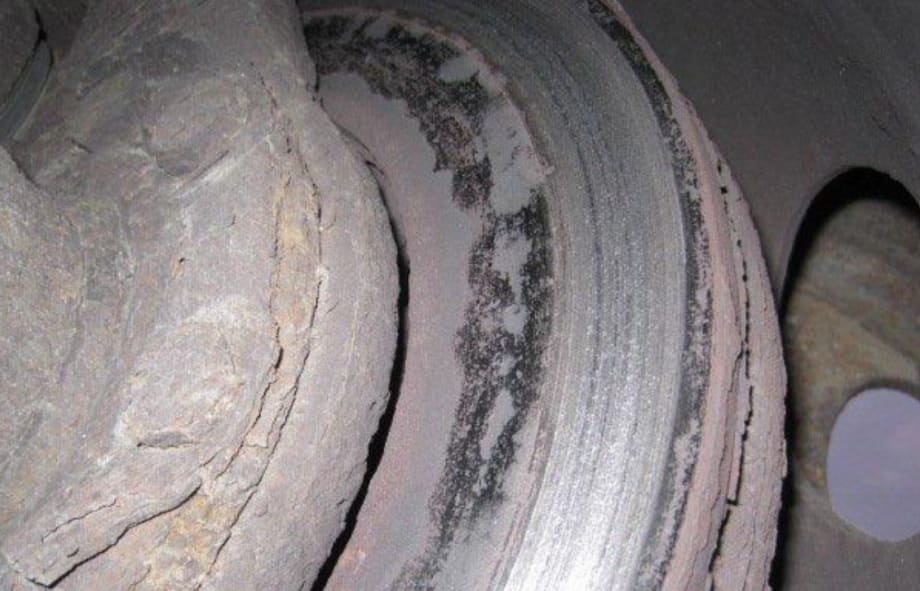
Metal to metal contact.
Photo: CVSA
3 min to read
Inspectors in Canada, Mexico and the U.S. conducted 18,875 motor vehicle inspections for the Commercial Vehicle Safety Alliance’s (CVSA) 2023 Brake Safety Week.
For the weeklong inspection and enforcement initiative, inspectors focused on the brake systems and components of commercial motor vehicles and submitted brake-related data to the Alliance.
Brake-Related Out-of-Service Violations
Of the 18,875 total commercial motor vehicles inspected, 2,375 (12.6%) were removed from roadways because inspectors discovered brake-related out-of-service violations, such as broken brake drums, loose air tanks, corroded holes in a spring brake housing, inoperative tractor protection valves, and others.
Of the 2,375 vehicles that were placed out of service, 295 (12.4%) had steering axle brake violations, 1,127 (47.5%) had stand-alone brake violations and 1,394 (58.7%) failed the 20% defective brakes criterion, which states that a vehicle is out of service if the number of defective brakes is equal to or greater than 20% of the service brakes on the vehicle or combination.
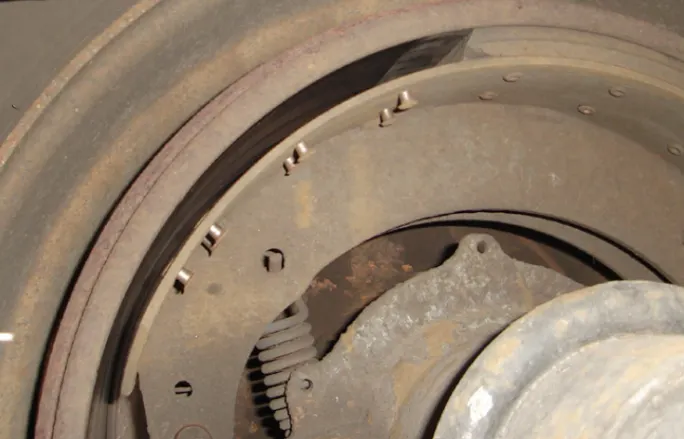
Missing lining block.
Photo: CVSA
Focusing on Brake Lining and Pad Issues
The focus of this year’s Brake Safety Week was on the condition of the brake lining and pad. Brake lining and pad issues may result in vehicle violations and could affect a motor carrier’s safety rating.
When inspecting the vehicle components of commercial motor vehicles, inspectors checked brake lining/pads for cracks, voids and contamination. They also looked for loose, missing or worn brake lining/pads. A total of 379 power (tractor) units and 261 towed (trailer) units had lining/pad violations.
Although lining/pad violations are not necessarily out-of-service violations, CVSA selected lining/pads as the focus for this year’s Brake Safety Week because brake lining/pad violations still affect a motor carrier’s safety rating. If left unaddressed, brake lining/pad violations may lead to more serious problems and can be out-of-service violations if they are on the steering axle or combined with other brake violations for the 20% brake criterion.
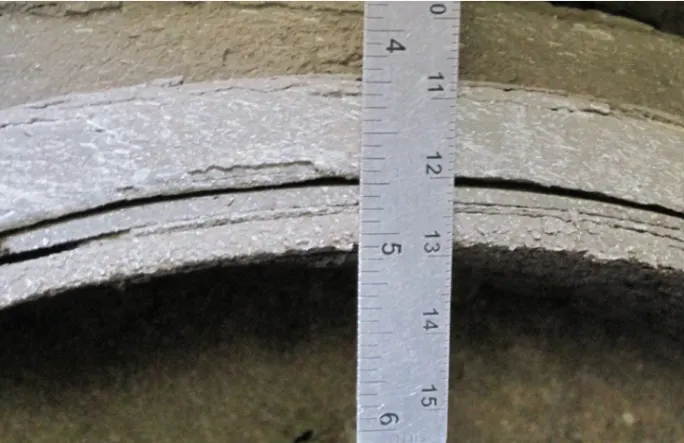
Worn out linings.
Photo: CVSA
Performance-Based Brake Testers
Eleven states with performance-based brake testers (PBBT) participated in this year’s Brake Safety Week by conducting inspections using their PBBTs. A PBBT is a machine that assesses the braking performance of a vehicle.
Of the 397 PBBT inspections, there were 18 failures, which is a 4.5% out-of-service rate. Ninety-five vehicles passed with at least one wheel below the 43.5% threshold. U.S. federal regulations and the North American Standard Out-of-Service Criteria require a minimum braking efficiency of 43.5%.
10 Brake Lining and Pad Tips
Here are some tips from vehicle inspectors to help ensure brake linings and pads have no issues during a roadside inspection.
Inspect visible portions of the brake lining and pads as part of your pre- and post-trip inspections.
Look for signs of missing lining, such as grooves in the drum from rivet contact.
Look at the shoe-to-drum clearance and ensure there is adequate lining on the shoe.
Look for any signs of leaks from the hub or other components that may be contaminating the lining/pad surface.
Ensure there are no missing lining blocks.
Check for visible cracks or voids in the lining block.
Check for any exposed rivets or lining blocks that look loose on the shoe.
On disc brakes, pay particular attention to the condition of the rotor, such as heavily rusted rotors across the entire friction surface on either side or metalto-metal contact.
Make sure all repairs are consistent with the brake manufacturer’s requirements and guidelines.
Note any issues in your driver vehicle inspection reports and report them to the motor carrier to have the defective linings/pads repaired
More Operations

Is Keeping Older Fleet Vehicles Really Saving Money?
Is keeping vehicles longer saving money, and what happens when a diagnostic test points to the wrong fix?
Read More →
How Smart Fleet Strategy Can Help Local Government Agencies Do More with Less
Keeping a vehicle longer may ease this year’s budget, but what does it cost the next one? A closer look at fleet decisions can reveal opportunities to reduce spending while protecting essential services.
Read More →
Connect with Government Fleet on LinkedIn
From industry news and fleet management strategies to conversations with peers, Government Fleet's LinkedIn page offers public-sector fleet professionals another way to stay informed and connected.
Read More →
Town of Queen Creek Named Most Successful Fleet Award Winner of Inaugural RTA Fleet Success Awards
Five fleets were honored at RTA Connect 2026 in Chicago for excellence across resource efficiency, intentional culture, risk management, and stakeholder satisfaction.
Read More →
Sponsored•October 14, 2026
A buyer's guide to fleet management software in 2027
Buying fleet management software in 2027 means looking beyond features and price. As fleet operations, technology and expectations evolve, this guide explores what today’s fleet professionals should consider when choosing a system that can deliver value now and adapt to what comes next.
Read More →
Hazard Alerts, Fleet Car Sales Rise and a New Shuttle Concept
Fleet car sales doubled, but the bigger picture tells a different story in this week’s roundup.
Read More →
How St. Johns County Turned Fleet Data Into Better Replacement Decisions
St. Johns County, Florida, had fleet data, but turning it into reliable decision guidance was another matter. Instead of starting over with a new fleet management system, the county connected existing tools and built a scoring system that gives managers an objective look at fleet health.
Read More →
Fleet Forward Conference Introduces One-Day Passes for 2026
New one-day registration lets fleet professionals attend Tuesday, Wednesday, or Thursday, with passes available for $249.
Read More →
ENC Unveils its ZAVIR Medium-Duty Shuttle
Two variants of the concept shuttles were revealed: a low-floor configuration and a high-floor configuration.
Read More →
Could Your Next Fleet Technician Start as an Intern?
What if your next technician hasn’t worked in a fleet shop yet? What fleets are doing to free up time.
Read More →