




Florida Fleets Spared from Hurricane Irma Damage
Hurricane Irma caused extensive damage and flooding across the State of Florida. As agencies begin recovery efforts, public fleets are reporting minimal damage to vehicles and facilities.
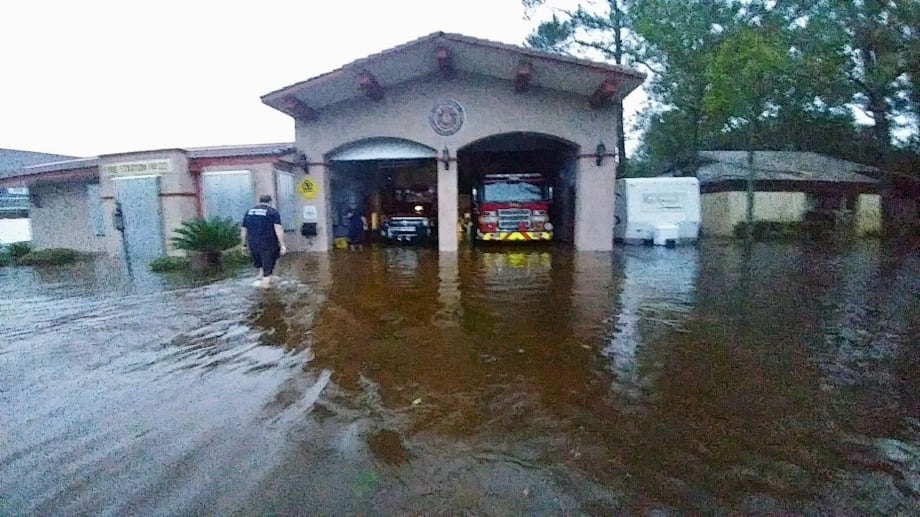
Flooding at a City of Jacksonville fire station. Photo courtesy of City of Jacksonville
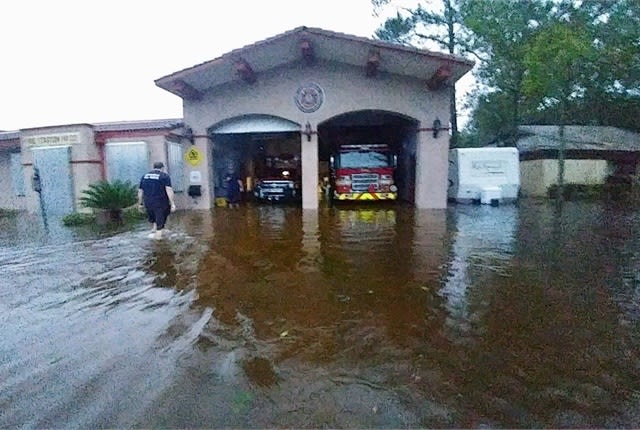
Flooding at a City of Jacksonville fire station. Photo courtesy of City of Jacksonville
Hurricane Irma, which swept through Florida a little over a week ago, caused extensive damage and flooding in the state, and the death toll in the U.S. is at 38 as of Sept 14, according to Reuters. The hurricane also left many without power — as of Thursday morning, more than 2.5 million accounts across the state (24% of all accounts) still did not have power.
As agencies begin recovery efforts, public fleets in Florida are reporting minimal damage to vehicles and facilities.
The Hillsborough County Fleet Management Department was well prepared for Irma. The fleet had no vehicle damages and only minor damage to its facility. Fleet staff members were at the County Emergency Operations Center from activation and will stay until shutdown, and coordinated fuel resupply and vehicle response requirements.
“We were fortunate that the county did not suffer more damage,” said Robert Stine Jr., CAFM, CPFP, fleet director. “It could have been much worse.”
Sarasota County had very minimal fleet damages and Fleet Manager Ron Kennedy, CEM, CPFP, said loss of power and getting fuel into the state were his biggest challenges.
Fleet staff was responsible for keeping vehicles on the road during and after the hurricane, but also had unrelated roles related to emergency operations. Kennedy said technicians were delivering and unloading shelter equipment and animal cranes, delivering water and sandbags, and cutting up fallen trees.
“Whatever was needed to get Sarasota back on its feet and serve the citizens is what we do while still keeping the fleet on the road,” he said. “Not a small task!”
Miami-Dade County suffered power losses, some flooding, and one vehicle with notable damage from a downed tree. Alex Alfonso, fleet management division director for Miami-Dade County, said one of the biggest challenges was maintaining power at facilities and maintaining communication for the fleet's automated fuel sites. In several cases, the fleet had to deploy personnel to manually dispense fuel to county vehicles. Even today, the county continues to deal with rolling communications blackouts.
Fleet staff mobilized before and after the storm to repair failing equipment and repair and replace tires damaged by debris. The county placed emphasis on providing fuel to its user departments across its 29 fueling facilities. In addition, fleet provided fuel fromm its bulk reserves for several neighboring public and private entities.
The City of Jacksonville fleet found water damage related to the storm in 10 vehicles so far, which are currently under asssessment. In addition to keeping public safety and public works vehicles operational, the fleet provided fuel to various agencies around the city.
The City of Lakeland fleet also avoided major damage. While there was extensive damage to city facilities in the form of roof and water damage, the fleet building, fuel station, and yard were largely unharmed, Gary McLean, CFPP, fleet manager, reported.
“We managed to keep fuel integrity the entire time we’ve been back open, resulting from our public-private partnership with our dedicated fuel vendor,” McLean said. The vendor made fuel allocations to the city its number one priority, allowing city crews to get service up very quickly.
The City of Tampa had minimal damage to its facility, and fleet vehicle damage is still being assessed. However, fleet-controlled motor pool vehicles are safe as they were relocated to higher ground, Connie White-Arnold, fleet manager, reported.
Fleet has assigned mobile maintenance teams — each consisting of two ASE-certified technicians and a fully stocked mobile truck, in addition to personal gear to sustain a 72-hour stay — to each of the city’s three emergency response centers. In addition, a 12-man crew sheltered in place at the fleet maintenance facility before and during the hurricane for rapid support of tires, parts, and maintenance beyond the mobile teams’ capabilities.
Fleet staff also played a substantial role in emergency fuel planning and delivery, monitoring fuel at seven sites before and during the storm. The city’s emergency fuel resiliency program had received kudos from the Department of Homeland Security for its fuel availability during and after Hurricane Irma, White-Arnold said.
In West Palm Beach, Mario Guzman, CAFM, general services manager, said the city only had minor damage on a couple of its vehicles. However, there was infrastructure damage — two fire stations were damaged as well as two garage doors at the fleet facility. Although fuel dispensers are still working, the fuel site awning was damaged and a new 600-gallon diesel exhaust fluid (DEF) tank was moved.
“The wind was so strong it blew it into the center lane,” Guzman explained. “We hadn’t used it yet but we had it bolted down.” A crew moved the tank the next day so vehicles could get in to fuel.
Guzman said he was able to get a fuel delivery two days before the storm first hit, and two days after. Most of the technicians are working on flat tires and batteries to support emergency response and recovery efforts.
Although Palm Beach County has yet to report its damage, Palm Beach County Fire Rescue also reported no damage to trucks. The fleet shop shut down at 45 mph sustained winds, and staff spent their time keeping generators running after the storm knocked out power to hundreds of thousands of residents, said Tim Calhoun, CAFM, fleet director.
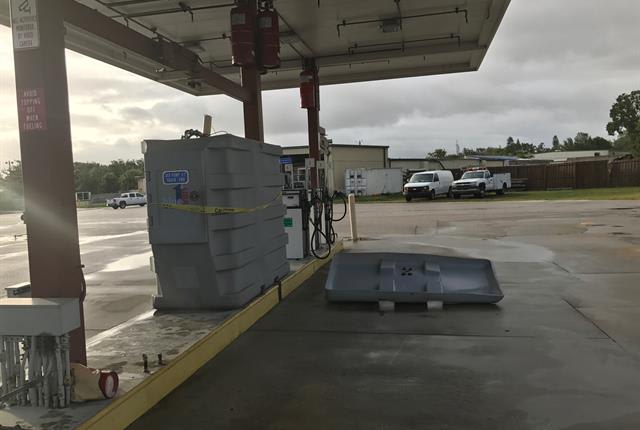
Manatee County reported minor fleet infrastructure damage. Photo courtesy of Manatee County
In Manatee County, Michael Brennan, CEM, fleet manager said there were only minor damages to the fleet infrastructure and some vehicular damage.
“We went into the storm with 99.8% fleet availability,” he said. “Great job to my team to have the fleet ready on short notice.”
All pool and courtesy 4X4 trucks were issued out to staff for additional mobility to support field teams with fuel, water, food, and supplies, and some trucks are being used to transport water around the county and to other agencies. Three of the four fleet facilities were utilized as shelters for employees and families who live in mandatory evacuation zones, to house “first-in teams,” and to house ambulances, crew, and medical supplies.
“Times like these build character and resiliency within our community. We’ll come back stronger and safer in the long run,” he said.
More Operations

Hazard Alerts, Fleet Car Sales Rise and a New Shuttle Concept
Fleet car sales doubled, but the bigger picture tells a different story in this week’s roundup.
Read More →
How St. Johns County Turned Fleet Data Into Better Replacement Decisions
St. Johns County, Florida, had fleet data, but turning it into reliable decision guidance was another matter. Instead of starting over with a new fleet management system, the county connected existing tools and built a scoring system that gives managers an objective look at fleet health.
Read More →
Fleet Forward Conference Introduces One-Day Passes for 2026
New one-day registration lets fleet professionals attend Tuesday, Wednesday, or Thursday, with passes available for $249.
Read More →
ENC Unveils its ZAVIR Medium-Duty Shuttle
Two variants of the concept shuttles were revealed: a low-floor configuration and a high-floor configuration.
Read More →
Could Your Next Fleet Technician Start as an Intern?
What if your next technician hasn’t worked in a fleet shop yet? What fleets are doing to free up time.
Read More →
How Phoenix Is Building Its Next Generation of Fleet Technicians
With more than 8,000 vehicles and pieces of equipment to maintain, the City of Phoenix could not afford to wait for fully trained technicians to walk through the door. Instead, they revamped their entire workforce strategy and showed how public fleets can create their own talent pipeline while preparing existing employees for increasingly complex vehicles.
Read More →
What’s Slowing Your Fleet Down?
Could a change in how work gets done help your fleet return vehicles to service sooner?
Read More →
Can Public Fleets Trust the Data Driving Their Decisions?
Public fleets have more data than ever, but inconsistent records and missing information can still undermine maintenance, replacement, and cost decisions.
Read More →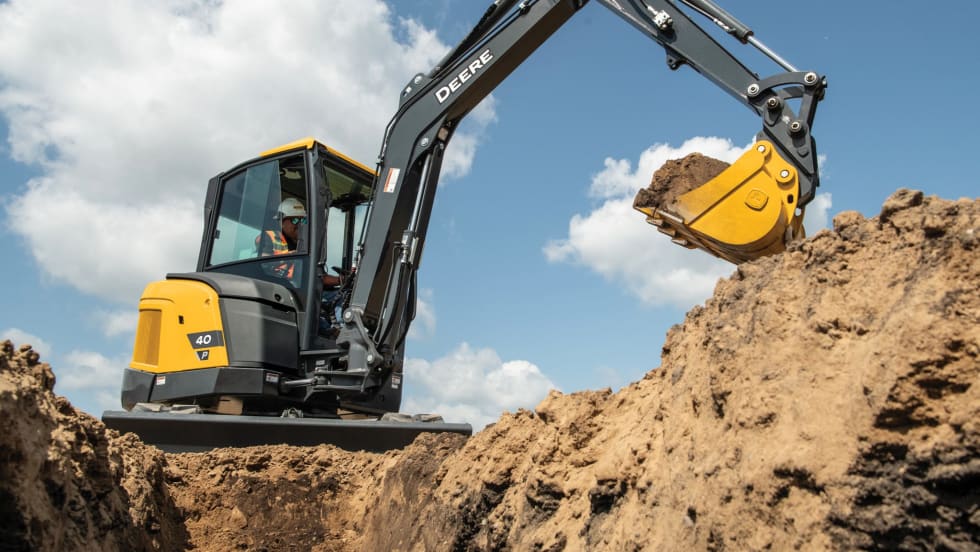
John Deere Introduces 40 P-Tier Compact Excavator
John Deere is adding a compact excavator designed for crews that need to move equipment between jobsites and handle multiple types of work with one machine. The 40 P-Tier weighs less than 10,000 pounds and offers configurable hydraulics, attachment options, and connected fleet-management capabilities.
Read More →
How Leading Fleets Improve and Why Business Plans Matter
This week, we look at what past Leading Fleet winners can teach us about making progress, plus how to build a business plan your fleet will actually use.
Read More →