





Read More: Planning the Perfect Handoff
Fleet Transitions: A Conversation with Salt Lake County's Ben Roueche
Ben Roueche, CPFP, has been named the associate director of fleets for Salt Lake County, Utah, after nine years as the fleet manager with the City of West Jordan.
December 7, 2023
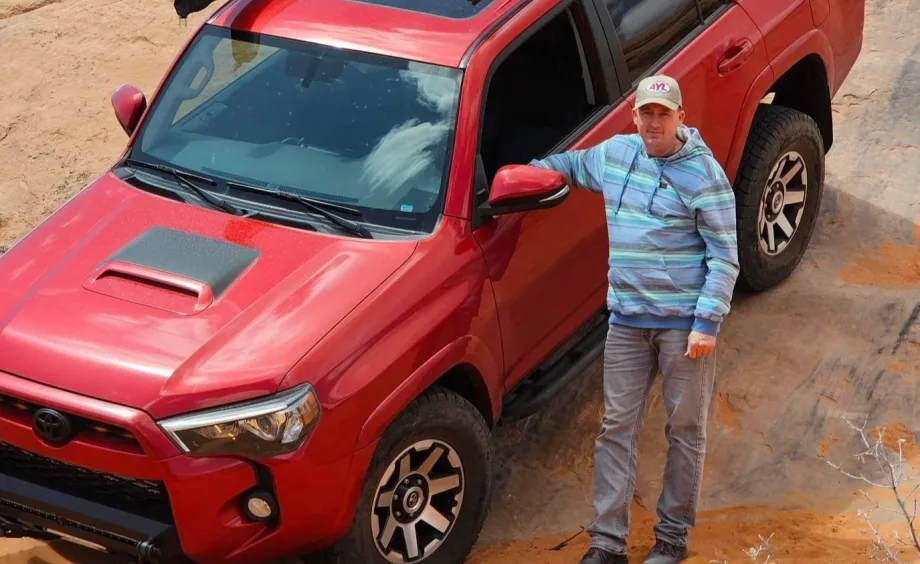
Ben Roueche, CPFP, has been named the associate director of fleets for Salt Lake County, Utah.
Photo: Ben Roueche
4 min to read
In the realm of professional shifts, the decision to begin a new position isn't just a change of scenery – it's a strategic move laden with responsibilities. As you gear up to tackle your new fleet, the baggage isn't just the skills you've accumulated; there's the added weight of crafting a seamless succession plan. Ben Roueche, CPFP, knows a thing or two about this.
Stepping into the shoes of associate director of fleets for Salt Lake County, Utah, after a commendable nine-year stint as the fleet manager with the City of West Jordan, Roueche provides practical insights into the complexities of transitioning from one job to another while looking back at what led him to fleet management.
Charting the Course: The Ascent into Fleet Management
Roueche’s introduction into the fleet world came early on. His first job was at an auto parts store where he worked while taking auto shop classes in high school.
“I thought that was my direction,” he recalled. Because of this, he enrolled in the General Motors ASEP program at his local university before going on to work in dealerships for a time. During this period he also found a passion for being involved in his community as a firefighter, which led to working for a fire equipment dealership as the service manager.
“My initial intent was staying close to public safety,” Roueche stated. “But I have found that it is the combination of community, customer service, and helping others succeed that has brought me to this point.”
With the city of West Jordan, Roueche was able to see over the process of bringing the average age of vehicles across the fleet from around 10 years to four years. On the technical side, he and the departments also brought in telematics and predictive maintenance to move the operation forward.
“Those accomplishments happened through teamwork and leadership,” he explained. “I was successful by strengthening my relationships with administration, finance, and department heads, and with the support of my team in the fleet department.”
Roueche added that this means understanding the people you’re working with. Their story, skill set, and background are all a part of the work dynamic and the more a fleet manager understands that uniqueness, the more successful a fleet will be.
“When you as a leader, can find ways to match up the strengths of all those differences, success will follow. And that goes beyond just the fleet department, extending out to police, fire, public works, administration.”
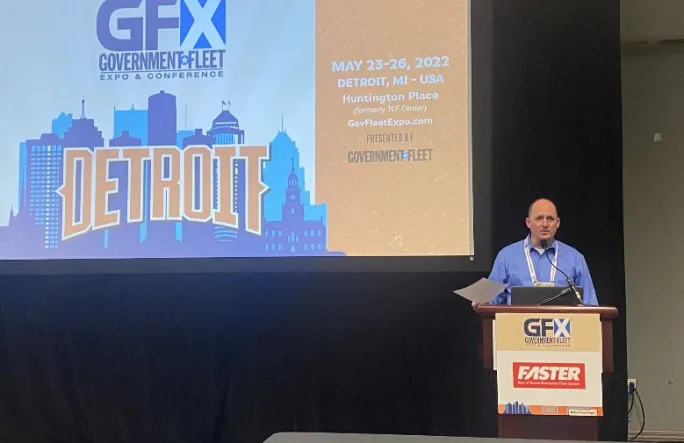
Looking back, Roueche considers people around him as a part of learning process and how to better lead a fleet.
Photo: Ben Roueche
Lessons Learned and Making a Smooth Transition
Looking back, Roueche considers people around him as a part of learning process and how to better lead a fleet.
“Everyone wants to share their ideas or opinions, but they still want you to be the expert,” Roueche noted. “This requires good people skills and good leadership.”
In the realm of lessons learned, what has stood out for him is that new technologies in the fleet world are rapidly transforming. For Roueche, that means individuals within the industry have to be open to this emerging technology while also being cautious with the trust placed on them by others to spend taxpayer money responsibly.
“Everyone wants to share their ideas or opinions, but they still want you to be the expert."
“I would say that both of those are ongoing for me and will be part of my new role,” he stated.
Looking back at his career path, Roueche wouldn’t change his fleet journey as it’s what he says led him to the career he’s in today. However, he does note that further education is always beneficial.
“I would like to have a degree in Public Administration, or Business Administration,” he stated. “I can get those now, but it would be easier for my younger self to accomplish that.”
As for the transition between these two roles, aka succession planning, Roueche believes this is a subject that is often talked about but frequently ignored. Roueche did not have someone lined up to fill his role and candidly added that he did regret not spending more time on preparation for succession. However, he has had enough time to leave notes and processes lined out for staff to cover and, once the right person is found to take over that position, he will still be close enough to help bring that individual up to speed once they are placed.
Within his new role, Roueche is focused on learning the new customers and his team. The transition also means a jump from 360 vehicles on the road at the city of West Jordan to more than 900 at Salt Lake County, where service is also provided to an additional 2,000 vehicles from outside agencies.
Looking at the Modern Fleet Manager Role Today
Roueche describes the modern fleet manager as someone who needs to have a dynamic personality, one that is able to move with the evolution of the public sector.
“We have always joked among ourselves that there is no “normal” day, no “slow season” in fleet,” he explained. “We’ll have some good best practices and metrics to give us structure, but the “rare” occurrences are becoming less so and fleet management isn’t as predictable as it once was. Our “cheese” is moving all the time now, and we must be able to embrace and even look forward to the next challenge from a different direction.”
More Operations
Is Keeping Older Fleet Vehicles Really Saving Money?
Is keeping vehicles longer saving money, and what happens when a diagnostic test points to the wrong fix?
Read More →
How Smart Fleet Strategy Can Help Local Government Agencies Do More with Less
Keeping a vehicle longer may ease this year’s budget, but what does it cost the next one? A closer look at fleet decisions can reveal opportunities to reduce spending while protecting essential services.
Read More →
Connect with Government Fleet on LinkedIn
From industry news and fleet management strategies to conversations with peers, Government Fleet's LinkedIn page offers public-sector fleet professionals another way to stay informed and connected.
Read More →
Town of Queen Creek Named Most Successful Fleet Award Winner of Inaugural RTA Fleet Success Awards
Five fleets were honored at RTA Connect 2026 in Chicago for excellence across resource efficiency, intentional culture, risk management, and stakeholder satisfaction.
Read More →
Sponsored•October 14, 2026
A buyer's guide to fleet management software in 2027
Buying fleet management software in 2027 means looking beyond features and price. As fleet operations, technology and expectations evolve, this guide explores what today’s fleet professionals should consider when choosing a system that can deliver value now and adapt to what comes next.
Read More →
Hazard Alerts, Fleet Car Sales Rise and a New Shuttle Concept
Fleet car sales doubled, but the bigger picture tells a different story in this week’s roundup.
Read More →
How St. Johns County Turned Fleet Data Into Better Replacement Decisions
St. Johns County, Florida, had fleet data, but turning it into reliable decision guidance was another matter. Instead of starting over with a new fleet management system, the county connected existing tools and built a scoring system that gives managers an objective look at fleet health.
Read More →
Fleet Forward Conference Introduces One-Day Passes for 2026
New one-day registration lets fleet professionals attend Tuesday, Wednesday, or Thursday, with passes available for $249.
Read More →
ENC Unveils its ZAVIR Medium-Duty Shuttle
Two variants of the concept shuttles were revealed: a low-floor configuration and a high-floor configuration.
Read More →
Could Your Next Fleet Technician Start as an Intern?
What if your next technician hasn’t worked in a fleet shop yet? What fleets are doing to free up time.
Read More →