




Faison Announced as Consultant and Spokesperson for Raybestos Brand Police System
MCHENRY, IL - Former Equipment Superintendent Ronnie Faison managed a 2,000-vehicle fleet for the North Carolina Highway Patrol.
MCHENRY, IL - It is possible no one in the world knows more about making a police car run safely then Ronnie Faison. For 35 years, the former equipment superintendent for the North Carolina Highway Patrol was responsible for managing one of the largest police pursuit fleets in the country.
After retiring from the Highway Patrol in March 2009, Faison became technical consultant and official spokesperson for the new Raybestos brand Police Braking System. Faison's relationship with Raybestos evolved over the final 15 years of his tenure, during which time he installed only Raybestos brand friction on every vehicle in and out of the NC Highway Patrol garage.
"The North Carolina Highway Patrol was involved in countless research and development tests with Raybestos product engineers at our driver training facility," said Faison. "They are constantly striving to improve their product and that's why Raybestos police brakes have always outperformed the competition, and why the new complete Police Braking System from Raybestos will perform unlike anything else in the fleet industry."
In his new role, Faison's responsibilities will include everything from product development and testing to public speaking engagements and appearing in Raybestos product spotlights and ads.
The components of the Police Brake System are designed to eliminate common problems that plague today's police vehicles. The system features the first aftermarket Police pad to earn D3EA® PPSV certification. The pads feature an enhanced formulation designed to reduce cost per mile.
The System's pursuit-proven rotors are created with Quiet on Arrival (QOA) Technology and an enhanced vane configuration that increases cooling air flow in the rotor. Also, the police-loaded calipers contain high-temperature silicone boots able to withstand double the temperature of normal EPDM rubber for a sustained period of time, therefore helping to prevent the "thermal events" many cruisers experience when a braking system overheats.
Designed to ensure officer safety while lowering a fleet's overall cost per mile, Faison believes this system will make a noticeable difference in the way a fleet operates.
"This system is the answer for any fleet manager that is faced with severe budgetary constraints but is still expected to provide the best brakes possible," Faison says. "This system is not only the best police-specific package available on the market today, but when you crunch the numbers you'll realize it's also the most economical."
Raybestos® brand brake parts are produced by affiliated companies in Affinia's Global Brake & Chassis Group, the leading manufacturer of braking systems in the transportation industry. Including everything from brake drums to rotors, pads, shoes and hydraulic parts, Raybestos brand brakes are the official brakes of NASCAR and the only brakes used by Joe Gibbs Racing in competition. In addition, the Raybestos brand is the preferred brake friction of the IndyCar Series and Firestone Indy Lights. For more information about Raybestos brakes, visit Raybestos.com.
Affinia Group Inc. is an innovative global leader in the design, manufacture, distribution and marketing of industrial grade products and services, including extensive offerings of aftermarket parts for automotive and heavy-duty vehicles. With more than $2 billion in annual revenue, Affinia has operations in North and South America, Europe, Asia and India. For more information, visit www.affiniagroup.com.
More Safety

New York City Expands Safety Technologies Across Municipal Fleet
Executive Order 19 moves intelligent speed assistance and pedestrian alerts from pilot programs toward standard fleet equipment, offering other public fleets a look at how safety technology can be tested, measured, and scaled.
Read More →
Hidden in Plain Sight: Fleet Compliance Risks
Fleet compliance isn't just about having policies — it's about consistently enforcing them. This practical guide reveals six hidden compliance risks common in public sector and shared fleet operations and outlines proven strategies to improve visibility, accountability, and audit readiness.
Read More →
5 Days Left to Submit Your 2026 Fleet Safety Award Nomination
Know a government fleet, safety, or risk manager who deserves recognition for making fleet operations safer? Nominations are open through Aug. 15.
Read More →
How the First 24 Hours Can Shape a Fleet Crash Response
How a strong accident response process helps government fleets move from the initial report to recovery while building a clearer record for what needs to change next.
Read More →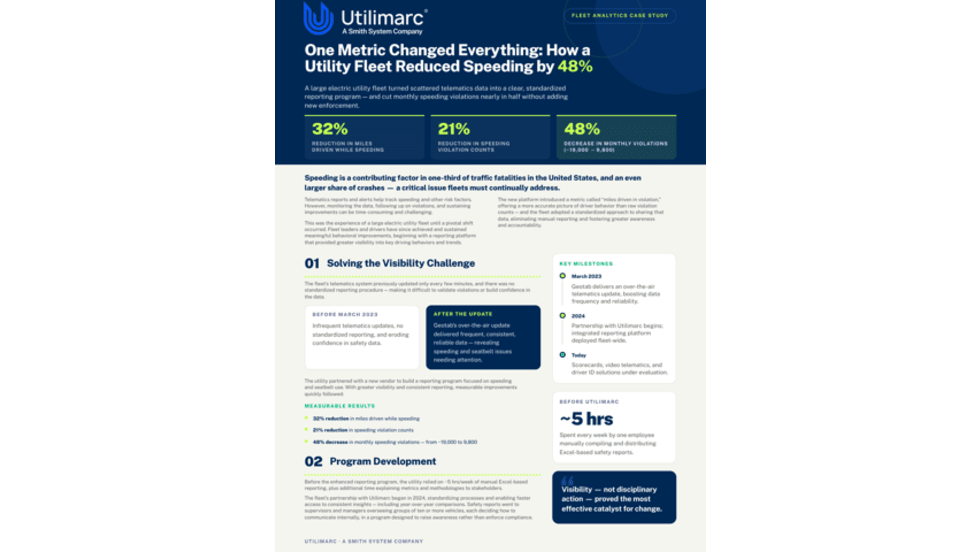
How Better Visibility Cut Speeding Violations by 48%
Fleet leaders don't need more data, they need clearer visibility into what the data is saying. This case study explores how one utility replaced speeding-event counts with a single metric — miles driven in violation — to strengthen safety and significantly reduce speeding violations.
Read More →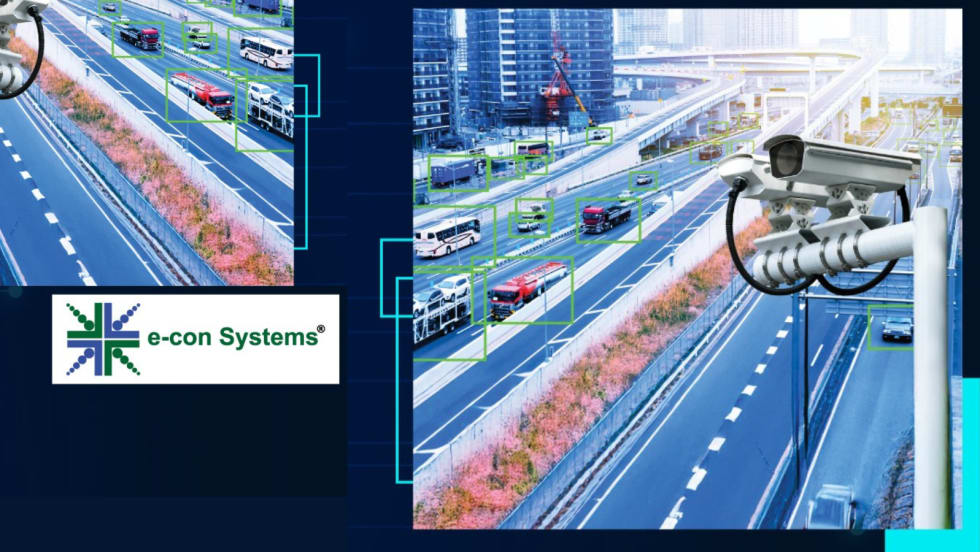
e-con Systems Expands AI Camera Tools for Traffic Monitoring
The systems support license plate recognition, traffic analytics, and video management for transportation agencies.
Read More →
King Township Pilot Links Driver Feedback to Reduced Speeding
How King Township, a best-in-class municipal fleet, reduced speeding by 10.9% and demonstrated a projected 349% ROI by putting safety ownership directly in drivers' hands.
Read More →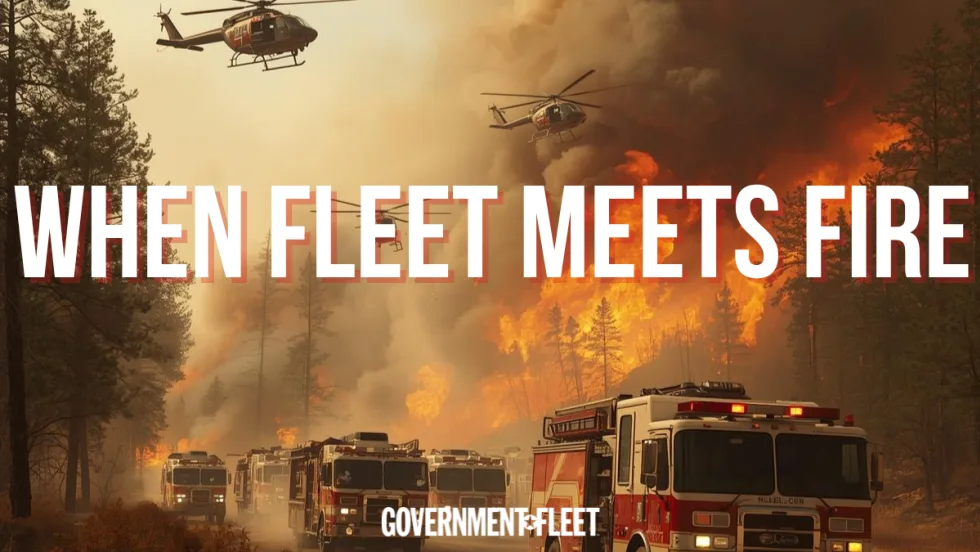
Beyond the Fireline: The Critical Role of Public Fleets in Wildfire Response
Behind every wildfire response is a complex network of vehicles, data, and decisions that must work in sync under extreme pressure. Global heating trends require strong fleet coordination and reliable communications to keep crews safe and operations running smoothly.
Read More →
How AI Is Transforming Public Fleet Safety - Part 1
AI-powered safety systems are helping public fleets tackle distracted driving by delivering real-time coaching and measurable behavior change behind the wheel. In part one of our Q&A, Nauto CEO Stefan Heck explains how agencies can improve safety, reduce costs, and navigate implementation challenges with AI-driven technology.
Read More →
Reducing Risk and Improving Safety in Public Sector Fleets with Advanced Driver-Assist Technology
Public sector fleets face increasing pressure to improve safety, reduce liability, and operate efficiently. See how advanced vehicle technologies are helping agencies protect drivers, the public, and their budgets.
Read More →