




Details Announced on 2015 Ford Super Duty
Ford introduced the 2015 F-Series Super Duty lineup September 26 at State Fair of Texas, featuring a second-generation 6.7L Power Stroke V-8 turbo diesel engine, increased towing capabilities, and a refreshed, Texas-inspired King Ranch model.
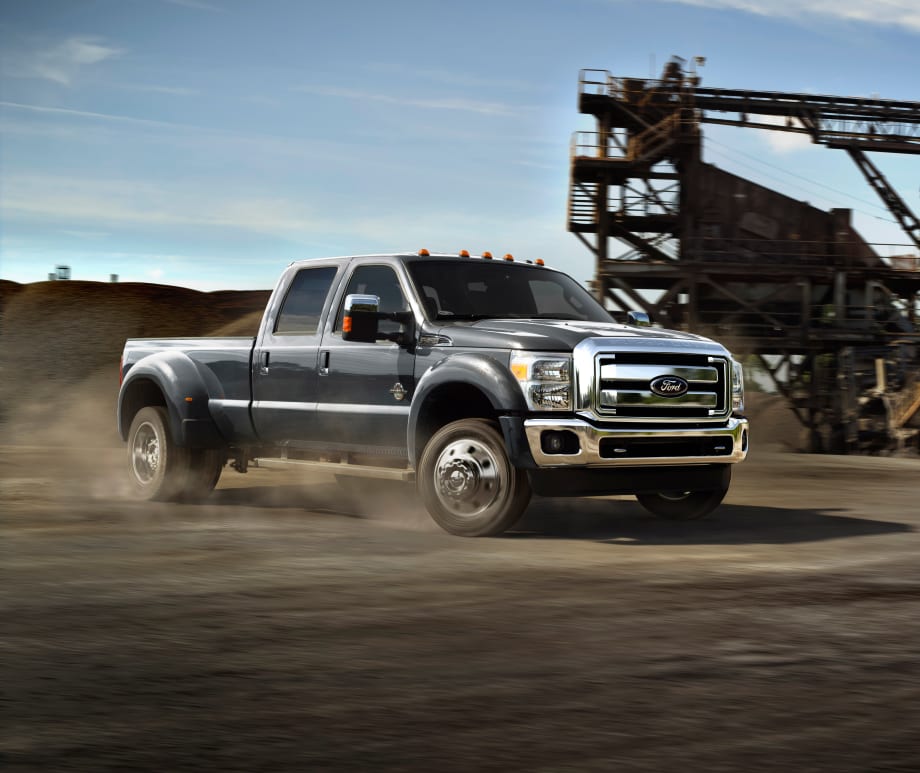
2015 Ford F-450 Super Duty
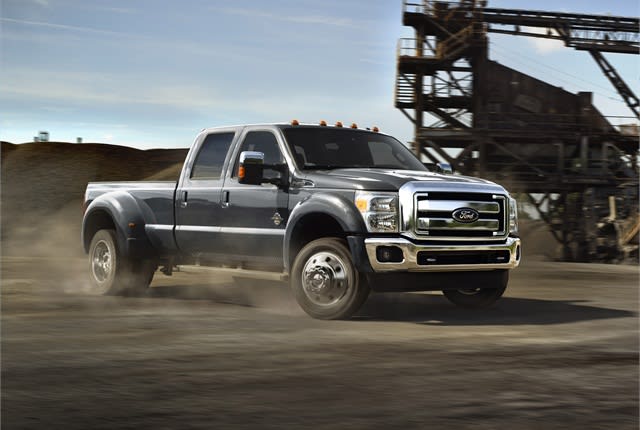
2015 Ford F-450 Super Duty
Ford introduced the 2015 F-Series Super Duty lineup September 26 at State Fair of Texas, featuring a second-generation 6.7L Power Stroke V-8 turbo diesel engine, increased towing capabilities, and a refreshed, Texas-inspired King Ranch model.
“Truck leadership means never resting, and the Super Duty team has been tireless in finding ways to improve the industry’s most popular heavy-duty pickups,” said Joe Hinrichs, executive vice president and president of The Americas, Ford Motor Company. “Super Duty diesel customers will benefit from improved performance and features backed by outstanding Built Ford Tough durability.”
Since the 6.7-liter Power Stroke V8 turbo diesel debuted in 2011, Ford engineers have listened to customers and continued to examine each component of the engine to develop improved performance.
Ford is the only heavy-duty pickup truck manufacturer that designs and builds its own diesel engine and transmission combination, ensuring the powertrain will work seamlessly with all chassis components and vehicle calibrations – from concept to execution. This approach also enables Ford engineers to optimize the vehicle’s performance across the entire lineup.
A key Ford innovation on the original 6.7-liter Power Stroke V8 turbo diesel was its so-called reverse-flow layout. The advanced design places the exhaust inside the engine’s V-shape while the air intake is positioned on the outside of the V. This segment-exclusive design naturally improves a variety of attributes:
Shorter airflow from the exhaust system to the turbocharger sitting between the engine’s cylinder banks improves turbo responsiveness – key to providing torque quickly to truck customers when they need it most
Positioning the turbo inside the engine’s valley helps isolate the engine’s hottest temperatures, improving performance and efficiency, while also reducing noise, vibration and harshness
Ford engineers built upon the many benefits of this design as they upgraded the Power Stroke. One improvement is a larger GT37 turbocharger that replaces the previous GT32 model, enabling more airflow to the engine to produce more power beyond today’s 400 horsepower and 800 lb.-ft. of torque.
More Operations
Could Your Next Fleet Technician Start as an Intern?
What if your next technician hasn’t worked in a fleet shop yet? What fleets are doing to free up time.
Read More →
What’s Slowing Your Fleet Down?
Could a change in how work gets done help your fleet return vehicles to service sooner?
Read More →
Can Public Fleets Trust the Data Driving Their Decisions?
Public fleets have more data than ever, but inconsistent records and missing information can still undermine maintenance, replacement, and cost decisions.
Read More →
How Phoenix Is Building Its Next Generation of Fleet Technicians
With more than 8,000 vehicles and pieces of equipment to maintain, the City of Phoenix could not afford to wait for fully trained technicians to walk through the door. Instead, they revamped their entire workforce strategy and showed how public fleets can create their own talent pipeline while preparing existing employees for increasingly complex vehicles.
Read More →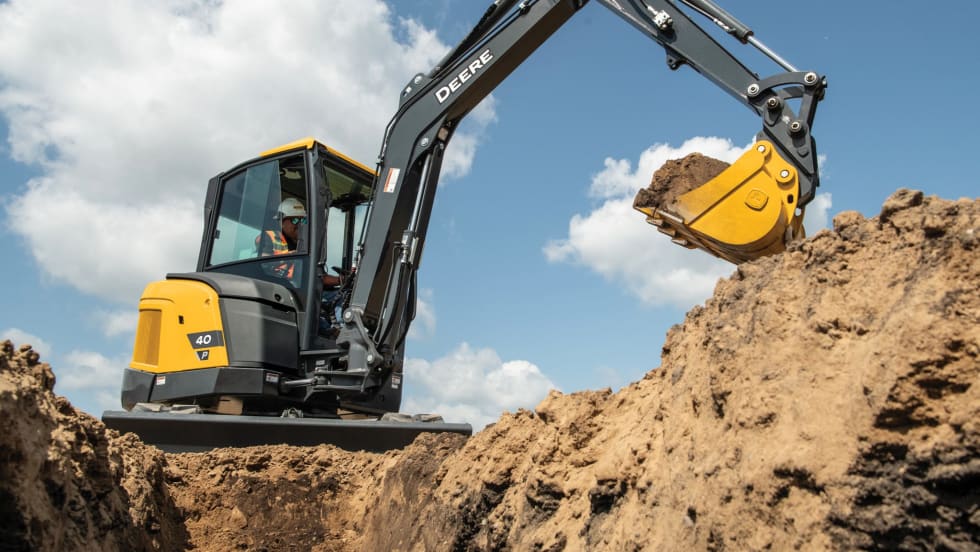
John Deere Introduces 40 P-Tier Compact Excavator
John Deere is adding a compact excavator designed for crews that need to move equipment between jobsites and handle multiple types of work with one machine. The 40 P-Tier weighs less than 10,000 pounds and offers configurable hydraulics, attachment options, and connected fleet-management capabilities.
Read More →
How Leading Fleets Improve and Why Business Plans Matter
This week, we look at what past Leading Fleet winners can teach us about making progress, plus how to build a business plan your fleet will actually use.
Read More →
Nominate a Fleet Leader for the 2027 Public Fleet Hall of Fame
Do you know a fleet leader who has made a lasting impact on the industry? Nominate this fleet professional for the 2027 Public Fleet Hall of Fame.
Read More →
Why Fleet Business Plans Need Three Perspectives
A fleet business plan should help agency leaders understand the fleet’s value, give the organization a clear direction, and establish shared expectations with customer departments.
Read More →
How Oil Analysis, Safety Technology, and Fleet Awards Drive Improvement
What happens when fleets let measured results guide their next decision?
Read More →
Emergency Response, Fleet Sales and New Technology
This week’s fleet news covers emergency preparedness, shifting vehicle sales, electric truck investments, and new tools for monitoring road conditions.
Read More →