




Department of Homeland Security Makes Vehicle Safety a Priority
WASHINGTON, D.C. — The U.S. Department of Homeland Security for Emergency Preparedness and Response (DHS) in October released the Fire Service Emergency Vehicle Safety Initiative report.
WASHINGTON, D.C. — The U.S. Department of Homeland Security for Emergency Preparedness and Response (DHS) in October released the Fire Service Emergency Vehicle Safety Initiative report. The report is the product of an initiative jointly sponsored by the U.S. Fire Administration (USFA) and the Department of Transportation´s Federal Highway Administration to enhance the safety of firefighters while responding and returning from emergencies and while operating on the roadway, according to Fire Chief magazine. In September, DHS announced that it had partnered, through the USFA, with the International Association of Fire Chiefs, the International Association of Fire Fighters (IAFF) and the National Volunteer Fire Council in its initiative to reduce the number of firefighters killed in emergency vehicle accidents, usually the second-leading cause of firefighter fatalities each year, accounting for about 25 percent of the death toll. “The vast majority of firefighter deaths while responding or returning are preventable. We must do everything that we can to provide our members with the information that they need to be safe,” said Harold Schaitberger, IAFF general president. “Our members face these risks every day, and this project will make them safer as they do so.” “As crashes involving privately owned vehicles are the leading cause of volunteer firefighter on-duty fatalities responding and returning, this is a major issue of concern to the NVFC and the volunteer fire service,” said NVFC Chairman Philip Stittleburg. The report contains detailed recommendations developed from this initiative regarding standards and standardized operating procedures, training, and technology that could be used to increase emergency vehicle operations safety, as well as the roadway safety operations of firefighters and other emergency responders. It also includes examples of best practices from several fire departments throughout the United States that have innovative emergency vehicle safety mitigation techniques and technologies. The recommendations address seatbelt use, driver selection and training, policies regarding alcohol use while driving, intersection safety, and fire apparatus and emergency vehicle safety design. As a follow-up, the IAFC, IAFF, NVFC and others plan to develop campaigns for their constituent groups of the fire service — career and volunteer, firefighters and fire officers — to attack the problem of vehicle deaths on every front, according the USFA. In the meantime, limited quantities of the publication are available for free by calling 800-561-3356 or 301-447-1189. It can also be downloaded at www.usfa.fema.gov via the “Publications” link. Requests for the publication also may be faxed to 301-447-1213. For more information about the report and other USFA efforts in emergency vehicle safety, visit www.usfa.fema.gov/inside-usfa/research/vehicle.shtm.
More Operations

Fleet Forward Conference Introduces One-Day Passes for 2026
New one-day registration lets fleet professionals attend Tuesday, Wednesday, or Thursday, with passes available for $249.
Read More →
ENC Unveils its ZAVIR Medium-Duty Shuttle
Two variants of the concept shuttles were revealed: a low-floor configuration and a high-floor configuration.
Read More →
Could Your Next Fleet Technician Start as an Intern?
What if your next technician hasn’t worked in a fleet shop yet? What fleets are doing to free up time.
Read More →
How Phoenix Is Building Its Next Generation of Fleet Technicians
With more than 8,000 vehicles and pieces of equipment to maintain, the City of Phoenix could not afford to wait for fully trained technicians to walk through the door. Instead, they revamped their entire workforce strategy and showed how public fleets can create their own talent pipeline while preparing existing employees for increasingly complex vehicles.
Read More →
What’s Slowing Your Fleet Down?
Could a change in how work gets done help your fleet return vehicles to service sooner?
Read More →
Can Public Fleets Trust the Data Driving Their Decisions?
Public fleets have more data than ever, but inconsistent records and missing information can still undermine maintenance, replacement, and cost decisions.
Read More →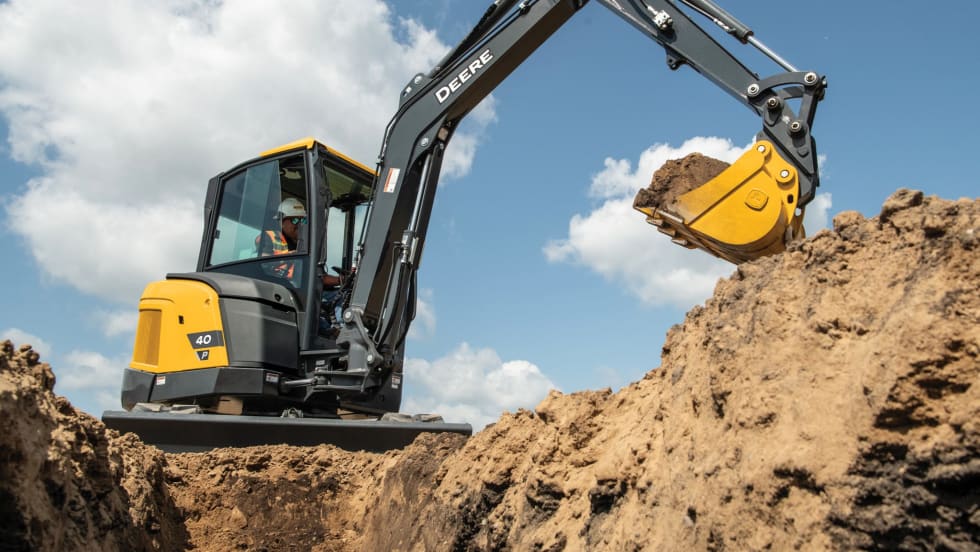
John Deere Introduces 40 P-Tier Compact Excavator
John Deere is adding a compact excavator designed for crews that need to move equipment between jobsites and handle multiple types of work with one machine. The 40 P-Tier weighs less than 10,000 pounds and offers configurable hydraulics, attachment options, and connected fleet-management capabilities.
Read More →
How Leading Fleets Improve and Why Business Plans Matter
This week, we look at what past Leading Fleet winners can teach us about making progress, plus how to build a business plan your fleet will actually use.
Read More →
Nominate a Fleet Leader for the 2027 Public Fleet Hall of Fame
Do you know a fleet leader who has made a lasting impact on the industry? Nominate this fleet professional for the 2027 Public Fleet Hall of Fame.
Read More →
Why Fleet Business Plans Need Three Perspectives
A fleet business plan should help agency leaders understand the fleet’s value, give the organization a clear direction, and establish shared expectations with customer departments.
Read More →