





Related: New Electric Utility Trucks Could Help Reduce Blackouts
'Connected' Bucket Truck Details Released
Developed in partnership with Altec and Telogis, PG&E is combing an ePTO system with telematics and even digital license plate technology for this Class 5 bucket truck.
June 8, 2015

The truck features software that helps prevent unsafe driving practices such as speeding. (Photos: Jason King, PG&E)
3 min to read
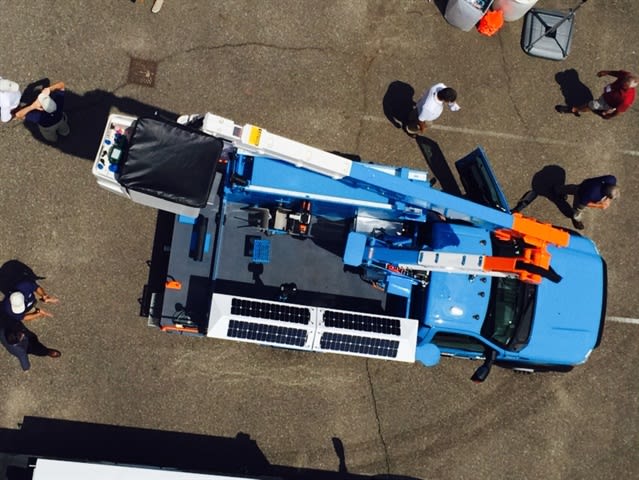
The truck features software that helps prevent unsafe driving practices such as speeding. (Photos: Jason King, PG&E)
PG&E has announced additional advances to its Class 5 hybrid bucket truck, unveiling "connected" bucket truck features that combine an electric power take-off (ePTO) and vehicle-as-a-hub communications technology. The goal of the technology is to improve operating efficiency while enhancing safety and productivity, according to the utility.
Developed in partnership with Altec and Telogis, the bucket truck was shown on June 1 at the Electric Utility Fleet Managers Conference in WIlliamsburg, Va.
ePTO
The connected truck features a next-generation ePTO system that allows crews to operate the bucket and auxiliary systems without having to idle the engine, reducing emissions and noise and enhancing worksite safety while maintaining what PG&E calls the “Grid of Things,” which is a plug-and-play platform that allows energy technologies to be interconnected with each other and integrated into the larger grid, similar to how the Internet maximizes the benefits of the billions of things connected to it (known as the Internet of Things).
One key improvement is the battery pack; the ePTO system is powered by lithium-ion magnesium batteries, which last up to 20% longer and are smaller, lighter and more energy efficient than previously used lead-acid batteries. But what really sets the vehicle apart is that it features a rugged flexible solar panel running along the bed, providing on-the-go, mobile battery charging. Under typical operating conditions, this feature will increase battery life by up to 25%, helping to ensure that crews have adequate charge to remain idle-free while on jobsites.
PG&E will begin introducing this next generation of idle-management technology on its trucks next year.
Vehicle as a Hub
Combining the Grid of Things with the Internet of Things is the cutting-edge suite of “Vehicle as a Hub” communications tools that PG&E developed in partnership with technology partner Telogis. This suite combines features that encourage safe driving habits, improve productivity and allow for mobile management of fleet resources.
The driver behavior feature of the Telogis suite will help enhance safety by giving vehicle operators the tools to monitor and manage unsafe driving habits. The feature utilizes in-cab alerts to notify drivers of unsafe behaviors, including speeding, harsh braking and not using seat belts.
To hasten the adoption of this technology, PG&E will be introducing this feature on 1,000 existing fleet vehicles beginning July 1.
The technology suite also will serve as a key resource to give drivers the tools that they need to enhance productivity, including a mobile hotspot to allow them to remain connected while in the field. In addition, the technology makes it possible for maintenance needs to be identified in real time, as the vehicle will send maintenance codes back to the garage when issues arise. This will help to ensure the reliability of fleet assets and also provide the garage the lead time to order necessary parts before the vehicle even returns.
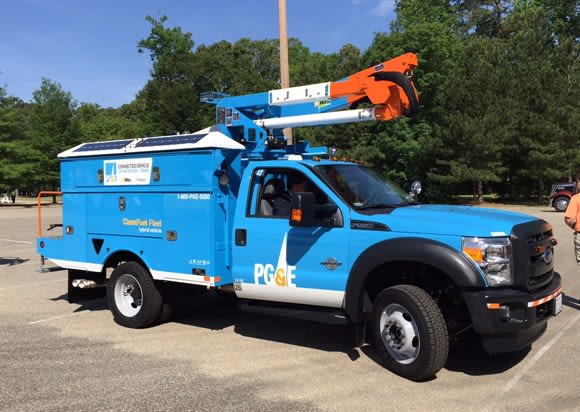
PG&E will begin introducing this next generation of idle-management technology on its trucks next year, while other technologies will go into fleet earlier.
“The cutting edge package of technology featured on this vehicle helps us better manage a wide-range of issues, from driver behavior to vehicle maintenance to reducing greenhouse gas emissions. We are constantly working to identify technologies to help us better manage our fleet while protecting the environment, and this truck is a prime example of that commitment,” said Dave Meisel, PG&E’s senior director of transportation and aviation services.
Digital License Plate
Taking connectivity one step further, this vehicle also features a “digital” license plate developed by San Francisco-based technology company Reviver. The digital plate allows automated vehicle registration as well as the opportunity to display public safety messages while the vehicle is stationary. The digital plate also automates digital payments, reducing administrative costs.
PG&E will be installing these digital plates on 10 fleet vehicles as part of a pilot project in July.
More Operations

Is Keeping Older Fleet Vehicles Really Saving Money?
Is keeping vehicles longer saving money, and what happens when a diagnostic test points to the wrong fix?
Read More →
How Smart Fleet Strategy Can Help Local Government Agencies Do More with Less
Keeping a vehicle longer may ease this year’s budget, but what does it cost the next one? A closer look at fleet decisions can reveal opportunities to reduce spending while protecting essential services.
Read More →
Connect with Government Fleet on LinkedIn
From industry news and fleet management strategies to conversations with peers, Government Fleet's LinkedIn page offers public-sector fleet professionals another way to stay informed and connected.
Read More →
Town of Queen Creek Named Most Successful Fleet Award Winner of Inaugural RTA Fleet Success Awards
Five fleets were honored at RTA Connect 2026 in Chicago for excellence across resource efficiency, intentional culture, risk management, and stakeholder satisfaction.
Read More →
Sponsored•October 14, 2026
A buyer's guide to fleet management software in 2027
Buying fleet management software in 2027 means looking beyond features and price. As fleet operations, technology and expectations evolve, this guide explores what today’s fleet professionals should consider when choosing a system that can deliver value now and adapt to what comes next.
Read More →
Hazard Alerts, Fleet Car Sales Rise and a New Shuttle Concept
Fleet car sales doubled, but the bigger picture tells a different story in this week’s roundup.
Read More →
How St. Johns County Turned Fleet Data Into Better Replacement Decisions
St. Johns County, Florida, had fleet data, but turning it into reliable decision guidance was another matter. Instead of starting over with a new fleet management system, the county connected existing tools and built a scoring system that gives managers an objective look at fleet health.
Read More →
Fleet Forward Conference Introduces One-Day Passes for 2026
New one-day registration lets fleet professionals attend Tuesday, Wednesday, or Thursday, with passes available for $249.
Read More →
ENC Unveils its ZAVIR Medium-Duty Shuttle
Two variants of the concept shuttles were revealed: a low-floor configuration and a high-floor configuration.
Read More →
Could Your Next Fleet Technician Start as an Intern?
What if your next technician hasn’t worked in a fleet shop yet? What fleets are doing to free up time.
Read More →