




Conn. Offering Grants for Fleet ZEV Adoption
Connecticut is providing $1 million in state grant funding to encourage government fleets to add zero-emission vehicles and EV charging infrastructure, and encourage consumers to purchase battery-electric vehicles with rebates.

Photo via Flickr
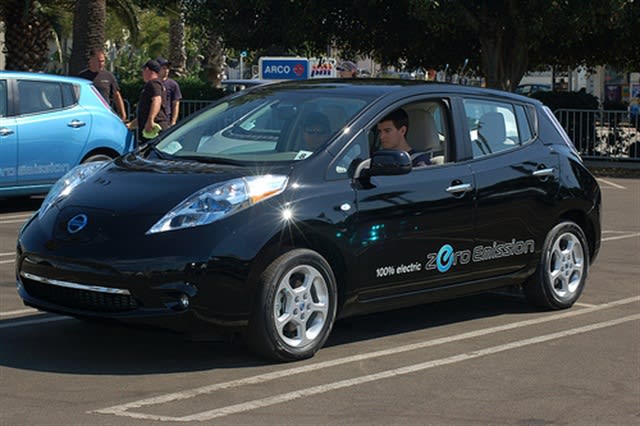
Photo via Flickr
Connecticut is providing $1 million in state grant funding to encourage government fleets to add zero-emission vehicles and EV charging infrastructure, and encourage consumers to purchase battery-electric vehicles with rebates, the state has announced.
Connecticut’s Department of Energy and Environmental Protection (DEEP) is overseeing the $1 million that's sourced from revenues the state receives from its participation in the Regional Greenhouse Gas Initiative (RGGI). Under the program, power plant emissions allowances are sold through auctions and the proceeds are invested by in state energy efficiency, renewable energy, and other consumer benefit programs.
Revenues from RGGI are being used to provide more than $1 million in grants to cities, towns, and state agencies who purchase eligible EVs for their fleets and install charging stations for their use as well as for the public.
This new grant program will provide a reimbursement of $15,000 per EV and $10,000 per charger meeting the program guidance specifications. The grant guidelines limit recipients to a maximum of six EVs and chargers.
DEEP’s consumer rebate program — the Connecticut Hydrogen and Electric Automobile Purchase Rebate Program (CHEAPR) — provides a cash rebate of up to $3,000 for Connecticut residents, businesses, and municipalities who purchase or lease an eligible EV. EVs covered by CHEAPR include battery electric, fuel cell, and plug-in hybrid vehicles.
Rebates offered through the CHEAPR program are on a sliding scale, with the maximum $3,000 amount for those who purchase or lease an EV with the greatest battery capacity. Rebates of $1,500 and $750 will be provided for EVs that travel shorter distances on battery power.
Since the program was launched in May, more than $632,000 in rebates have been issued or reserved for the purchase or lease of 278 vehicles.
The original funding for the rebate program came from $1 million available to the state through an agreement that allowed for the merger of Northeast Utilities and NSTAR in April of 2012.
DEEP Commissioner Robert Klee said the expanded consumer rebate initiative and new grant program for cities, towns, and state agencies will help Connecticut meet its goals as part of an eight-state effort to put 3.3 million Zero Emission Vehicles (ZEVs) on the road by 2025.
More Operations

Is Keeping Older Fleet Vehicles Really Saving Money?
Is keeping vehicles longer saving money, and what happens when a diagnostic test points to the wrong fix?
Read More →
How Smart Fleet Strategy Can Help Local Government Agencies Do More with Less
Keeping a vehicle longer may ease this year’s budget, but what does it cost the next one? A closer look at fleet decisions can reveal opportunities to reduce spending while protecting essential services.
Read More →
Connect with Government Fleet on LinkedIn
From industry news and fleet management strategies to conversations with peers, Government Fleet's LinkedIn page offers public-sector fleet professionals another way to stay informed and connected.
Read More →
Town of Queen Creek Named Most Successful Fleet Award Winner of Inaugural RTA Fleet Success Awards
Five fleets were honored at RTA Connect 2026 in Chicago for excellence across resource efficiency, intentional culture, risk management, and stakeholder satisfaction.
Read More →
A buyer's guide to fleet management software in 2027
Buying fleet management software in 2027 means looking beyond features and price. As fleet operations, technology and expectations evolve, this guide explores what today’s fleet professionals should consider when choosing a system that can deliver value now and adapt to what comes next.
Read More →
Hazard Alerts, Fleet Car Sales Rise and a New Shuttle Concept
Fleet car sales doubled, but the bigger picture tells a different story in this week’s roundup.
Read More →
How St. Johns County Turned Fleet Data Into Better Replacement Decisions
St. Johns County, Florida, had fleet data, but turning it into reliable decision guidance was another matter. Instead of starting over with a new fleet management system, the county connected existing tools and built a scoring system that gives managers an objective look at fleet health.
Read More →
Fleet Forward Conference Introduces One-Day Passes for 2026
New one-day registration lets fleet professionals attend Tuesday, Wednesday, or Thursday, with passes available for $249.
Read More →
ENC Unveils its ZAVIR Medium-Duty Shuttle
Two variants of the concept shuttles were revealed: a low-floor configuration and a high-floor configuration.
Read More →
Could Your Next Fleet Technician Start as an Intern?
What if your next technician hasn’t worked in a fleet shop yet? What fleets are doing to free up time.
Read More →