




BMW Considering Sport Bike for Police Market
TORRANCE, CA - BMW is currently selling a civilian version of its F800-GS in the United States, and could easily convert it for police use, according to the company's law enforcement manager.
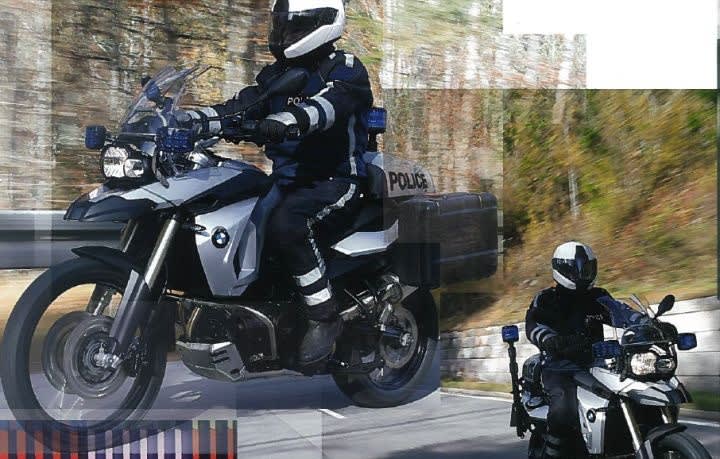
Promotional flier showing the European version of the F800-GSP. Photo Credit: BMW.

TORRANCE, CA - BMW plans to field-test a sport bike now being used by police agencies in Europe as an off-road option for American law enforcement. BMW is currently selling a civilian version of its F800-GS in the United States, and could easily convert it for police use, according to the company's law enforcement manager.
BMW plans to bring the F800-GSP to the Michigan State Police's annual vehicle tests in late September, says Frank Stevens, BMW's authority program manager.
The bike is similar to the BMW 650 once offered to agencies for light off-road use in parks, gravel roads, and fire trails. If BMW begins producing the F800, the company would make it available with a two-cylinder, vertical-twin, 800cc engine (the 650 had a one-cylinder engine). The company ceased offering the 650, because it didn't catch on with agencies.
The Philadelphia Police Department purchased 12 650s and the Fresno (Calif.) Police Department bought 30 for its gang enforcement officers to pursue suspects through residential back yards.
An F800-GSP could be offered to agencies who patrol rugged areas as an alternative to ATVs, because quads usually need to be transported to a search area via trailers.
The success the company has had with the civilian model could give the company traction to offer it to law enforcement, Stevens said.
"As with most vehicles, it started out as a civilian platform because you have to have enough volume and authority to justify a motorcycle from the ground up," Stevens said. "The F-series platform has been very successful for us."
The police version of the F800 would include interference suppression so officers could use radios, radar and LIDAR equipment unimpeded by electrical noise from the engine. The bikes would also include tip-over protection bars and an integrated lighting and siren package.
By Paul Clinton
More Operations

Is Keeping Older Fleet Vehicles Really Saving Money?
Is keeping vehicles longer saving money, and what happens when a diagnostic test points to the wrong fix?
Read More →
How Smart Fleet Strategy Can Help Local Government Agencies Do More with Less
Keeping a vehicle longer may ease this year’s budget, but what does it cost the next one? A closer look at fleet decisions can reveal opportunities to reduce spending while protecting essential services.
Read More →
Connect with Government Fleet on LinkedIn
From industry news and fleet management strategies to conversations with peers, Government Fleet's LinkedIn page offers public-sector fleet professionals another way to stay informed and connected.
Read More →
Town of Queen Creek Named Most Successful Fleet Award Winner of Inaugural RTA Fleet Success Awards
Five fleets were honored at RTA Connect 2026 in Chicago for excellence across resource efficiency, intentional culture, risk management, and stakeholder satisfaction.
Read More →
A buyer's guide to fleet management software in 2027
Buying fleet management software in 2027 means looking beyond features and price. As fleet operations, technology and expectations evolve, this guide explores what today’s fleet professionals should consider when choosing a system that can deliver value now and adapt to what comes next.
Read More →
Hazard Alerts, Fleet Car Sales Rise and a New Shuttle Concept
Fleet car sales doubled, but the bigger picture tells a different story in this week’s roundup.
Read More →
How St. Johns County Turned Fleet Data Into Better Replacement Decisions
St. Johns County, Florida, had fleet data, but turning it into reliable decision guidance was another matter. Instead of starting over with a new fleet management system, the county connected existing tools and built a scoring system that gives managers an objective look at fleet health.
Read More →
Fleet Forward Conference Introduces One-Day Passes for 2026
New one-day registration lets fleet professionals attend Tuesday, Wednesday, or Thursday, with passes available for $249.
Read More →
ENC Unveils its ZAVIR Medium-Duty Shuttle
Two variants of the concept shuttles were revealed: a low-floor configuration and a high-floor configuration.
Read More →
Could Your Next Fleet Technician Start as an Intern?
What if your next technician hasn’t worked in a fleet shop yet? What fleets are doing to free up time.
Read More →