




About the Author: Bob Stanton is a consultant for Stanton Fleet Consultants, based in Cumming, Georgia. He previously served as a municipal fleet manager for 25 years and prior to that worked in the private fleet industry. He can be reached at victorybob@gmail.com.
Set Your Own Vendor Fuel Surcharges
There is little doubt, given recent fuel price escalation, that surcharges either are or will be back. Here’s an idea: Why don’t you set and control them?
by Bob Stanton
March 11, 2022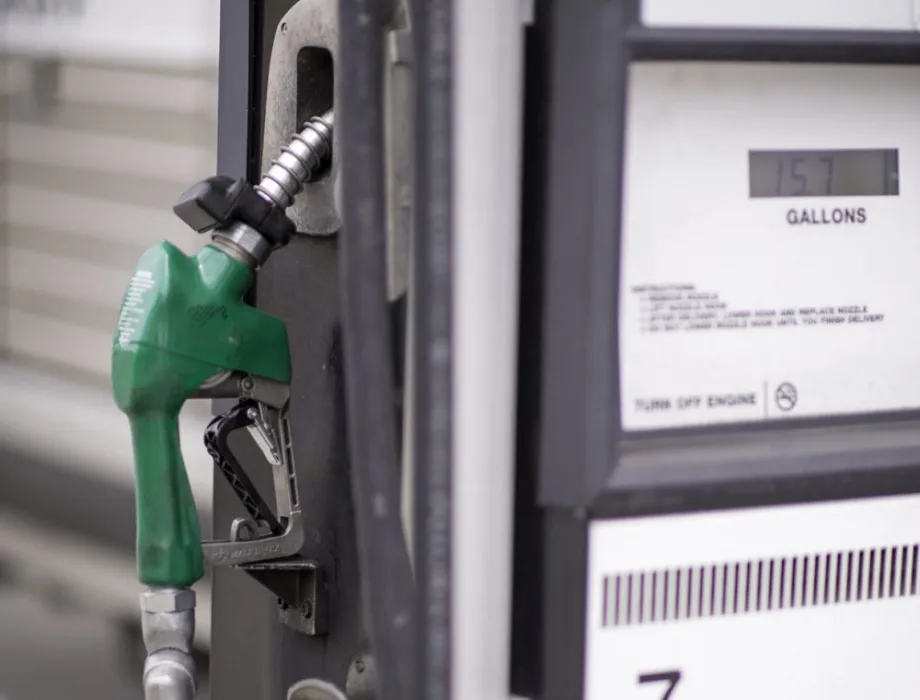
2 min to read
We thought fuel surcharges, those pesky vendor add-ons, were a thing of the past. That past was the summer of 2008, the last time we experienced a record national average fuel price per gallon. There is little doubt, given recent fuel price escalation, that surcharges either are or will be back.
Honestly, fuel surcharges are a fair and equitable way for our service providers to offset their increased fuel costs. Some governments may prefer to hold vendors accountable for their agreed- upon rates but to be fair, their rates were set when fuel prices were “reasonable.” As good stewards and with our desire to treat the marketplace fairly, fuel surcharges should be allowed, regardless of contract languages or purchase order rate constraints. The question for us is how we will monitor and control them.
Here’s an idea: Why don’t you set and control them? In the summer of 2008, in Polk County, Florida, we took several steps to mitigate fuel prices that had exceeded $4.00/gallon for the first time in history. Among those steps was notifying our towing, parts delivery, on-site service providers, and transport companies that the county (fleet management) would set the surcharge rate on a per-mile basis and add that amount to their invoices prior to payment. Using this method, we controlled the surcharges, we avoided the often-arbitrary assessments vendors would add, and vendors actually appreciated our effort.
Our method used the simple spreadsheet below. We set three categories of vehicles: heavy truck/transport/wrecker/Landoll; medium-duty flatbed roll-off or rear drag wrecker; and compact car/pickup. We used a base average miles per gallon for each category, the base fuel price/gallon (price at the end of January 2022 for instance in today’s world), and the current price/gallon when the services were rendered. Our spreadsheet calculated the increased fuel cost to our vendors in a cost/mile calculation. Using their invoices, on which mileage was reported, we added the additional fuel cost as calculated by our spreadsheet to their payments. Our finance department appreciated this method as well because it was well justified and documented.
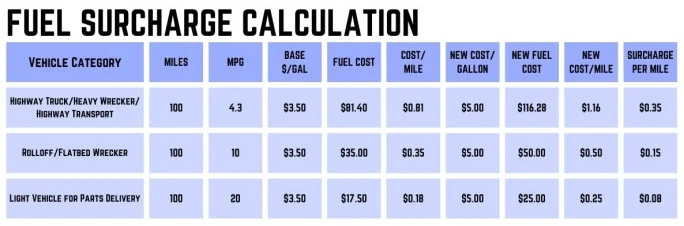
The only modification necessary is shown in the column for the new cost/gallon, where staff can enter today’s fuel cost/gallon using OPIS, the local 7-11, or whatever source seems to reflect the current market price in your area.
This is an easy step that will pay dividends in vendor relationships, give you more control over your costs, protect against arbitrary price hikes, and is easily justifiable both for your accounting and for the marketplace.
Subscribe to Our Newsletter
More Blog Posts

Now What Should We Do? Looking Beyond the Pinpoint Test
When a pinpoint test leads to a replacement that doesn’t fix the problem, technicians need to look beyond the instructions.
Read More →
The Missing Link in Fleet Safety: Turning Data into Behaviour Change
Every municipal vehicle tells residents something about how their fleet is being managed. For King Township, Ontario, that visibility made speeding more than a driver performance issue.
Read More →
Flavor of the Decade: The End
As automakers pivot toward hybrids and extended-range models, the costly slowdown in battery-electric vehicle adoption raises questions about what comes next for the Big Three and government fleets.
Read More →
Why Technician Development Is a Retention Strategy
Clear development opportunities can help fleets show technicians how their skills and careers may progress within the organization.
Read More →
Building a Cross-Department Fleet Data Standard: What to Agree on First
As municipalities expand their use of fleet technology, the challenge is less about collecting data and more about making that data usable.
Read More →
7 Tips for Smarter Fleet Management
The potential to manage your fleet effectively while ensuring the safety of both employees and the community can often go untapped, but there are certain habits you can adopt to get to that point.
Read More →
Why Now Is the Time to Return to Government Fleet Expo
For fleet professionals who haven't attended GFX in a while, this year's event provides more than just education sessions and networking opportunities. From emerging leaders and innovative fleet strategies to industry recognition and peer-to-peer discussions, GFX 2026 reflects the changing landscape of public fleet operations.
Read More →
What to Expect at GFX
The Government Fleet Expo & Conference can be overwhelming in the best way possible. Whether you’re a first-time attendee or a returning fleet professional, these practical tips will help you plan ahead, stay energized, maximize networking opportunities, and make the most of every moment at GFX 2026 in Long Beach.
Read More →
How to Get the Most From an Industry Conference
A new strategy in how to present conference attendance justification for you and even for your staff and how you and they can benefit and even thrive in the conference environment.
Read More →
How Electric Vehicles as a Service Could Reshape Public Fleets
How the EV model can address concerns about meeting state mandates, cost, emissions and range anxiety.
Read More →