




Getting Help from Your Neighbors
A neighboring fleet manager touring your shop can often clearly see what could be improved that you can’t see because it has become part of the way the shop functions.

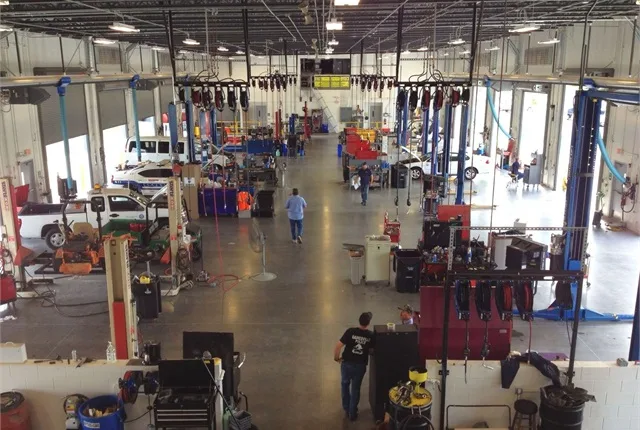
Photo courtesy of City of Gainesville
Public fleet managers can’t be very secretive. By law, people can get the information they want if they just ask, which leads to a fairly open industry willing to share its ideas and practices. Fleet managers will often share requests for proposal, policies and procedures, spec sheets, and other documents that are time-consuming to write and easier to adjust.
While sending over some documents is easy enough, public fleet managers are willing to go the extra mile by visiting each other’s facilities. A fleet manager looking for an opinion about his or her shop can ask a colleague nearby to tour it and see what can be improved.
A visitor can often see very clearly what could be changed about a shop that the host can’t quite see because it has become part of the way the shop functions. Larry Campbell, CPFP, fleet director for the City of Fort Wayne, Ind., often lends his expertise to nearby agencies that request it. Some of the common things he sees that fleets could improve upon are parts piled up around the parts room, making it difficult to keep accurate inventory; unclean shops; and facilities with not enough light.
The Fort Wayne fleet isn’t immune to an untidy facility, but Campbell makes it a point to plan for cleaning time if it gets bad, such as after a bad winter season. Sometimes, a fresh coat of paint on the wall can make a big difference for presentation and morale, he added.
Rick Longobart, fleet and facilities manager for the City of Santa Ana, Calif., has been on a number of site visits with his team. Some potential improvements that he sees at the facilities he has visited include: lack of work space, necessary fuel island improvements, lack of space in the parts room, improvements to the customer service drive-through area, and weak or a lack of policies and procedures.
Some things (such as tidiness and policies) can be more easily changed, while others (such as lighting and space issues) may require more time and outside consultation. Either way, it’s good to know what you can improve so you can provide a better work environment for technicians and make changes to improve operation efficiency.
A Mutually Beneficial Arrangement
Fleet tours don’t just benefit the host facility. They can (and should) also benefit the visiting fleet team. The Santa Ana fleet normally sends between six and eight administrative team members per visit.
“The site visits were priceless for our team as it allows them to observe each operation, put our operation into perspective, and make improvements to our facility,” Longobart said.
Some of the things Santa Ana fleet staff has learned as a result of these visits are: the different ways agencies assign work orders, different facility layouts, best practices at various shops, new technologies, and how others conduct business, Longobart said.
While Campbell tours others’ facilities, he’ll have visitors at his shop as well. The Fort Wayne fleet operates in a 60-year-old building that has been upgraded to have many of the features of a modern facility, and Campbell will often point out to visitors features that make the shop compliant with OSHA (Occupational Safety and Health Administration) and ISO (International Organization for Standardization) standards as well as safety features.
I enjoy site visits because it allows me to see the environment fleet managers work in every day. During a tour, I’ll often find out about a technology, tool, or procedure I haven’t heard about before. I think that’s also why our facility site tours at the Government Fleet Expo & Conference (GFX) are also so popular — because who doesn’t want a peek inside another facility to see what others are working with and how they conduct their operation?
What are your experiences touring other shops? What do you notice and what have you taken back to your own facilities?
More Blog Posts
Understanding the Road to Improved Operations
Every fleet has goals, but meaningful progress depends on knowing where the operation stands and continuing forward when the path changes.
Read More →
Navigating the Crossroads of Data and New Technologies
As data volumes increase and emerging technologies advance, where do government fleets stand? Takeaways from Samasara Go Beyond Public Sector 2026.
Read More →
When the Roadblocks Hit, Where is Your Inspiration?
It can be easy to get caught up in the busy day-to-day of fleet, but when the problems pile up, that's when it's time to find the motivation to keep going.
Read More →
Is it Time for Change or Consistency?
Consistency can be good, but there comes a time when you have to step back and ask whether what you’re doing is the best approach.
Read More →
Blink and You’ll Miss It: Fleet Reflections from 2025
A note as we leave behind 2025 and plan for new ventures heading into 2026.
Read More →
It’s Far Worse Than a Technician Shortage…
A letter to government fleet leaders on the technician gap and how to rebuild the pipeline that keeps public services running.
Read More →
Public Perception of Your Fleet Changes
How fleet transitions shape public perception and how a well-managed rollout can influence your fleet's narrative.
Read More →
The Balancing Act: Stability vs. Shifting Leadership Priorities
With the revolving door of government leadership bringing new priorities fleets are expected to pivot, even if those pivots undermine long-term planning.
Read More →
How Technology is Driving Upgrades in the City of Columbus Fleet Operations
How the city of Columbus fleet has embraced change as a strategic driver, using technology to revolutionize how the fleet fuels, tracks, and measures performance across a 260-square-mile service area.
Read More →
At the End of the Day, Be Good to Yourself
When the stresses of your work life become too much, don't forget to prioritize yourself and find balance in each day.
Read More →