




Wisc. Fleet Manager is Up to the Task
Filling the shoes of recently retired Jeff Tews, Lonnie Fischer discusses his new role and provides advice for others just breaking into the field.


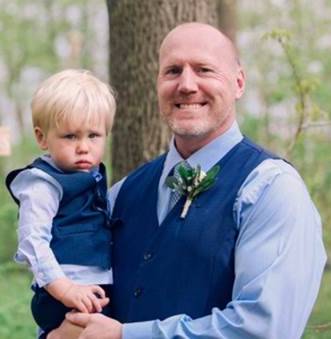
Lonnie Fischer with son Logan
Lonnie Fischer, new fleet services manager for the City of Milwaukee, Wisc., is aware he has some big shoes to fill. Government Fleet magazine’s 2020 Fleet Manager Hall of Fame inductee Jeff Tews recently retired from the position, and handed over the reins to Fischer in late August. Fischer is now focused on the road ahead; here’s what he had to say about his challenges, early successes, and tips for others in his position.
Learning from One of the Best
One of his main goals is to live up to the reputation set forth by Tews.
“He is such an accomplished fleet manager that my initial goal is to do whatever I can to represent the role in as positive a light as Jeff did. It’s a pretty lofty goal, because I've never met a gentleman as meticulous, organized, and professional he is.”
Tews is currently sticking around to help Fischer become acclimated to his new position and Fischer says the more he works with him, the more he comes to realize everything Tews has done for the organization.
“I just hope to carry on in the tradition of my predecessor.”
Successes and Educational Experiences
Fischer says one of the aspects he’s excelled at so far is learning the organizational culture and processes of the department. Assimilation is not always easy, especially during an unprecedented event like the global COVID-19 pandemic which has relegated many to working from home.
“If you had asked me back in March, when this virus really started to change the way we live, if I would have taken a position with another organization, I would have said you’re crazy. But I’m glad I now find myself with the City of Milwaukee. I feel thankful, blessed, ready for the challenge.”
One of the features of the job he’s had a little bit of difficulty adapting to is spec writing. Managing so many different types of equipment, from loaders to aerial trucks, can certainly be daunting to someone who isn’t used to such a vast array of vehicles.
“It’s been challenging, but rewarding,” he says.
Maintaining Efficiency
One of the main projects Fischer is maintaining a focus on is helping various departments stay fiscally efficient.
The director has tasked him with evaluating the tire shop, tire repair process, and keeping track of inventory to help ensure every dollar is being spent wisely.
“We have so many different types of vehicles, and with that comes an incredibly diverse selection of tires. It may sound like a little project, but it’s far from it.”
The director’s also requested he determine possible changes to how the department manages inventory, making sure they have the parts they need when they need them.
Just Listen
As the “new guy” on the team, Fischer has made it clear that he and those he works with are a team.
“My staff are essential to not only my success, but the success of the City of Milwaukee’s DPW. Whenever accepting a new position (from the outside/another organization), it is paramount to gain as much organizational knowledge from other managers, supervisors, technicians, dispatchers, operators, and office personnel as possible. Listening to the institutional knowledge of others and applying what you have learned will make you successful - if you are willing to put in the time.”
Climbing the Career Advancement Ladder
Fischer spent four years as a diesel mechanic in the Marine Corps. During his last year in the military, he became a crew chief leader, and worked on diesel and heavy equipment.
In April of 2009 he was hired by Milwaukee County Transit System and worked in three different departments with the goal of career advancement. He started out in safety and risk management as a project manager, and did that for six and a half years as a contract employee. He was then hired directly by Milwaukee County Transit as a finance supervisor. After two years in finance he accepted a position in the maintenance department as a third shift garage manager at their largest facility.
During his time with the transit system, he wanted to continue his education. He already had a bachelor's degree from Carroll University in natural resources and conservation. From there, he attended the University of Wisconsin, Milwaukee and received his master's degree in criminal justice. When he took the position in the finance department, he decided getting an MBA would be a good investment.
Feeling it was time to reach higher, he applied for his current fleet manager position, and luckily enough to be selected for it.
“When I worked at Milwaukee County Transit, a primary goal was career advancement. That's why I chose to work in three different departments, because I believe to really know an organization, you need to gain experience in many different facets and see how they all operate. I think it was excellent preparation for the position I’m in now, and I hope to continue to learn something new every day.”
More Operations

Is Keeping Older Fleet Vehicles Really Saving Money?
Is keeping vehicles longer saving money, and what happens when a diagnostic test points to the wrong fix?
Read More →
How Smart Fleet Strategy Can Help Local Government Agencies Do More with Less
Keeping a vehicle longer may ease this year’s budget, but what does it cost the next one? A closer look at fleet decisions can reveal opportunities to reduce spending while protecting essential services.
Read More →
Connect with Government Fleet on LinkedIn
From industry news and fleet management strategies to conversations with peers, Government Fleet's LinkedIn page offers public-sector fleet professionals another way to stay informed and connected.
Read More →
Town of Queen Creek Named Most Successful Fleet Award Winner of Inaugural RTA Fleet Success Awards
Five fleets were honored at RTA Connect 2026 in Chicago for excellence across resource efficiency, intentional culture, risk management, and stakeholder satisfaction.
Read More →
A buyer's guide to fleet management software in 2027
Buying fleet management software in 2027 means looking beyond features and price. As fleet operations, technology and expectations evolve, this guide explores what today’s fleet professionals should consider when choosing a system that can deliver value now and adapt to what comes next.
Read More →
Hazard Alerts, Fleet Car Sales Rise and a New Shuttle Concept
Fleet car sales doubled, but the bigger picture tells a different story in this week’s roundup.
Read More →
How St. Johns County Turned Fleet Data Into Better Replacement Decisions
St. Johns County, Florida, had fleet data, but turning it into reliable decision guidance was another matter. Instead of starting over with a new fleet management system, the county connected existing tools and built a scoring system that gives managers an objective look at fleet health.
Read More →
Fleet Forward Conference Introduces One-Day Passes for 2026
New one-day registration lets fleet professionals attend Tuesday, Wednesday, or Thursday, with passes available for $249.
Read More →
ENC Unveils its ZAVIR Medium-Duty Shuttle
Two variants of the concept shuttles were revealed: a low-floor configuration and a high-floor configuration.
Read More →
Could Your Next Fleet Technician Start as an Intern?
What if your next technician hasn’t worked in a fleet shop yet? What fleets are doing to free up time.
Read More →