


Fact Box
Denver International Airport
Budget: $3.8M
# of staff: 68
Parts Inventory: $1.2M
 MENU
MENU SEARCH
Airlines, one of the hardest hit industries by COVID-19, needed to adapt quickly and calmly; here’s how Denver International Airport fleet did it.

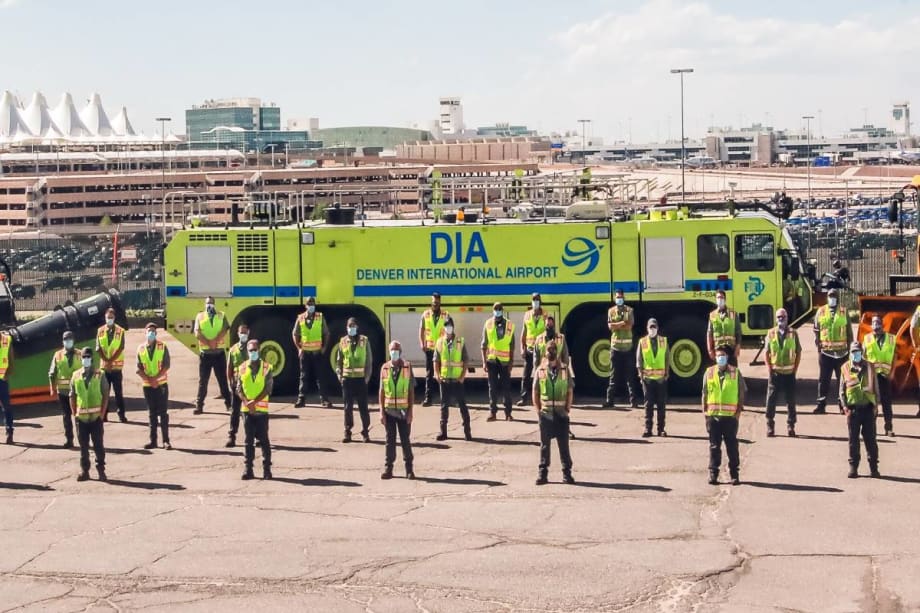
Airlines, one of the hardest hit industries by COVID-19, needed to adapt quickly and calmly; here’s how Denver International Airport did it.
Photo: Denver International Airport
While the pandemic hit home the importance of the essential workers of the world, it also taught fleet managers in particular how to adapt to a climate in which they had no choice but to do more with less. Jeff Booton, senior director of maintenance for Denver International Airport, discussed how the fleet division is bouncing back from an unprecedented time of upheaval in the airline industry.
Obviously, cleaning, masking, and social distancing were safety precautions the fleet team needed to adapt to just like every other essential business. However, budgets and staffing were, and continue to be, the department’s main challenges.
Staffing levels took several hits due to individual resignations, an early retirement program, and a hiring freeze. These actions reduced staff by over 26%, but Booton said they came out of it with enthusiastic employees who are working hard to get the fleet back on track.
“Financially, our O&M budget was reduced by 30% and our $12 million capital replacement budget was suspended indefinitely. We actually had to write purchase justifications for every individual part we needed as we were literally watching every dime,” he explained.
To get through both challenges, the division has made many changes to remain flexible, including altered shift schedules, work extended shifts, parking assets indefinitely, and more.
The hiring freeze was recently lifted, so Booton is currently in the recruiting/onboarding process.
“There is still difficult work ahead in terms of the budget, as the airline industry’s return to ‘normal’ is still in question,” he said.
Booton said there were many lessons learned during the pandemic that will keep the division prepared for whatever may come their way next. A main change that will likely remain is a higher level of scrutiny into the division’s budget than normal, as well as hybrid work schedules for some administrative positions.
“I feel like we learned a lot about ourselves and our fleet and have a better understanding of our capabilities under contingency operations,” he said. Here are three lessons the Airport Maintenance Division has learned due to changes brought by COVID-19:
Ensure your contingency plans are comprehensive.
Most fleets plan for natural disasters by determining alternate work locations, tool availability, and communication methods, but they should also consider severe financial restrictions into those plans.
“Have you prioritized the assets in your fleet, so you know what really needs to be operating? Do you know where you can minimize costs without severely impacting the mission of your fleet?” Booton asked.
Plan for a severely limited workforce.
The division now has a plan that lays out its capabilities based on different staffing levels (e.g., at 75% staffing, work on low priority assets will stop; at 50% staffing, all PM’s will be deferred except for high priority assets; etc.).
Be a calm, consistent leader.
“A friend of mine used to tell everyone to ‘panic slowly.’ Stick to the facts and don’t speculate on what’s next. Be deliberate, steady, and confident. Everyone wants up-to-date, factual information during a crisis. When there’s a lack of information flowing, employees will find their own information via social media, etc.,” he explained.
“Know your team and listen. Identifying a change in behavior of your team members may be the most important thing you do during a crisis,” he continued. “Some people act out, some will isolate themselves, but these are just signs they need to express their thoughts and/or concerns instead of keeping them bottled up.”

Is keeping vehicles longer saving money, and what happens when a diagnostic test points to the wrong fix?
Read More →
Keeping a vehicle longer may ease this year’s budget, but what does it cost the next one? A closer look at fleet decisions can reveal opportunities to reduce spending while protecting essential services.
Read More →
From industry news and fleet management strategies to conversations with peers, Government Fleet's LinkedIn page offers public-sector fleet professionals another way to stay informed and connected.
Read More →
Five fleets were honored at RTA Connect 2026 in Chicago for excellence across resource efficiency, intentional culture, risk management, and stakeholder satisfaction.
Read More →
Buying fleet management software in 2027 means looking beyond features and price. As fleet operations, technology and expectations evolve, this guide explores what today’s fleet professionals should consider when choosing a system that can deliver value now and adapt to what comes next.
Read More →
Fleet car sales doubled, but the bigger picture tells a different story in this week’s roundup.
Read More →
St. Johns County, Florida, had fleet data, but turning it into reliable decision guidance was another matter. Instead of starting over with a new fleet management system, the county connected existing tools and built a scoring system that gives managers an objective look at fleet health.
Read More →
New one-day registration lets fleet professionals attend Tuesday, Wednesday, or Thursday, with passes available for $249.
Read More →
Two variants of the concept shuttles were revealed: a low-floor configuration and a high-floor configuration.
Read More →
What if your next technician hasn’t worked in a fleet shop yet? What fleets are doing to free up time.
Read More →