




What Good Comes Out of COVID?
Darryl Syler has learned much during the international crisis and has adapted in ways that help him run a safer, more efficient fleet.



Darryl Syler
COVID-19 hasn’t just thrown a wrench into how work gets done; it’s thrown the whole tool box into the mix. Nevertheless, hardship tends to give birth to ingenuity, which is apparent when one looks at people like Darryl Syler, CPFP, state fleet administrator for the office of fleet management, general services division for Ohio. He’s used the pandemic as a chance to improve the way the state’s fleet runs.
Coping With COVID
When COVID-19 hit the US, Syler and his team started working from home on March 13…and are still doing so. Of his 11 staff members, some do go into the office as needed. However, they abide by mask requirements and ensure they follow all safety guidelines and procedures.
“Working from home has come with several challenges, but it's also allowed us to look at our utilization and determine whether or not we may need as many vehicles as we currently have,” he says.
Over the next three to six months, he hopes to reduce the size of the state’s fleet and maintain steady control of it.
“COVID-19 has also opened our eyes to how we take things for granted; simple things such as cleaning vehicles in our motor pool after they're used.”
They’ve established strict procedures for when a vehicle comes in after use. Either one of his team members cleans it or, depending on the circumstance, their procurement office has contracts with multiple cleaning and fumigation services to provide service. “It's been a challenge, but it's been a good learning challenge and a lot of ways.”
Getting the Budget Right
The department started its 2021 budget on July 1, and ended up having to cut 20% of its budget the last quarter of the 2020 fiscal year.
“We were able to do so because we didn’t have as many assets on the road and were controlling our costs. We started with a little bit of a deficit going into ’21, but we're looking at ways each and every day to combat that,” he explains.
Now, Syler is able to look deeper at utilization and determine if the state really needs all these vehicles currently in service or if they can move them to a motor pool to get more usage out of them.
“We do have agencies that have budgetary issues we're helping along the way too, because we have a chargeback program in our fleet program where agencies pay for usage of their vehicles.”
He’s also using the results of a state audit report that came out in June of 2019 as a benchmarking tool, which has allowed him to take a good, hard look at fleet usage and size.
“We want to make sure we're doing the correct thing from an environmental standpoint as well,” he says.
Caring for the Environment
A project he’s personally initiated along with his staff has been developing a green sustainability policy for the state.
“We do have electric vehicle charging stations on our state procurement contract now and we are expecting some fully electric and hybrid vehicles, not only for us, but also to allow municipalities and county governments around the state to be able to piggyback off our contract,” he says.
Listen and Adapt
One of the things he’s learned during his time as a fleet manager is you should never underestimate the power of listening to your customers.
“Stay customer focused, but also listen to your staff because they are your subject matter experts on the floor doing the job.”
He’s also fascinated by how quickly technology has evolved over the years.
“It's so far advanced and we're not even on the cusp of where we could be in the next five to 10 years. I think the aspect of it being something ever-evolving is just amazing.”
More Safety
New Partnership Aims to Expand Public Digital Hazard Alert System Statewide
The Hawai’i Department of Transportation (HDOT) is expanding advance digital hazard alerts for the public statewide.
Read More →
New York City Expands Safety Technologies Across Municipal Fleet
Executive Order 19 moves intelligent speed assistance and pedestrian alerts from pilot programs toward standard fleet equipment, offering other public fleets a look at how safety technology can be tested, measured, and scaled.
Read More →
Hidden in Plain Sight: Fleet Compliance Risks
Fleet compliance isn't just about having policies — it's about consistently enforcing them. This practical guide reveals six hidden compliance risks common in public sector and shared fleet operations and outlines proven strategies to improve visibility, accountability, and audit readiness.
Read More →
5 Days Left to Submit Your 2026 Fleet Safety Award Nomination
Know a government fleet, safety, or risk manager who deserves recognition for making fleet operations safer? Nominations are open through Aug. 15.
Read More →
How the First 24 Hours Can Shape a Fleet Crash Response
How a strong accident response process helps government fleets move from the initial report to recovery while building a clearer record for what needs to change next.
Read More →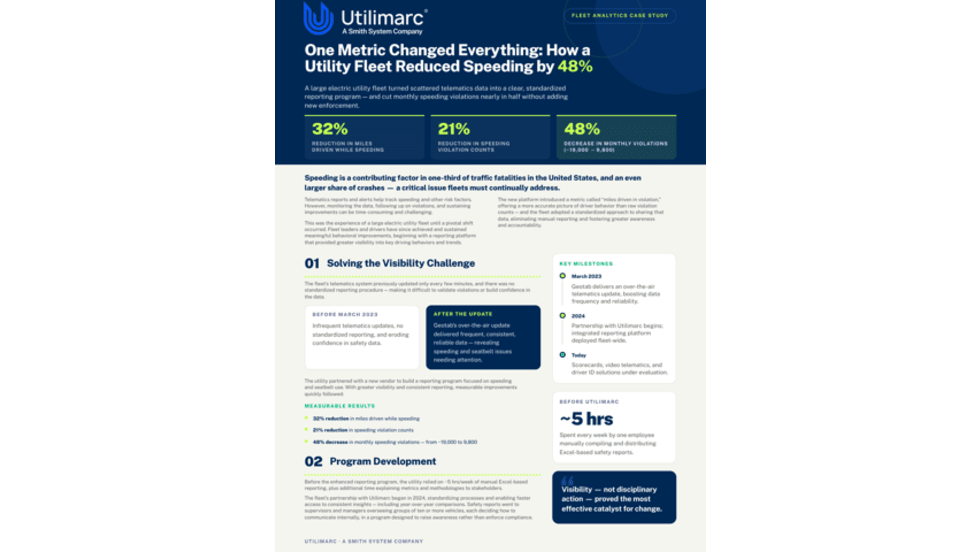
How Better Visibility Cut Speeding Violations by 48%
Fleet leaders don't need more data, they need clearer visibility into what the data is saying. This case study explores how one utility replaced speeding-event counts with a single metric — miles driven in violation — to strengthen safety and significantly reduce speeding violations.
Read More →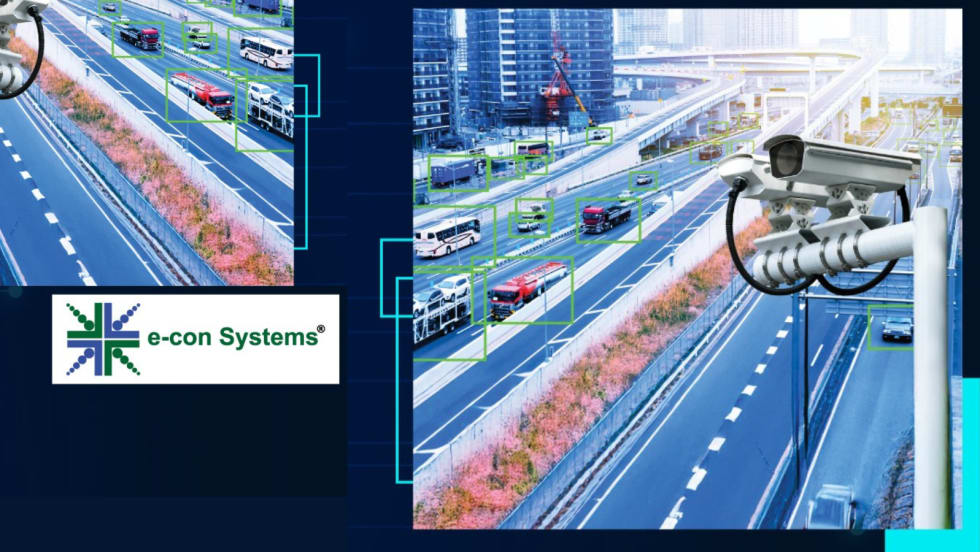
e-con Systems Expands AI Camera Tools for Traffic Monitoring
The systems support license plate recognition, traffic analytics, and video management for transportation agencies.
Read More →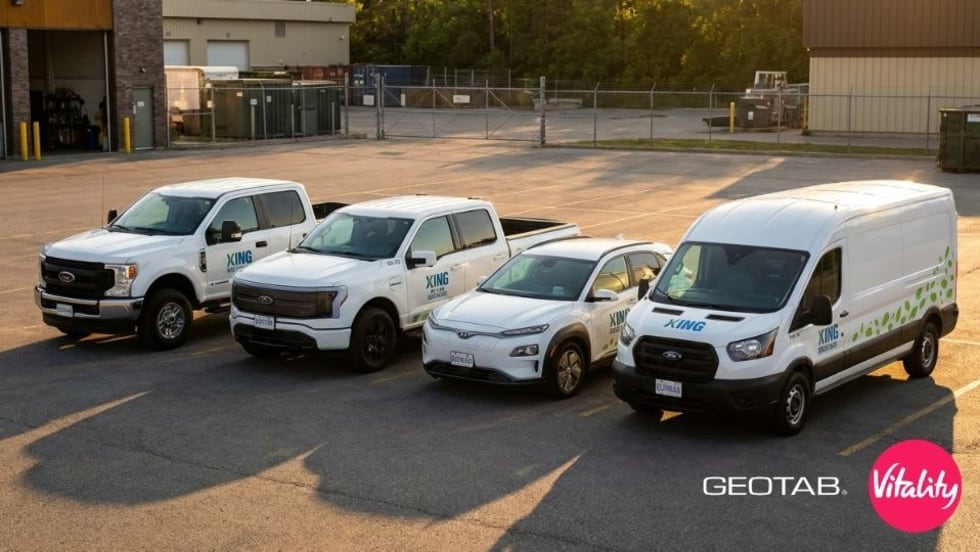
King Township Pilot Links Driver Feedback to Reduced Speeding
How King Township, a best-in-class municipal fleet, reduced speeding by 10.9% and demonstrated a projected 349% ROI by putting safety ownership directly in drivers' hands.
Read More →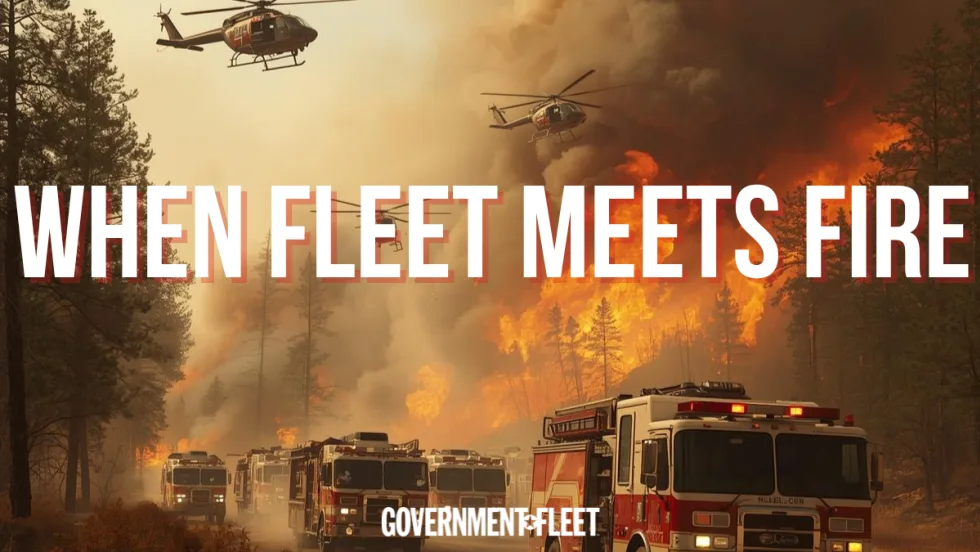
Beyond the Fireline: The Critical Role of Public Fleets in Wildfire Response
Behind every wildfire response is a complex network of vehicles, data, and decisions that must work in sync under extreme pressure. Global heating trends require strong fleet coordination and reliable communications to keep crews safe and operations running smoothly.
Read More →
How AI Is Transforming Public Fleet Safety - Part 1
AI-powered safety systems are helping public fleets tackle distracted driving by delivering real-time coaching and measurable behavior change behind the wheel. In part one of our Q&A, Nauto CEO Stefan Heck explains how agencies can improve safety, reduce costs, and navigate implementation challenges with AI-driven technology.
Read More →