The City of Jamestown's Early Efforts at Centralization
A new fleet management software system is allowing the City of Jamestown, N.Y., Division of Fleet Services to make improvements, including early efforts at centralization.
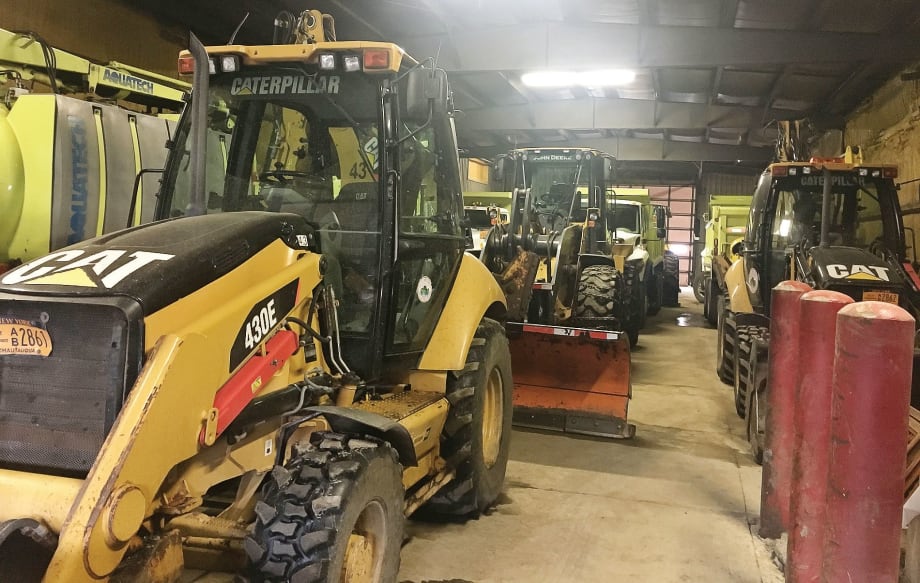
The Jamestown, N.Y., Fleet Services Division is working toward centralizing fleet management and maintenance of the city’s 400 units.
Photo courtesy of City of Jamestown
3 min to read
It began with a fleet management software system, a new system to replace one that had been in use since the ’90s and made record-keeping, data entry, and tracking a nightmare. Patrick Monaghan, fleet manager, had been requesting one for years, and the fleet finally went live with its new software system in January 2017.
The Jamestown Fleet
Number of assets: 400
Fleet replacement cost: $26 million
Number of fleet employees: 9
Average fleet age: 10.6 years
Percent of maintenance outsourced, citywide: 18%
Shortly after, the city commissioned a fleet report from consulting firm Mercury Associates to identify further areas of improvement. Mercury identified an aging fleet, an inadequate facility, and insufficient personnel, but it also acknowledged that the fleet was on the right track toward improvement — beginning with that new software.
Ad Loading...
With the Mercury report backing him up, Monaghan is making the improvements he can, while working on getting additional funding, personnel, and buy-in for a centralized fleet division.
Here’s what the Division of Fleet Services has been and will be working on in its quest to become a more efficient operation.
Monaghan
Utilizing the New Fleet Software
The new FMIS is CollectiveGov, from Collective Data. It allows the fleet to pull reports on anything entered into the system, tie in its parts supply, manage preventive maintenance effectively, track acquisition and depreciation costs, and move toward a paperless shop.
“Technicians are able to enter their time in on a computer. [In the past, they would] write it down on a piece of paper, hand it to me, and then I’d have to transfer it into the system,” Monaghan said.
Staff is still working to fully implement all the features. Current projects include finishing barcoding parts and integrating the fuel module.
Ad Loading...
Working Toward a Replacement Program
The average age of fleet vehicles is 10.6 years, significantly older than the recommended age, according to the Mercury study. While City Council is on board with the idea of replacing vehicles in a more timely manner, the funding isn’t there to make it happen, Monaghan said.
He has seen success with a small-scale replacement program: A few pickup trucks are on a short cycle — two to three years. They’re sold while their value is still high and they have low mileage or low hours.
“We’re almost getting out of them what we paid for them,” he reported.
Striving for Centralization
Fleet Services, part of the Public Works Department, maintains all Public Works, Fire, and Parks and Recreation vehicles, as well as most Board of Public Utilities (BPU) Water and Waste Water vehicles. The Police Department, BPU Electric, and BPU Solid Waste outsource their fleet maintenance and repair.
Centralization would allow the fleet to improve service levels and leverage economies of scale to lower costs, according to the Mercury report. To do this, fleet would need a larger maintenance facility, four additional positions, and to overcome the long-standing culture of siloed fleet management.
Ad Loading...
As part of his improvement efforts, Monaghan said he is slowly working toward a centralized fleet.
Keeping a vehicle longer may ease this year’s budget, but what does it cost the next one? A closer look at fleet decisions can reveal opportunities to reduce spending while protecting essential services.
From industry news and fleet management strategies to conversations with peers, Government Fleet's LinkedIn page offers public-sector fleet professionals another way to stay informed and connected.
Five fleets were honored at RTA Connect 2026 in Chicago for excellence across resource efficiency, intentional culture, risk management, and stakeholder satisfaction.
Buying fleet management software in 2027 means looking beyond features and price. As fleet operations, technology and expectations evolve, this guide explores what today’s fleet professionals should consider when choosing a system that can deliver value now and adapt to what comes next.
St. Johns County, Florida, had fleet data, but turning it into reliable decision guidance was another matter. Instead of starting over with a new fleet management system, the county connected existing tools and built a scoring system that gives managers an objective look at fleet health.