




State of Utah Saves More Than $1M by Centralizing Fleet Services
In 2001, the State of Utah outsourced maintenance management to ARI, leading to substantial annual operational savings. Over the past four years, the state saved more than $1 million in maintenance costs.
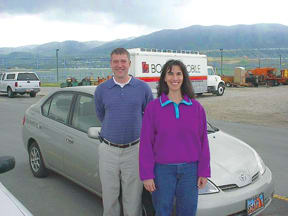
When the state of Utah centralized its fleet management in 2001 in an effort to reduce costs, the decision was made to utilize an outside vendor — the ARI fleet management company — rather than hire additional internal staff.
According to Steven Saltzgiver, director of fleet and surplus services for the state of Utah in Salt Lake City, once the fleet was centralized, outsourcing made the most sense.
“We chose to partner with ARI, which allowed us to centralize without adding additional internal resources,” says Saltzgiver. “This cost avoidance was part of the initial savings.”
Enhanced Data Accuracy Allows More Effective Cost Tracking
The Division of Fleet and Surplus Services aids state and local agencies with transportation needs and provides assistance in disposing and procuring surplus properties.
Functions currently outsourced to ARI include emergency roadside service, repair call center operations, maintenance approval less than $1,000, and vendor payment for maintenance. Full outsourcing implementation occurred in July 2001.
More than 3,000 of the state’s 7,250 vehicles are handled by ARI. The state owns the majority of the fleet vehicles, which include Fords, Chevrolets, Dodges, Toyotas, and Hondas.
Vehicles are replaced at 90,000 miles and/or 12 years; however, the average vehicle is replaced at six years.
The state looks at time in service, mileage, repair costs, and lifecycle costing to determine replacement cycles. However, the enhanced accuracy of the ARI cost data will allow Saltzgiver to now look at separate lifecycles for each class of equipment, make, and model.
The improved data integrity is made possible by using standardized industry codes to annotate repairs and a monthly download into the fleet system of all work orders performed.
The State Saved More Than $1M Dollars Over the Past Four Years
“This partnership is showing some significant cost savings through effective maintenance scheduling, monitoring, and warranty recovery,” says Saltzgiver.
The most significant savings seen by the state since centralizing and outsourcing its fleet management is reduced maintenance costs. The state saved $1,062,880 in maintenance costs over the past four years.
Cost per mile has also decreased dramatically since 2001. In 2003 alone, the state saved $583,000, a 9-percent overall decrease in cost per mile over 2002.
“These savings can be attributed directly to the improved centralized maintenance management system initiated by ARI,” says Saltzgiver.
In addition, the division is able to utilize 24/7 assistance to customers without hiring additional personnel to run the call center.
Added convenience is also a benefit to the state’s fleet customers since they are able to choose from a wide range of service locations on ARI’s broad vendor network. “This enhances the comfort level and convenience factor for our customers,” says Saltzgiver.
In addition, the state saved administrative costs by consolidating repair billing processes into one monthly ARI invoice versus hundreds of vendor invoices.
{+PAGEBREAK+}
Program Driver Packet is Kept in All Vehicles
ARI provides all program details to the state’s fleet customers through a detailed driver operating packet, kept in each vehicle at all times. Included in the packet are:
A program information pullout. The pullout details the driver’s responsibility to maintain the vehicle. The procedures are indexed by subject heading for quick reference. National account vendors are also listed on the back inside cover of a preventive maintenance coupon book.
A preventive maintenance coupon book. Covering routine preventive maintenance, the book features mileage intervals and service requirements preprinted on each coupon. The coupons serve as purchase orders, so there is no need for drivers to get approval from the call center for repairs less than $1,000 dollars.
Non-routine maintenance and repair instructions. These requests are handled by certified ASE call center service technicians. The drivers call the 800 number provided in their packet for any non-routine maintenance and repair approval. All ARI vendors and call center technicians are monitored for customer service skills, quality control, accuracy, and integrity.
Fleet management ID sticker. Once drivers write vehicle number and client codes in the spaces provided, they attach the sticker to the glove compartment. Post-Warranty Recovery Improves with Partnership
Saltzgiver is also impressed with how the state’s partnership with ARI has produced savings in the area of post-warranty recovery. “This area of fleet maintenance costs was never recouped in the past,” he says. ARI’s clout in negotiating with manufacturers to collect on the state’s behalf has led to increased recovery. To date, the total equals $77,571. Another area that has improved for the state is accident management. “ARI’s more reliable and consistent mileage data equates to a cost avoidance of more than $101,000 annually,” says Saltzgiver. Since outsourcing its maintenance management, the State has also reduced its pool fleet, saving about $450,000 per year. Six-Month Pilots Allowed the State to Gauge Program’s Impact
The Division of Fleet Operations participated in two, six-month pilot programs to ensure that the ARI system would benefit the state. The daily motor pool and the departments of public safety and commerce were a few of the agencies involved in the pilot. Fleet operations received positive feedback from these agencies, including knowledgeable and professional ARI technicians, quicker response times, and greater vendor availability. During the pilot programs, costs were analyzed to determine if maintenance costs would change significantly. The state found that outsourcing the program would save money by:Freeing up full-time employees to handle other duties.
Letting management focus on other issues, allowing better, quicker resolutions to problems.
Minimizing quality-control issues. After the successful pilot programs, the program rolled out to the entire fleet. Regular Communication Helps Enhance Partnership
To effectively maintain the partnership, ARI and Saltzgiver meet three times per year, both by phone and in person. “We also regularly monitor data and vendor performance,” says Saltzgiver, ”as well as meeting in person to go over the annual report.” Frequent e-mailing also keeps the partners in constant communication. “ARI is very responsive to problem solving,” says Saltzgiver. The state will continue to look for ways to minimize costs and streamline operations, either through in-house initiatives or partnering with outside vendors.
More Operations
Who Deserves Fleet Recognition and What Could You Teach at GFX?
Who helped shape your fleet career, and what have you learned that could help someone else?
Read More →
What’s Haunting Public Sector Fleets?
Public sector fleet challenges rarely happen in isolation, and addressing one often means understanding how it connects to another.
Read More →
Is Keeping Older Fleet Vehicles Really Saving Money?
Is keeping vehicles longer saving money, and what happens when a diagnostic test points to the wrong fix?
Read More →
How Smart Fleet Strategy Can Help Local Government Agencies Do More with Less
Keeping a vehicle longer may ease this year’s budget, but what does it cost the next one? A closer look at fleet decisions can reveal opportunities to reduce spending while protecting essential services.
Read More →
Connect with Government Fleet on LinkedIn
From industry news and fleet management strategies to conversations with peers, Government Fleet's LinkedIn page offers public-sector fleet professionals another way to stay informed and connected.
Read More →
Town of Queen Creek Named Most Successful Fleet Award Winner of Inaugural RTA Fleet Success Awards
Five fleets were honored at RTA Connect 2026 in Chicago for excellence across resource efficiency, intentional culture, risk management, and stakeholder satisfaction.
Read More →
A buyer's guide to fleet management software in 2027
Buying fleet management software in 2027 means looking beyond features and price. As fleet operations, technology and expectations evolve, this guide explores what today’s fleet professionals should consider when choosing a system that can deliver value now and adapt to what comes next.
Read More →
Hazard Alerts, Fleet Car Sales Rise and a New Shuttle Concept
Fleet car sales doubled, but the bigger picture tells a different story in this week’s roundup.
Read More →
How St. Johns County Turned Fleet Data Into Better Replacement Decisions
St. Johns County, Florida, had fleet data, but turning it into reliable decision guidance was another matter. Instead of starting over with a new fleet management system, the county connected existing tools and built a scoring system that gives managers an objective look at fleet health.
Read More →
Fleet Forward Conference Introduces One-Day Passes for 2026
New one-day registration lets fleet professionals attend Tuesday, Wednesday, or Thursday, with passes available for $249.
Read More →