




Shield Your Eyes (and Headlights): Phoenix’s Fleet Weathers the Dust Storms
Dust storms are a frequent nuisance and an occasional threat in Phoenix, where officials keep an eye on the weather for the city’s fleet drivers and vehicles.

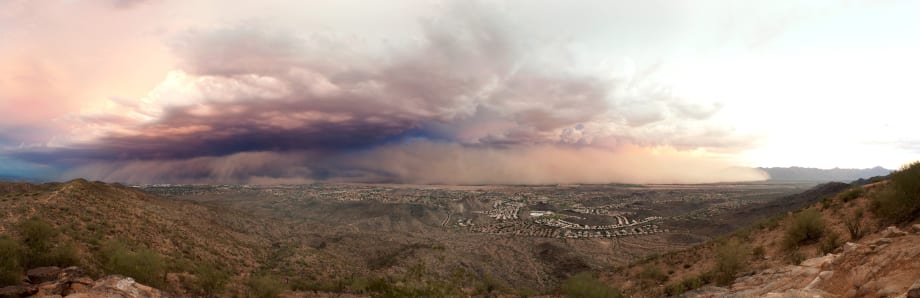
Phoenix is prone to dust storms, the most intense of which are known as “haboobs,” one of which struck the city on July 31, 2011. Photo: Alan Stark
Phoenix is prone to dust storms, the most intense of which are known as “haboobs,” one of which struck the city on July 31, 2011. Photo: Alan Stark
According to the World Meteorological Organization, Phoenix is the sunniest major city in the world, averaging 3,872 hours of sunshine per year. This ranking is made more impressive by the fact that Arizona’s capital is beset by frequent dust storms of varying intensity. GF sat down with Gregg Duckett, the city’s public works operations manager, and Aramis Stevenson, training and exercise coordinator for the Phoenix Manager’s Office of Homeland Security and Emergency Management.
GF: How frequent are the dust storms, and how long do they typically last?
Stevenson: The Phoenix area encounters many dust storms throughout the year, but there are usually only two or three large-scale dust storms, sometimes referred to as “haboobs,” each year. The most severe impact is lower visibility, which may last for 15 to 30 minutes; however, the effects of a large dust storm can last two to three hours without rain.
GF: Is there a season in which dust storms are particularly prevalent?
Stevenson: Yes, between June 15 and Sept. 30. Each year, Arizona has a monsoon season, during which frequent dust storms or a haboob may occur.
GF: How much advance warning do you typically get, if any?
Stevenson: Depending upon the size of the dust storm and how quickly it develops, the National Weather Service usually provides notifications or alerts anywhere from 10 to 45 minutes in advance. The dust storms usually develop in the southern portion of the state, so the local weather outlets and the Arizona Department of Transportation are very good at ensuring people in the Phoenix area are advised before a dust storm or haboob could or does arrive.
GF: Does the city effectively grind to a halt when a major dust storm hits?
Stevenson: No, not really. Staff and residents who are driving are advised to slow down or pull over and stop depending on the visibility and wind speed. Those out in the open are advised to move indoors or inside their vehicle while it passes.
GF: Does the fleet mobilize during or after a dust storm, for example, as part of an emergency response during the storm or cleanup after the storm has passed?
Duckett: It depends on the severity of the storm. For example, if along with the haboob there is what is called a “downburst,” which is a very strong wind over a small area, or heavy rain, then there can be a lot of downed trees, flash flooding, and debris on the streets and in parks. When this happens, the streets and public works departments will dispatch crews to remove the debris.
GF: What kind of damage can a dust storm do to a vehicle?
Duckett: Not too much. Mostly it pits the paint and frosts the windshield and headlight covers.
GF: Does it take long to remedy the damage done to a vehicle by a dust storm?
Duckett: No, typically the vehicles are not damaged by the storms, although they may need to have their engine air cleaner cleaned or replaced. Over the long term, though, the storms can damage the windshields and headlamp covers, requiring replacement. Blowing sand is very abrasive, reducing the visibility through the windshield and reducing the light output of the headlights.
GF: Is there anything you can do to protect a vehicle from a dust storm, short of storing it indoors?
Duckett: That is about it. In general, the storms can be tough on paint and glass if left out in the open.
More Operations

Is Keeping Older Fleet Vehicles Really Saving Money?
Is keeping vehicles longer saving money, and what happens when a diagnostic test points to the wrong fix?
Read More →
How Smart Fleet Strategy Can Help Local Government Agencies Do More with Less
Keeping a vehicle longer may ease this year’s budget, but what does it cost the next one? A closer look at fleet decisions can reveal opportunities to reduce spending while protecting essential services.
Read More →
Connect with Government Fleet on LinkedIn
From industry news and fleet management strategies to conversations with peers, Government Fleet's LinkedIn page offers public-sector fleet professionals another way to stay informed and connected.
Read More →
Town of Queen Creek Named Most Successful Fleet Award Winner of Inaugural RTA Fleet Success Awards
Five fleets were honored at RTA Connect 2026 in Chicago for excellence across resource efficiency, intentional culture, risk management, and stakeholder satisfaction.
Read More →
A buyer's guide to fleet management software in 2027
Buying fleet management software in 2027 means looking beyond features and price. As fleet operations, technology and expectations evolve, this guide explores what today’s fleet professionals should consider when choosing a system that can deliver value now and adapt to what comes next.
Read More →
Hazard Alerts, Fleet Car Sales Rise and a New Shuttle Concept
Fleet car sales doubled, but the bigger picture tells a different story in this week’s roundup.
Read More →
How St. Johns County Turned Fleet Data Into Better Replacement Decisions
St. Johns County, Florida, had fleet data, but turning it into reliable decision guidance was another matter. Instead of starting over with a new fleet management system, the county connected existing tools and built a scoring system that gives managers an objective look at fleet health.
Read More →
Fleet Forward Conference Introduces One-Day Passes for 2026
New one-day registration lets fleet professionals attend Tuesday, Wednesday, or Thursday, with passes available for $249.
Read More →
ENC Unveils its ZAVIR Medium-Duty Shuttle
Two variants of the concept shuttles were revealed: a low-floor configuration and a high-floor configuration.
Read More →
Could Your Next Fleet Technician Start as an Intern?
What if your next technician hasn’t worked in a fleet shop yet? What fleets are doing to free up time.
Read More →