




Outsourcing Generates Savings for Utility Agency
Eliminating in-house vehicle maintenance saves the Tennessee Valley Authority millions of dollars each year. This provides better service to residents and sets an example for private companies.

Faced with growing competition in the electric utility industry, the Tennessee Valley Authority (TVA) recognized the need to distinguish itself as a leading supplier of wholesale electric power with a competitive, efficient, and reliable operation.
The TVA's role as a government agency operating with public funds made it especially important to set a standard for responsibility that could be strived for among competitors in the private sector.
Its power system pays its own way by selling electricity to customers throughout the Tennessee Valley.
Outsourcing vehicle maintenance was one of many actions taken to cut operating costs and reduce the agency's workforce. Contracting out this service was found to be the best way to ensure that all vehicle maintenance requirements are performed at the lowest total ownership costs, says Michael Metcalf, manager of fleet and procurement business services for TVA.
Most recently, the TVA awarded its vehicle maintenance contract to Automotive Resources International (ARI), a fleet leasing and management company based in Mt. Laurel, N.J.
ARI's national database of suppliers provide routine preventive maintenance, corrective repairs, collision repairs, and emergency roadside assistance to the TVA's light-duty fleet of sedans, vans, light trucks, and SUVs.
The TVA can also work with local repair shops if a national supplier is not located in the area, an important benefit for vehicles located in rural areas of the Tennessee Valley, says Metcalf.
"Through a comprehensive strategic sourcing initiative, we performed an overall program review that was aimed at providing fleet services at the lowest total ownership cost," says Metcalf. Since it began outsourcing, the TVA has eliminated its five full-service garages.
The fleet has also been reduced from 4,500 vehicles in 1997 to about 2,800 vehicles today. These are used in seven states for the TVA's work, including environmental research, navigation and flood control projects on the Tennessee River, and power generation.
The TVA chose ARI for its vehicle maintenance by conducting competitive negotiations with interested companies. Each side entered into a 10-year contract, which can be terminated at any time by mutual agreement. The government/utility segment represents about 15 percent of ARI's total fleet maintenance business.
Congress established the TVA in 1933 primarily to provide flood control, navigation, and electric power to stimulate economic growth in the Tennessee Valley region.
Today, the TVA is doing its part to improve regional air quality by reducing sulfur dioxide and nitrogen oxide emissions from its coal-fired power plants.
The TVA is spending $1.5 billion on scrubbers to further reduce sulfur dioxide emissions by 85 percent by 2010.
More Operations

ENC Unveils its ZAVIR Medium-Duty Shuttle
Two variants of the concept shuttles were revealed: a low-floor configuration and a high-floor configuration.
Read More →
Could Your Next Fleet Technician Start as an Intern?
What if your next technician hasn’t worked in a fleet shop yet? What fleets are doing to free up time.
Read More →
How Phoenix Is Building Its Next Generation of Fleet Technicians
With more than 8,000 vehicles and pieces of equipment to maintain, the City of Phoenix could not afford to wait for fully trained technicians to walk through the door. Instead, they revamped their entire workforce strategy and showed how public fleets can create their own talent pipeline while preparing existing employees for increasingly complex vehicles.
Read More →
What’s Slowing Your Fleet Down?
Could a change in how work gets done help your fleet return vehicles to service sooner?
Read More →
Can Public Fleets Trust the Data Driving Their Decisions?
Public fleets have more data than ever, but inconsistent records and missing information can still undermine maintenance, replacement, and cost decisions.
Read More →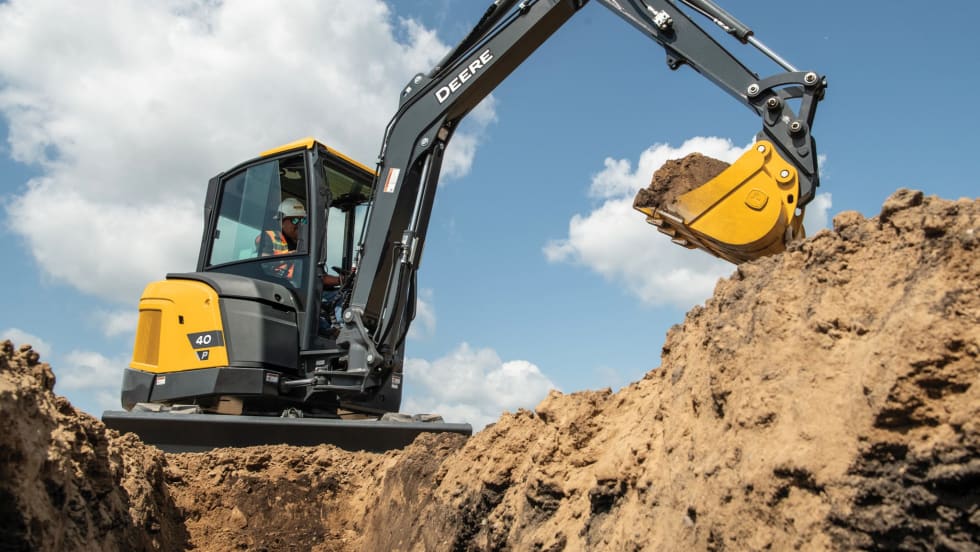
John Deere Introduces 40 P-Tier Compact Excavator
John Deere is adding a compact excavator designed for crews that need to move equipment between jobsites and handle multiple types of work with one machine. The 40 P-Tier weighs less than 10,000 pounds and offers configurable hydraulics, attachment options, and connected fleet-management capabilities.
Read More →
How Leading Fleets Improve and Why Business Plans Matter
This week, we look at what past Leading Fleet winners can teach us about making progress, plus how to build a business plan your fleet will actually use.
Read More →
Nominate a Fleet Leader for the 2027 Public Fleet Hall of Fame
Do you know a fleet leader who has made a lasting impact on the industry? Nominate this fleet professional for the 2027 Public Fleet Hall of Fame.
Read More →
Why Fleet Business Plans Need Three Perspectives
A fleet business plan should help agency leaders understand the fleet’s value, give the organization a clear direction, and establish shared expectations with customer departments.
Read More →
How Oil Analysis, Safety Technology, and Fleet Awards Drive Improvement
What happens when fleets let measured results guide their next decision?
Read More →