




King County Outsources Repair Management to Eliminate Downtime
Increased vehicle downtime, too much paper work, and shady repair shops were all reasons King County switched from an in-house vehicle-repair process to a vendor’s product tailored to its specific fleet needs.
Ask any fleet manager about their primary concern and, chances are, it’s saving time. Time equals money. In the fleet business, time is essential because following schedules are imperative. Many fleet managers may not be aware of the services available to help them cut time, decrease spending, and manage paper load.
King County,Wash., operates a fleet of more than 2,700 vehicles, motorcycles, and pieces of equipment for divisions including parts maintenance, wastewater treatment, road construction, and law enforcement. “ We have a little bit of everything,” says Bob Toppen, equipment maintenance manager for King County, “Anything with wheels, we got it. Some of them don’t even have wheels!”
About four years ago, King County was looking to decrease vehicle downtime associated with repairs and reduce cost from false estimates. The county turned to CEI.
CEI, headquartered in Trevose, Pa., provides collision management, driver safety and risk management services to government, sales and service, and heavy-duty truck fleets. Founded in 1983, CEI also provides direct repair program outsourcing to property and casualty companies that insure both light-duty and heavy-duty vehicles.
Hidden Costs:
Prior to using CEI, King County’s maintenance department self-managed
the vehicle-repair process that cost the county an “exorbitant” amount of money. “Before CEI, we were using our own system and it was very cumbersome and time consuming, and we were getting a lot of excessive downtime from the process and procedure we had to follow
with having an in-house program in a government agency,” said Toppen. “We were outsourcing our repair work, but we were having to do all of the legwork ourselves,” said Toppen.
Unfair Estimates
Outsourcing the county’s needs became critical when managers realized
how much time and money was being spent simply organizing which vehicles needed repair and where they were to be serviced.
Hidden costs surfaced primarily because different body shops performed repairs. Often, it is hard to find reliable and honest technicians who don’t exaggerate estimates, or worse, replace parts prematurely. It is a common and costly problem many fleet maintenance managers face with repair shops. “They would figure out how we operated our repair process and low-ball the estimate just to get the job. Once they got the vehicle into their shop, they would tack on a number of additional charges after the initial estimate. We went through a number of shops for that reason,”Toppen said.
Finding the right shop for vehicle repairs relies heavily on trust. Fleet managers often find themselves exceeding budget on non-existent repairs. “We do our own in-house repair-versus-replace analysis on all of our vehicles. We inspect them according to a certain criteria and determine whether they are suitable for continued use. In some cases, the vehicle would be approved for repair during our check, then the shop would tack on all of these miscellaneous charges and repairs that would put us over budget to the point where we should have just replaced the vehicle instead of repairing it,” said Toppen. “We would have to start the paperwork all over again.”
Under the new program, estimates are sent directly to CEI by the shop, which then passes them to Toppen’s department. CEI checks the estimate against pre-determined standards established for its network of prescreened body shops.
Vehicle Downtime
Delays in vehicle turnover can become a liability for large fleets. It was the single-most-important reason King County switched to CEI. “Our process was, once we got the vehicle, we had to go out and get three different repair estimates. It took a lot of time and effort
to get the shop to send someone out to our facility and write the estimates; the vehicles were completely out of commission and there was no way to control it. It was very frustrating,” said Toppen. “With CEI, we have eliminated all of that. They have the vehicle down to the body shop within a day. We realize substantial savings because we have cut vehicle downtime to almost nothing.”
By eliminating non-repairable and troublesome vehicles, King County has also downsized the fleet significantly and made only top-notch vehicles ready and available for use.
Other Benefits
Toppen pointed out other outsourcing benefits. Information about vehicle repairs and operations is now readily available to staff through Internet access to CEI’s Web-based claims management
system. What once took a staff analyst hours to retrieve — total and
average repair costs, estimates, and repair time information — now is readily available, any time, at the touch of a button. And then there’s the extra time created for Toppen’s staff by eliminating
the labor-intensive steps formerly involved with the bidding process.
“With CEI, we were able to keep doing our risk management and in-house subrogation with our own county people,” said Toppen. “We have saved considerably in administrative costs and the staff gets to concentrate on more important things. We run a tight ship, and CEI helps us to accomplish that”.
More Operations

Fleet Forward Conference Introduces One-Day Passes for 2026
New one-day registration lets fleet professionals attend Tuesday, Wednesday, or Thursday, with passes available for $249.
Read More →
ENC Unveils its ZAVIR Medium-Duty Shuttle
Two variants of the concept shuttles were revealed: a low-floor configuration and a high-floor configuration.
Read More →
Could Your Next Fleet Technician Start as an Intern?
What if your next technician hasn’t worked in a fleet shop yet? What fleets are doing to free up time.
Read More →
How Phoenix Is Building Its Next Generation of Fleet Technicians
With more than 8,000 vehicles and pieces of equipment to maintain, the City of Phoenix could not afford to wait for fully trained technicians to walk through the door. Instead, they revamped their entire workforce strategy and showed how public fleets can create their own talent pipeline while preparing existing employees for increasingly complex vehicles.
Read More →
What’s Slowing Your Fleet Down?
Could a change in how work gets done help your fleet return vehicles to service sooner?
Read More →
Can Public Fleets Trust the Data Driving Their Decisions?
Public fleets have more data than ever, but inconsistent records and missing information can still undermine maintenance, replacement, and cost decisions.
Read More →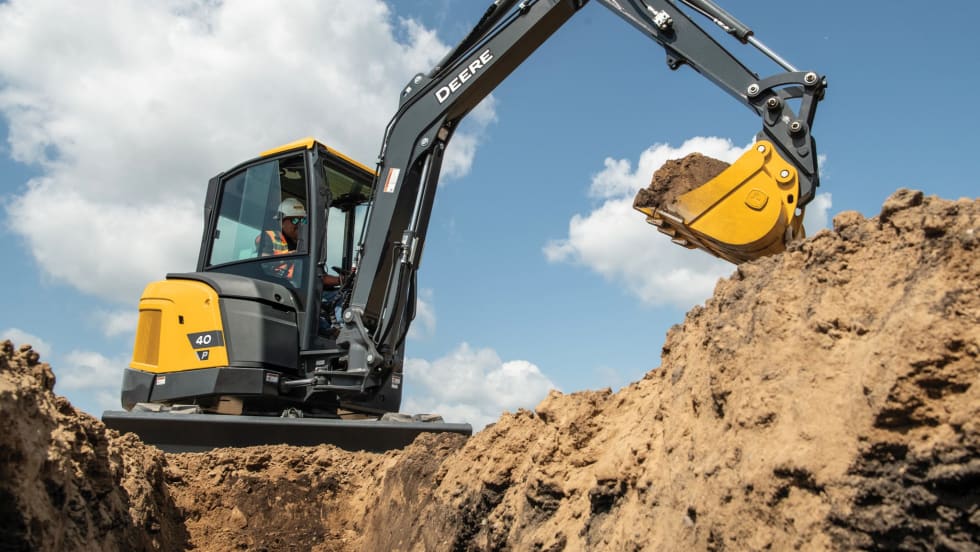
John Deere Introduces 40 P-Tier Compact Excavator
John Deere is adding a compact excavator designed for crews that need to move equipment between jobsites and handle multiple types of work with one machine. The 40 P-Tier weighs less than 10,000 pounds and offers configurable hydraulics, attachment options, and connected fleet-management capabilities.
Read More →
How Leading Fleets Improve and Why Business Plans Matter
This week, we look at what past Leading Fleet winners can teach us about making progress, plus how to build a business plan your fleet will actually use.
Read More →
Nominate a Fleet Leader for the 2027 Public Fleet Hall of Fame
Do you know a fleet leader who has made a lasting impact on the industry? Nominate this fleet professional for the 2027 Public Fleet Hall of Fame.
Read More →
Why Fleet Business Plans Need Three Perspectives
A fleet business plan should help agency leaders understand the fleet’s value, give the organization a clear direction, and establish shared expectations with customer departments.
Read More →