




Fleets Cook Up a Recipe for Fuel Economy
Responding to high oil prices, two Florida fleets began their own fuel production operations, creating environmentally friendly biodiesel fuel from local sources of cooking oil.
The scent of French fries should have been a dead giveaway. But the operator of the St. Johns County brush chipper was completely unaware it was running on biodiesel fuel made from recycled cooking oil. All he knew was that it wasn’t smoking as much as normal.
“He really thought something was wrong with it,” said Joe Stephenson, the Florida county’s public works director.
Nothing wrong here. It’s just the makings of a grown-up science fair project, an experiment that an increasing number of fleets are taking on. By collecting used oil from area restaurants, schools, and other entities, then processing it with methanol and sodium hydroxide, fleet managers are banking on saving a little money, reducing dependence on foreign oil, and “greening-up” their cities at the same time.
“Yes, we are taking on more work,” said Sam K. Houston Jr., division chief for the City of Jacksonville, Fla.’s fleet management division. “But it’s just the right thing to do.”
Plant Aims to Produce 2,000 Gallons Biodiesel a Week
Last summer,Houston began building a biodiesel plant with capacity to produce 2,000 gallons of fuel each week.
“When fuel was $1 a gallon, this wouldn’t have been cost-effective,” he explained. In 2006, however, his more-than 5,000- unit fleet ran up a fuel bill of $15 million. And since about 2.5 million of the 6 million gallons of fuel used each year are diesel, the less expensive, homemade blend could save some $150,000 annually. In addition, he estimates he’ll recoup the cost of the plant within four or five months and foresees a day when excess is sold to other government entities.
He had to start small, beginning with a few years’ worth of research, including the science of the process, the benefits of biodiesel, and the commitment level he could get from area restaurants.
Houston learned several things. First, biodiesel is a zero-emission fuel, not only environmentally friendly, but also ready to use in any diesel engine without modifications. Second, after the cooking oil is heated, mixed, and processed, the only byproduct is soapy water discharged into the sewer system. Third, restaurants were willing to offer up 100 gallons of cooking oil per week.
“Right now, some restaurants are paying to get rid of it,”Houston said. “In the future, we’ll probably have to buy it.” At present, it appears a sweet deal for everyone involved. The cost of processing a gallon of biodiesel is about 70 cents, he estimates, versus paying $2.50 a gallon. Restaurants can turn their participation into a public relations benefit, advertising their environmentally friendly efforts, while also saving taxpayer dollars.
Production Begins with Trial and Error
In St. Johns County, the biodiesel program began with former fleet maintenance manager Gary Emerson, now a consultant. Stephenson, however, easily recalls the days Emerson spent in his office,
“learning how to make biodiesel, using equipment the size of a blender
you’d make margaritas with.”
Before long, a quantity was produced to try in pieces of equipment, not only at B-20 (a mix of 20-percent biodiesel and 80- percent diesel), but also at B-100 (100-percent biodiesel). By October 2005, the County Commission had awarded the department a small budget for pursuing the project further, and the school board and other institutional vegetable oil users were invited to participate. The department was producing 100 gallons per batch and up to two batches per day.
Last fall, the St. Johns program began collecting a steady income of raw product from local schools so there’s a steady income of raw product to fill two 3,000-gallon containers. Stephenson expected to routinely process that amount this fiscal year for use in vehicles.
Efforts Applauded
Both Houston and Stephenson said they’ve met enthusiastic response for
their programs, even though there have been “fits and starts” along the way. Emerson, for example, “cobbled together” his own machinery out of PVC pipes, pumps, and containers. At one point, a pump lost its prime, but an associated heater kept on working — right up to the point it melted the PVC.
But overall, Stephenson said, “People think it’s great. We’re not importing the raw material, and they like the fact that we’re recycling, and that the government is doing something innovative and economically effective.”
In one method of producing biodiesel, collected used cooking oil is heated, mixed, and processed with methanol and sodium hydroxide.
More Operations

How St. Johns County Turned Fleet Data Into Better Replacement Decisions
St. Johns County, Florida, had fleet data, but turning it into reliable decision guidance was another matter. Instead of starting over with a new fleet management system, the county connected existing tools and built a scoring system that gives managers an objective look at fleet health.
Read More →
Fleet Forward Conference Introduces One-Day Passes for 2026
New one-day registration lets fleet professionals attend Tuesday, Wednesday, or Thursday, with passes available for $249.
Read More →
ENC Unveils its ZAVIR Medium-Duty Shuttle
Two variants of the concept shuttles were revealed: a low-floor configuration and a high-floor configuration.
Read More →
Could Your Next Fleet Technician Start as an Intern?
What if your next technician hasn’t worked in a fleet shop yet? What fleets are doing to free up time.
Read More →
How Phoenix Is Building Its Next Generation of Fleet Technicians
With more than 8,000 vehicles and pieces of equipment to maintain, the City of Phoenix could not afford to wait for fully trained technicians to walk through the door. Instead, they revamped their entire workforce strategy and showed how public fleets can create their own talent pipeline while preparing existing employees for increasingly complex vehicles.
Read More →
What’s Slowing Your Fleet Down?
Could a change in how work gets done help your fleet return vehicles to service sooner?
Read More →
Can Public Fleets Trust the Data Driving Their Decisions?
Public fleets have more data than ever, but inconsistent records and missing information can still undermine maintenance, replacement, and cost decisions.
Read More →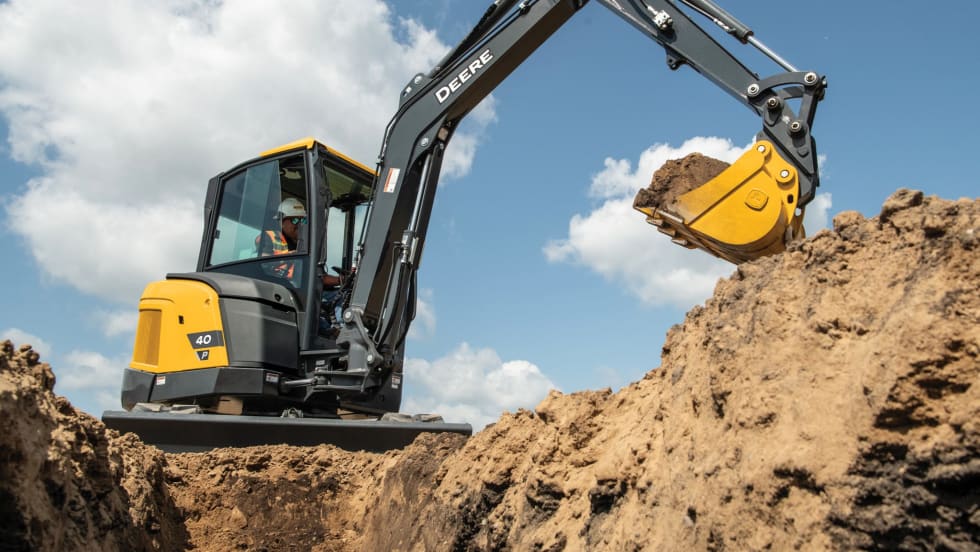
John Deere Introduces 40 P-Tier Compact Excavator
John Deere is adding a compact excavator designed for crews that need to move equipment between jobsites and handle multiple types of work with one machine. The 40 P-Tier weighs less than 10,000 pounds and offers configurable hydraulics, attachment options, and connected fleet-management capabilities.
Read More →
How Leading Fleets Improve and Why Business Plans Matter
This week, we look at what past Leading Fleet winners can teach us about making progress, plus how to build a business plan your fleet will actually use.
Read More →
Nominate a Fleet Leader for the 2027 Public Fleet Hall of Fame
Do you know a fleet leader who has made a lasting impact on the industry? Nominate this fleet professional for the 2027 Public Fleet Hall of Fame.
Read More →