




Related: 5 Steps to Implementing a New Fuel Management System
Facing Challenges as a Road to Improvement
Terry Manning sees every situation he comes across as a way to develop professionally.

Lexi Tucker・Senior Editor

4 min to read

Terry Manning
When asked about why he decided to become a fleet supervisor, Terry Manning of Clallam County PUD, Wash., says it’s because he enjoys being challenged in a way that will help him grow.
“I’ve always seen moving up and taking on more responsibility as a way to become better at what you do,” he says.
He’s learned a lot during his evolution from mechanic to fleet manager, and hopes to continue to do so.
No Dull Moments
Like any good fleet manager, his job is to keep the shop up and running, and vehicles moving in and out. From ordering parts to ordering trucks, no two days are the same: and that’s what he loves about what he does.
“I think the most interesting aspect of the job is there’s never a dull moment. You come in one morning, thinking Monday's going to be set in stone, and two hours into it, I'm going 180 degrees the other way,” he explains.
Making sure the trucks he orders are spec’ed the way the crews need it and ensuring they are going to function for the next 10 to 15 years and fit well into the fleet is like constantly solving a jigsaw puzzle that enables everyone to do their job well…how could that possibly be considered dull?
Managing A Finite Resource
Manning says his biggest challenge is time management. There are only so many hours in a day, and you have to find the method that works best for you to get everything done in a timely manner.
“You say to yourself, ‘ok, I've got all these projects on my desk and I’ve got to get them going.’ Prioritize. Write everything down, keep notes, and track your progress.”
He says it can certainly get complicated, as he must strike a balance between what goes on in the shop and his office. “I must always be thinking about how to keep everything moving forward.”
COVID-19 has added even more to his schedule, as he and his team must ensure they are properly sanitizing vehicles. They must wipe down surfaces before and after they’ve done work on a vehicle. When parts come in, they have to make sure they're also sanitized.
“It adds even more to your to-do list and costs you time as well.”
Easing Fueling
A project he’s currently working on implementing is a Fuel Master system which is set to go live in early September.
This will help move fueling along from the antiquated process of a driver pulling up to a pump, writing down their mileage and truck number, pumping the fuel, and then writing down how much they used.
Now, all they’ll have to do is use a little key that has identification data. They'll put that in, input their identification, and pump the fuel. Everything is digital, which helps streamline the process.
“It cuts down paperwork and makes it easier to access the information we need. It helps us keep track of how our fuel system’s working and how we can keep a better record of we are actually performing.”
Asking Around
Manning advises newer fleet managers to go out and do more research when it comes to purchasing and spec’ing.
“Find out what other people are experiencing. Find out what works for others, and then work off of that. When I first started, nobody told me anything about spec’ing trucks, so when I all of a sudden had to, I asked around. Stay informed as to what’s going on out there, and rely on other fleet managers and the internet.”
Wise Words
Here are a few other tips Manning has for fleet managers who are just starting their journey:
Don’t forget where you started from. During the time you’ve worked, your managers may have treated you with respect or micro-managed. Either way, you learn how you want to be treated and should work those skills into your management position.
Take the insight you learned and build your portfolio. In Manning’s case, he had positive input from his managers and strives to do that with the crews he manages.
Without a team concept in place, your shop will be dysfunctional.
Trust your people. “I can send anyone of the techs out on a job and know it will be completed in a safe and timely manner.”
Spend time with each of your team members to learn about their likes and dislikes in their field of work. Get to know them.
Training should be one of the highest priorities on your to-do list.
Don’t get stuck in the rut of “that’s how it’s always been done”; team members have some great ideas.
There will almost always be more than one way to complete a job. If it’s done in a safe, timely, and cost-effective way, let your team go to work and learn.
Subscribe to Our Newsletter
More Operations

Could Your Next Fleet Technician Start as an Intern?
What if your next technician hasn’t worked in a fleet shop yet? What fleets are doing to free up time.
Read More →
What’s Slowing Your Fleet Down?
Could a change in how work gets done help your fleet return vehicles to service sooner?
Read More →
Can Public Fleets Trust the Data Driving Their Decisions?
Public fleets have more data than ever, but inconsistent records and missing information can still undermine maintenance, replacement, and cost decisions.
Read More →
How Phoenix Is Building Its Next Generation of Fleet Technicians
With more than 8,000 vehicles and pieces of equipment to maintain, the City of Phoenix could not afford to wait for fully trained technicians to walk through the door. Instead, they revamped their entire workforce strategy and showed how public fleets can create their own talent pipeline while preparing existing employees for increasingly complex vehicles.
Read More →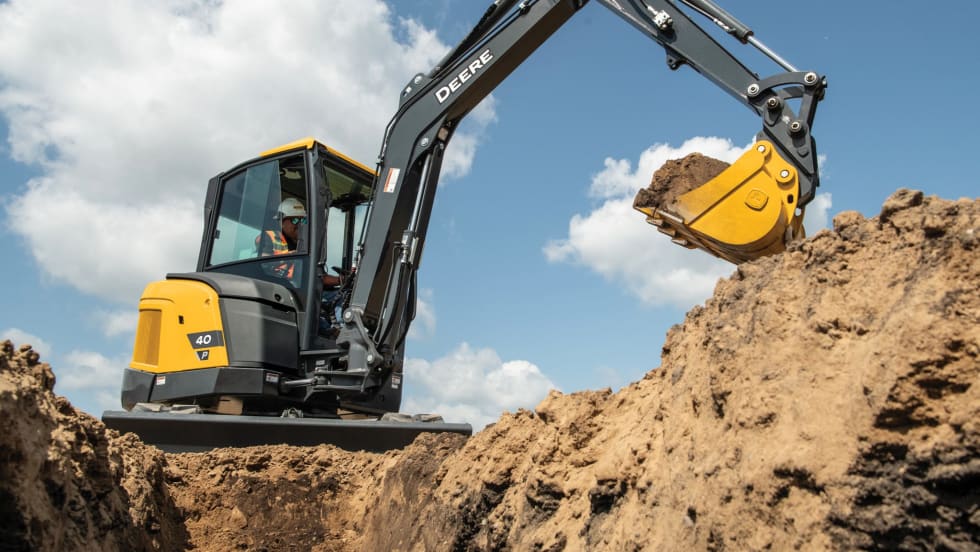
John Deere Introduces 40 P-Tier Compact Excavator
John Deere is adding a compact excavator designed for crews that need to move equipment between jobsites and handle multiple types of work with one machine. The 40 P-Tier weighs less than 10,000 pounds and offers configurable hydraulics, attachment options, and connected fleet-management capabilities.
Read More →
How Leading Fleets Improve and Why Business Plans Matter
This week, we look at what past Leading Fleet winners can teach us about making progress, plus how to build a business plan your fleet will actually use.
Read More →
Nominate a Fleet Leader for the 2027 Public Fleet Hall of Fame
Do you know a fleet leader who has made a lasting impact on the industry? Nominate this fleet professional for the 2027 Public Fleet Hall of Fame.
Read More →
Why Fleet Business Plans Need Three Perspectives
A fleet business plan should help agency leaders understand the fleet’s value, give the organization a clear direction, and establish shared expectations with customer departments.
Read More →
How Oil Analysis, Safety Technology, and Fleet Awards Drive Improvement
What happens when fleets let measured results guide their next decision?
Read More →
Emergency Response, Fleet Sales and New Technology
This week’s fleet news covers emergency preparedness, shifting vehicle sales, electric truck investments, and new tools for monitoring road conditions.
Read More →