




Engaging Techs With Upward Mobility Prospects
Tom Keyser believes the key to snagging the interest of talented technicians is to educate them about the career possibilities government fleets contain.

The potential for upward mobility in the fleet world is staggering, and not touted nearly enough. Tom Keyser focuses heavily on it with his techs.
Photo: Canva/Government Fleet
Tom Keyser, fleet manager for Washington County, Oregon, found his way into fleet management in a way familiar to many who have retired from the military. He was a part of the Air Force for 29 years, where he did work similar to what he does now. With a staff of 21 and duties such as approving vehicle and parts purchases, managing budget and workflow, and assisting with end users’ needs and requests, he’s learned much and stayed engaged in a job where there’s never a boring day.
Attracting New Techs
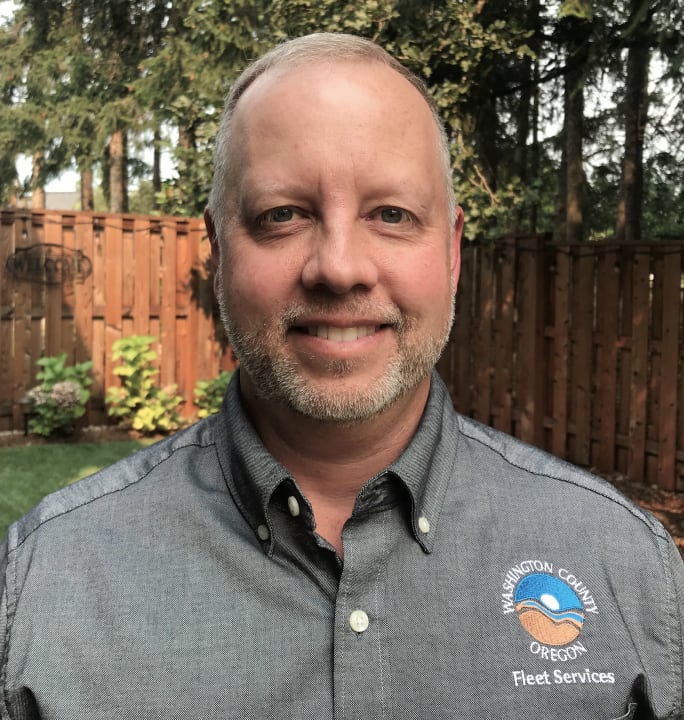
Tom Keyser
Photo: Washington County, Oregon
He’s recently had some employees move on and is facing what many other fleet departments are going through: trying to figure out how to fix a shortage of qualified technicians.
“We used to have 40 or 50 qualified applicants, and that’s now been reduced to maybe eight or 10. We're lucky we've gotten quality people that applied, but I know others are struggling with this same issue and we are all competing for the same applicants.”
His department works closely with Portland Community College and their Diesel Technology program on their Junior-Senior day focused on local high schools and a Diesel Day that is open to the public to try to attract those that may be interested in the automotive field and make them aware of this potentially lucrative and misunderstood career path.
“We want to get the word out there that while we may be a government entity, we still have a full shop and a spectrum of jobs like heavy equipment and automotive technicians, stores clerk, shop supervisor, service coordinator. There's a lifelong career that can be made that has great stability and benefits, and it’s being undersold.”
The potential for upward mobility in the fleet world is staggering, and not touted nearly enough. One can evolve from a fleet assistant, who ensures the shop is clean, shuttles vehicles to and from vendors, manages shop equipment, and runs various errands, to a fleet manager making much more than just a “livable” wage.
“There’s a spectrum of careers you can work your way through. You can't necessarily do that a lot of other places.”
Upfitting Interest
Keyser enjoys that every day is different. Their Sheriff's Office in particular, has some pretty unique requirements. Watching the upfit process and getting a first hand look at some of the features they’ve included for not only their standard patrol vehicles, but for special teams such as tactical and canine is fascinating.
Much of the vehicle upfitting is done in-house, and seeing a brand-new vehicle being stripped down to the bare bones and then built back up with various requirements and equipment is an interesting process, he says.
“I don't think those who drive the vehicles on a regular basis understand how in-depth that process is and how all of the equipment and electronics work together…everything has to be perfect.”
And that's just one set of customers. He also works with Health and Human Services, Facilities and Parks, Land Use and Transportation among others and dealing with so many different departments is what keeps the job fresh because he’s never dealing with the same situation at any given time.
Getting Connected
A current project he’s working on is expanding the county’s electric infrastructure and electric vehicle program. Since the area is relatively rural, it’s been challenging. The department recently added its first all-electric Chevy Bolt to the motor pool fleet, and hopes to add more as they build and upgrade.
“We're trying to include charging in the planning phase early on. We also started an electrification team. Fleet, sustainability, and facilities are working together to tackle this as a whole versus me following my own path, facilities trying to work infrastructure, and then sustainability asking us both what's going on.”
He’s also excited because he’s started to implement telematics in about a third of the fleet. The department is working to learn the system so they can use it to its full potential and hopefully expand it to other parts of the county.
Certified for Success
Keyser has a federal certification as well as NAFA’s CAFM certification. The value certifications provide is something that shouldn’t be undersold.
“I don't think we had something like this for a long time in our career field. Especially when I was coming up in the military. I'm trying to encourage my employees to get certified as well, because I think it would help them as they grow in their career. Knowing there are avenues to help you expand your breadth of knowledge can open doors. I stumbled upon it by accident just by asking questions and networking, but it would be smart for those who are up and coming to look into it as well.”
More Operations

Is Keeping Older Fleet Vehicles Really Saving Money?
Is keeping vehicles longer saving money, and what happens when a diagnostic test points to the wrong fix?
Read More →
How Smart Fleet Strategy Can Help Local Government Agencies Do More with Less
Keeping a vehicle longer may ease this year’s budget, but what does it cost the next one? A closer look at fleet decisions can reveal opportunities to reduce spending while protecting essential services.
Read More →
Connect with Government Fleet on LinkedIn
From industry news and fleet management strategies to conversations with peers, Government Fleet's LinkedIn page offers public-sector fleet professionals another way to stay informed and connected.
Read More →
Town of Queen Creek Named Most Successful Fleet Award Winner of Inaugural RTA Fleet Success Awards
Five fleets were honored at RTA Connect 2026 in Chicago for excellence across resource efficiency, intentional culture, risk management, and stakeholder satisfaction.
Read More →
A buyer's guide to fleet management software in 2027
Buying fleet management software in 2027 means looking beyond features and price. As fleet operations, technology and expectations evolve, this guide explores what today’s fleet professionals should consider when choosing a system that can deliver value now and adapt to what comes next.
Read More →
Hazard Alerts, Fleet Car Sales Rise and a New Shuttle Concept
Fleet car sales doubled, but the bigger picture tells a different story in this week’s roundup.
Read More →
How St. Johns County Turned Fleet Data Into Better Replacement Decisions
St. Johns County, Florida, had fleet data, but turning it into reliable decision guidance was another matter. Instead of starting over with a new fleet management system, the county connected existing tools and built a scoring system that gives managers an objective look at fleet health.
Read More →
Fleet Forward Conference Introduces One-Day Passes for 2026
New one-day registration lets fleet professionals attend Tuesday, Wednesday, or Thursday, with passes available for $249.
Read More →
ENC Unveils its ZAVIR Medium-Duty Shuttle
Two variants of the concept shuttles were revealed: a low-floor configuration and a high-floor configuration.
Read More →
Could Your Next Fleet Technician Start as an Intern?
What if your next technician hasn’t worked in a fleet shop yet? What fleets are doing to free up time.
Read More →