




Elite Fleets Proactively Contend with Industry Challenges
Accolades aside, managers of three elite fleets, share their proactive approaches in tackling today's vexing fleet challenges.


At a Glance |
Three of the 2012 Elite Fleets have been continuing in the tradition of fleet excellence:
|
The Elite Fleets, award winners of previous fleet awards, continue to contend with the same challenges other fleets face. Three of the 2012 Elite Fleets — City of Portland, Ore., City of Troy, Mich., and Hillsborough County, Fla. — persist in battling industry challenges, but they’re also continuing in the tradition of excellence, accomplishing such actions as increasing insourcing, improving technician incentives, and succeeding during audits.
City of Portland Boosts ASE-Certified Technician Numbers
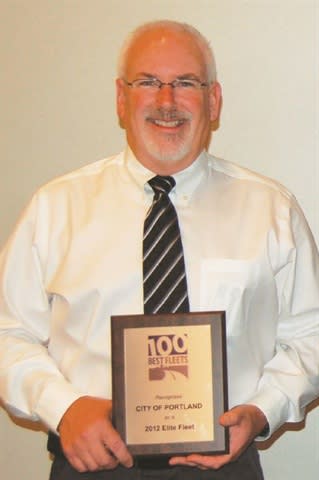
John Hunt
A high-priority initiative for the City of Portland, Ore., City Fleet is strengthening the technical expertise of its technician team. The ultimate goal is achieving a designation such as an ASE Blue Seal of Excellence.
Fleet Manager John Hunt, CPFP, gained a valuable incentive toward that goal last year when he and his Portland team successfully negotiated with the labor union for premium pay compensation to technicians holding ASE Master Technician status.
“In an unprecedented motivational program, mechanical staff now are offered $160 per month for ASE Master certification,” Hunt said. Since the pay incentive program began, the number of ASE Master Technicians has quadrupled.
Fleet staff serves city bureaus with a total of 2,950 units and is funded by a $17 million operating budget.
According to Hunt, the fleet operation must deal with such obstacles as budget constraints (a recent 8% reduction), technician shortage (increase in equipment with a cutback of six staff members since 2001) and training, a scarcity of specialized tools and diagnostic equipment, and aging facilities.
Strategies Hunt has employed to surmount those obstacles include leveraging technology to promote efficiencies, increasing training activities, proactive business planning, and enhancing communications and collaborations with management and customers.
Technology improvements include upgrading to a Web-based fleet management system to increase efficiencies and streamline the vehicle repair process. Additionally, a computer-based technical training program has been implemented.
Expanded insourcing activities help compensate for reduced budgets, while a 24-hour, Monday-Friday, main garage operation minimizes vehicle downtime.
As a result of the City’s ranking in the 100 Best Fleets program, Hunt described several networking and learning opportunities helping his fleet operation remain a leader in the public sector. Notably, the Department of Homeland Security invited Hunt to join the agency’s Sustainability and Efficiency Task Force and share Portland’s fleet expertise. Hunt also was appointed to the City of Portland’s Office of Management and Finance Strategic Planning Committee.
“These opportunities offer new avenues to learn the latest and best information as new networking relationships are developed,” Hunt said.
[PAGEBREAK]
City of Troy Passes Audit, Avoids Cutbacks
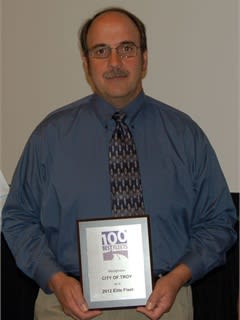
Sam Lamerato
In 2011, budget issues prompted the City of Troy, Mich., to initiate audits of each City division, conducted by the International City/County Management Association.
The City’s fleet organization sailed through the audit.
“Unlike many other City divisions, fleet management was declared sustainable, meaning no cutbacks in staff or budget,” said Sam Lamerato, CPFP, fleet superintendent. “Fleet, especially, received high marks for being ahead of the curve and proactive in anticipating challenges.”
The 17-member team manages a diverse 500-unit fleet, with a budget of $6.5 million. Nearly all technicians hold ASE Master certifications or double Master designations. The City of Troy is the only Municipal Blue Seal repair facility in the State of Michigan.
Lamerato has “stepped up” insourcing activities and now services 13 other city and county agency fleets.
“Our insourcing started with just a handshake between agencies; then, as word of mouth of our operations spread to surrounding jurisdictions, we developed a service agreement,” Lamerato said. “Budget-compressed agencies realized reducing garage staff and outsourcing maintenance/repair could significantly trim costs.”
The City of Troy fleet operates two facilities, one with a two-shift schedule. “The second shift allows insourcing customers to drop off vehicles at the end of the day and pick them up the following morning, ready for work,” Lamerato said.
Among the fleet’s current challenges is retention and recruitment of qualified technicians. Lamerato has worked closely with City officials to stabilize salary, benefits, and job security for his staff.
Retirement packages offered to senior staff present another, longer-term issue for fleet management, Lamerato noted.
“These packages are attractive and difficult to overcome. However, they deplete the organization’s pool of experienced personnel who could step up to management positions,” Lamerato said.
He also promotes awareness among management and residents of the fleet’s importance to the efficient delivery of City services.
[PAGEBREAK]
Management Supports Hillsborough County
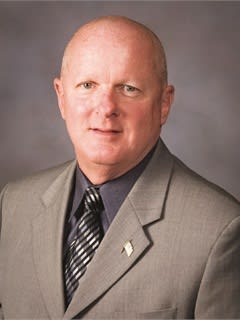
Bob Stanton
The Hillsborough County, Fla., fleet operation contends with many of the same challenges facing most public sector fleets. The most challenging, of course, are relentless budget pressures.
Over the past two years, for example, 14 fleet administrative positions have been cut. Today, 51 technicians and support staff comprise a fleet organization that numbers 3,100 vehicles and equipment units with an operating budget of $8 million (excluding fuel and capital expenses). Director of Fleet Management Bob Stanton credits his “strong staff plus a supportive upper management” for helping make “all current challenges and obstacles easy to overcome.”
Stanton has built upon a collaborative relationship with County management initially cultivated by his predecessor, Sharon Subadan, CPM, CAFM, CPFP, now the deputy county administrator for public safety and community services.
Stanton joined Hillsborough County’s fleet team in May 2011, after 20 successful years as the fleet management director for neighboring Polk County, Fla.
“Sharon’s knowledge and experience in the fleet world has benefited the entire County organization and my organization specifically,” Stanton said. “Our collective initiatives are more readily accepted for that reason.”
One initiative to counter ever-tightening budget dollars has been expanding insourcing efforts for nearby fleet operations, enhancing revenues for Hillsborough County while providing cost-effective options for neighbor fleets.
Stanton and his team are also analyzing vehicle performance data to extend unit life cycles wherever possible.
Additionally, Stanton has worked to exploit cost allocation opportunities.
“The budget challenges over the past five years have made the accurate allocation of all cost categories critical to ensure our expenses are both accurately stated and fully supportable to our customers,” Stanton explained. “We’ve identified several opportunities where cost allocation accuracy can be improved.”
Overall, Stanton promotes a spirit of innovation in his team to ensure the organization’s ability to meet future challenges.
Notable Numbers | |
The Hillsborough County, Fla., City of Portland, Ore., and City of Troy, Mich., fleets and their managers collectively boast of: | |
Total years of fleet management experience | 105 |
Fleet manager industry association affiliations, committee chairmanships, certifications, and awards | 30 |
ASE certifications held by fleet technicians | 425 |
Volusia County, Fla., is also a 2012 Elite Fleet.
SOURCES:
John Hunt, CPFP, fleet manager, City of Portland, Ore.
Sam Lamerato, CPFP, fleet superintendent, City of Troy, Mich.
Bob Stanton, director of fleet management, Hillsborough County, Fla.
More Operations

Is Keeping Older Fleet Vehicles Really Saving Money?
Is keeping vehicles longer saving money, and what happens when a diagnostic test points to the wrong fix?
Read More →
How Smart Fleet Strategy Can Help Local Government Agencies Do More with Less
Keeping a vehicle longer may ease this year’s budget, but what does it cost the next one? A closer look at fleet decisions can reveal opportunities to reduce spending while protecting essential services.
Read More →
Connect with Government Fleet on LinkedIn
From industry news and fleet management strategies to conversations with peers, Government Fleet's LinkedIn page offers public-sector fleet professionals another way to stay informed and connected.
Read More →
Town of Queen Creek Named Most Successful Fleet Award Winner of Inaugural RTA Fleet Success Awards
Five fleets were honored at RTA Connect 2026 in Chicago for excellence across resource efficiency, intentional culture, risk management, and stakeholder satisfaction.
Read More →
A buyer's guide to fleet management software in 2027
Buying fleet management software in 2027 means looking beyond features and price. As fleet operations, technology and expectations evolve, this guide explores what today’s fleet professionals should consider when choosing a system that can deliver value now and adapt to what comes next.
Read More →
Hazard Alerts, Fleet Car Sales Rise and a New Shuttle Concept
Fleet car sales doubled, but the bigger picture tells a different story in this week’s roundup.
Read More →
How St. Johns County Turned Fleet Data Into Better Replacement Decisions
St. Johns County, Florida, had fleet data, but turning it into reliable decision guidance was another matter. Instead of starting over with a new fleet management system, the county connected existing tools and built a scoring system that gives managers an objective look at fleet health.
Read More →
Fleet Forward Conference Introduces One-Day Passes for 2026
New one-day registration lets fleet professionals attend Tuesday, Wednesday, or Thursday, with passes available for $249.
Read More →
ENC Unveils its ZAVIR Medium-Duty Shuttle
Two variants of the concept shuttles were revealed: a low-floor configuration and a high-floor configuration.
Read More →
Could Your Next Fleet Technician Start as an Intern?
What if your next technician hasn’t worked in a fleet shop yet? What fleets are doing to free up time.
Read More →