Report: Fleet Managers See Majority Salary Increase from 2022-2023
Most fleet managers with many years under their belts are enjoying a salary bump and have a concentrated emphasis on fleet management, according to a new study.
More than half of public sector survey respondents — approximately 73% — reported a salary increase in 2023 from 2022.
Photo: Government Fleet
3 min to read
How much weight does a salary hold for fleet managers across the industry? In order to better understand where years of experience and salary increases relate, it's helpful to look at what other fleet leaders are being paid and how their fleet, as well as where their time is spent, may influence pay increases.
Fleet managers from the public sector shared their salary changes as well as a look into the makeup of their fleets in a recent Government Fleet salary study comparison of 2022 and 2023. Here’s a look at how the results broke down and how both sectors compare.
Ad Loading...
A Fleet Majority of Salary Bumps But Significant Percentage Drops
More than half of public sector survey respondents — approximately 73% — reported a salary increase in 2023 from 2022. However, roughly 24% noted no change from the previous year while just over 2% reported a decrease from the previous year.
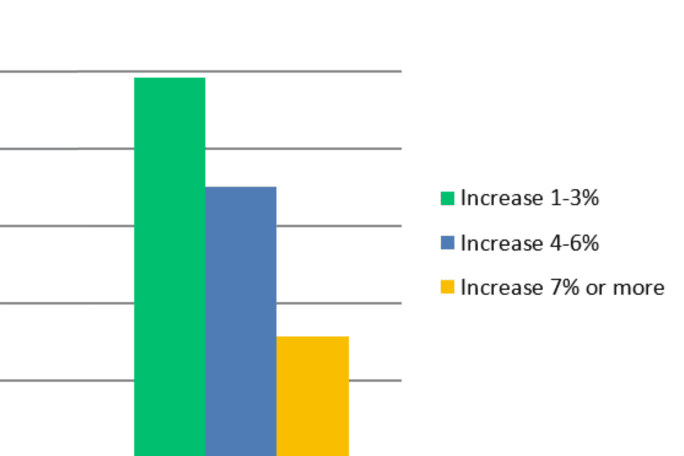
The majority of public sector fleet managers who did see a salary bump reported that the increase was between 1-3%. This was followed by approximately 35% reporting a salary increase of 4-6%. Approximately 16% saw an increase of 7% or more.
However, when it came to fleet managers who saw a decrease, the majority of respondents reported a drop of 7% or more.
Most public sector respondents reported a salary within the $50,001 to $80,000 range. More than half the respondents reported a salary of $80,000 or above.
At one end of the salary scale, about 1% reported a salary of less than $30,000 while about 1% reported a salary of more than $200,000.
Ad Loading...
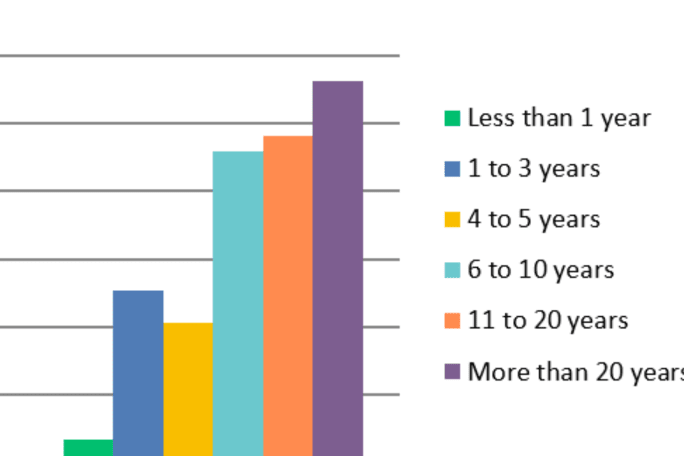
The above represents the number of years respondents have in fleet management. Almost 30% of public sector fleet managers reported more than 20 years as a fleet manager.
Photo: Government Fleet
Fleet Manager Backgrounds and Current Salaries
Most public sector fleet managers reported having at least some college education — almost 30%. This was followed by 25% having a technical degree and roughly 12% having a high school degree. Just over 2% had a Certified Automotive Fleet Manager certification.
As far as experience goes, most respondents have a fair share of fleet time under their belts. Almost 30% of public sector fleet managers reported more than 20 years as a fleet manager. Around 24% had 11 to 20 years of fleet management experience.
Still, with the number of experienced fleet managers, there seem to be some new faces in the public sector. Almost 15% of respondents had three or fewer years in fleet management.
The above represents the percentage increase of fleet manager salaries. Approximately 35% of respondents reported a salary increase of 4-6%.
Photo: Government Fleet
A Closer Look at the Fleets And How They Operate
Almost 70% of public sector fleets had five or more staff members they supervise with 17% having between one and two staff and almost 8% having none. This differs greatly from the private sector where only about 30% of fleet managers have five or more staff they oversee.
Most fleets also have more than 1,000 vehicles managed. Most fleets within the public sector have at least 50 vehicles, according to respondents. About half of respondents reported that 1-20% of fleet responsibilities are outsourced to a third-party fleet services provider. Almost 30% do not outsource to a third party.
Ad Loading...
When it came to time devoted to the position, a whopping 58% of fleet managers in the public sector reported devoting between 76% and 100% of their time to fleet management.
In summary, the salary study shows that fleet managers are more fleet-focused than ever and have seen a salary hike. However, there is a shift in new fleet managers entering the public sector. Shifts in the industry may influence compensation structures as organizations seek professionals capable of meeting the demand in fleet. Monitoring these trends is crucial for the continued effectiveness of public sector fleet operations.
Keeping a vehicle longer may ease this year’s budget, but what does it cost the next one? A closer look at fleet decisions can reveal opportunities to reduce spending while protecting essential services.
From industry news and fleet management strategies to conversations with peers, Government Fleet's LinkedIn page offers public-sector fleet professionals another way to stay informed and connected.
Five fleets were honored at RTA Connect 2026 in Chicago for excellence across resource efficiency, intentional culture, risk management, and stakeholder satisfaction.
Buying fleet management software in 2027 means looking beyond features and price. As fleet operations, technology and expectations evolve, this guide explores what today’s fleet professionals should consider when choosing a system that can deliver value now and adapt to what comes next.
St. Johns County, Florida, had fleet data, but turning it into reliable decision guidance was another matter. Instead of starting over with a new fleet management system, the county connected existing tools and built a scoring system that gives managers an objective look at fleet health.