




Compliance Under Chaos: What Fleet Leaders Overlook During Disaster Response
Fleet leaders preparing for disaster response often focus on readiness, speed, and safety. What’s frequently overlooked is how quickly compliance, documentation, and utilization controls can degrade under pressure.
by Travis Kay and Justin Gibson, Amerit Fleet Solutions
May 2, 2026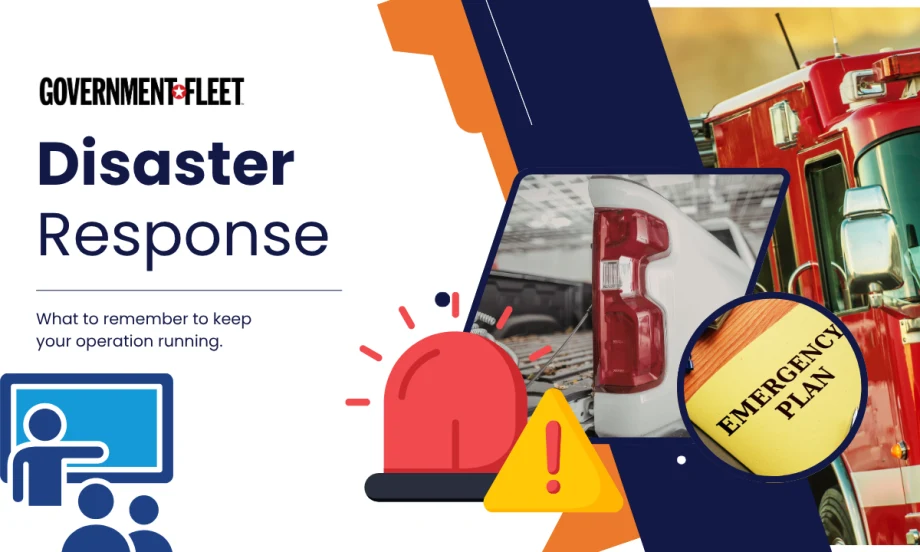
Preparedness starts in the shop, where clear policies, hands-on training, and tested response plans help fleets stay ready when disruptions hit.
Credit:
Government Fleet
4 min to read
- Fleet leaders often prioritize readiness, speed, and safety in disaster responses.
- Compliance and documentation frequently suffer under the pressure of expedient actions during crises.
- The challenge of maintaining utilization controls can impact the overall effectiveness of disaster response efforts.
*Summarized by AI
Fleet leaders preparing for disaster response often focus on readiness, speed, and safety, and rightly so. What’s frequently overlooked is how quickly compliance, documentation, and utilization controls can degrade under pressure.
From a regulatory standpoint, most post‑disaster issues don’t stem from bad intent; they stem from systems that weren’t built to flex under stress.
Below are practical observations drawn from managing compliance across large, regulated fleet programs during high‑disruption events.
Compliance Gaps During or After Disaster Response Operations
The most frequent gaps I see during disaster response involve hours‑of‑service exceptions and incomplete inspection documentation. In emergency situations, drivers may be required to remain on duty beyond standard limits or to evacuate without completing required post‑trip inspections.
Federal regulations do allow flexibility during emergencies, but that flexibility comes with an expectation: fleets must be able to clearly document why exceptions occurred and how risks were managed. The problem isn’t the exception; it’s failing to defend it later.
How Inspection and Maintenance Documentation Breaks Down Under Emergency Conditions
Breakdowns happen when normal daily processes are compressed or abandoned for safety reasons. Post‑trip inspections may be missed due to evacuation orders, sheltering, or vehicle abandonment.
When that happens, defects that should have been documented can fall through the cracks, and the next operator may unknowingly start with incomplete information. These gaps are understandable in the moment, but without a recovery process, they create downstream compliance and safety exposure once operations resume.
Utilization and Asset Tracking Issues That Surface After Operations Normalize
Once fleets return to steady‑state operations, cumulative utilization limits often surface as a constraint. Extended emergency shifts can rapidly consume allowable on‑duty hours, restricting driver availability days later, often when recovery workload is still high.
From emergency vehicles to response planning, disaster readiness depends on keeping fleet operations steady when the unexpected interrupts daily service.
Credit:
Government Fleet
Asset tracking issues also emerge when vehicles are reassigned, temporarily abandoned, or repaired in the field without clear handoff documentation. The challenge isn’t real‑time response; it’s re‑establishing clarity after the fact.
Maintaining Regulatory Discipline Without Slowing Urgent Response Efforts
The most effective tool is education before the emergency, not enforcement during it. When technicians and drivers understand regulatory thresholds, hours‑of‑service limits, inspection requirements, and acceptable exceptions, they make better decisions under pressure.
Educated teams self‑monitor, communicate earlier, and capture critical context while events are still fresh. Compliance issues grow when people don’t know what they’re supposed to protect until it’s too late.
The Role of Governance Structure in Sustaining Operational Integrity During Disasters
Governance becomes critical when conditions are unstable. Fleets with clear responsibility, escalation paths, and documented standards are far more resilient under stress. As fleets scale, post‑event cleanup becomes more difficult and more visible to regulators.
A mature governance structure ensures operational teams know what’s expected, what’s allowable, and who owns the outcome, even when normal rules are temporarily flexed.
The Risks of Deferring Documentation and Compliance Tasks During an Event
Deferred documentation is one of the fastest ways compliant fleets create long‑term exposure. Details fade quickly, workloads intensify, and reconstructing events days or weeks later becomes unreliable.
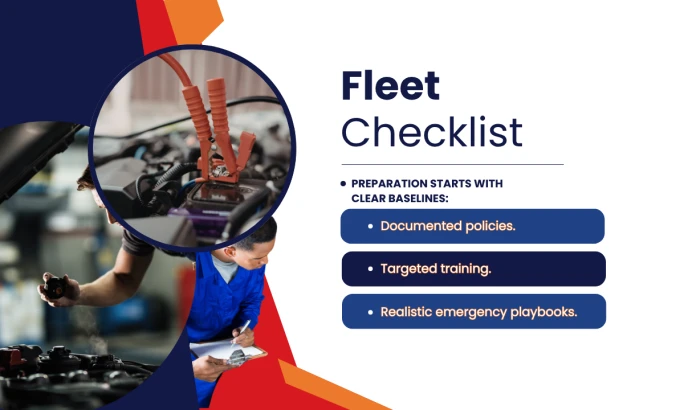
Strong internal systems give fleets room to respond under pressure, helping teams stay flexible during emergencies without immediately running into compliance problems.
Credit:
Government Fleet
During disasters, regulators understand disruption, but they still expect fleets to demonstrate that compliance was actively managed. The longer documentation is delayed, the harder it is to credibly explain what happened and why.
Building Systems That Flex During Emergencies and Hold Up Under Audit
The strongest systems are designed below regulatory maximums. By setting internal limits that leave a margin, such as shorter standard shifts, fleets retain flexibility when emergencies arise without immediately triggering violations.
When exceptions are needed, the process for documenting them is already built in. Flexibility isn’t about lowering standards; it’s about building buffered operations that tolerate disruption while remaining auditable.
Lessons Smaller Fleets Can Apply From Large-Scale Fleet Programs
Large fleets succeed by minimizing manual compliance and standardizing oversight through technology and process discipline. Smaller fleets often struggle not because they lack intent, but because they rely on manual systems that don’t scale during disruption.
Today, the right technology and structured program support make enterprise‑grade compliance achievable at any size, if fleets commit to using those tools consistently, not just during audits.
Practical First Steps to Reduce Post-Disaster Compliance Exposure
Preparation starts with clear baselines:
- Documented policies.
- Targeted training.
- Realistic emergency playbooks.
Fleets should define how to handle stranded drivers, vehicle abandonment, emergency rescues, and communication protocols before those scenarios occur. When drivers and managers know exactly what to do and what must still be documented, fleets recover faster and with far less compliance fallout.
Subscribe to Our Newsletter
More Disaster Response

25 Years Later: What 9/11 Taught Government Fleets About Emergency Response
Twenty-five years after 9/11, New York's fleet response still offers lessons for public agencies preparing for the unexpected. From repurposing equipment to maintaining essential services, the response shows what it takes to keep a fleet moving when the mission changes overnight.
Read More →
How Fleets Can Streamline Insurance Claims and Repairs
Learn how fleets can speed up storm recovery with proactive claims readiness, VIN accuracy, and pre-storm prep to minimize downtime and repair delays.
Read More →
BRINC, Nova Partner to Advance Public Safety Drone Mapping
The partnership aims to provide real-time aerial intelligence to first responders with automated mapping and hotspot detection
Read More →
Building a Power Plan That Holds Up When the Grid Does Not
When the grid fails, a power plan proves its value by holding up under real conditions, not the clean assumptions made on calm days.
Read More →
What to Say When It Matters Most: Crisis Communication for Fleet Leaders
Effective crisis communication is critical for fleet leaders navigating high-stakes, fast-moving situations. Clear, timely messaging helps maintain trust, align teams, and ensure operational continuity when disruptions occur. By preparing key messages in advance, leaders can respond with confidence and credibility when it matters most.
Read More →
Disaster-Proof Your Fleet: A Resilience Blueprint for Fleet Managers
Build a resilient fleet with this disaster-readiness guide for fleet managers. Learn how to plan, adapt, and lead through any emergency confidently.
Read More →