




Building a Power Plan That Holds Up When the Grid Does Not
When the grid fails, a power plan proves its value by holding up under real conditions, not the clean assumptions made on calm days.

When the grid fails, a power plan proves its value by holding up under real conditions, not the clean assumptions made on calm days.
BBM
- A resilient power plan is vital for maintaining operations when the electrical grid fails.
- The true effectiveness of a power plan is demonstrated in real-world conditions, rather than in theoretical scenarios.
- Designing for unexpected challenges ensures power reliability beyond calm and predictable situations.
*Summarized by AI
The first sign the grid is unstable isn’t always the lights; it could be the radio. A dispatcher asks for an update, and the reply comes back late and clipped. Someone realizes the building is running on whatever battery life remains in a few devices, and the “temporary” outage is already affecting how calls are handled.
In those first minutes, fleets fall back on the preparation they have already done. That is when an outage-resilience plan either holds up under pressure or exposes the gaps that only show up when the grid does not.
We caught up with the team from Anker SOLIX, a power delivery and storage solutions provider, to ask what they see most often in real-world outage planning and deployment. Check out their advice for fleets below, based on what works in the field and where plans tend to fall short.
Knowing Your Blind Spots in Outage-Resilience Plans
The most critical blind spot is single-source dependency, according to the Anker SOLIX team. Agencies often realize too late that their plan has a fatal flaw: Generators fail when fuel trucks can't reach them (the infinite fuel assumption), and standalone batteries fail when the sun doesn't shine (the runtime gap).
To fix this, the SOLIX team has been seeing a shift toward multi-source energy systems. This means the system must be able to harvest energy from any available source.
- Scenario A: Roads cut, sky clear: When fuel deliveries are disrupted, but sunlight is available, portable battery storage paired with portable solar can create a workable recharge loop. The key is having sufficient solar input and the right procedures to keep charging consistent, so the system can support operations without relying on fuel logistics.
- Scenario B: Stormy skies, grid down: When solar is limited, a practical approach is to use a generator primarily as a battery recharging tool rather than as the direct power source for every load. It works like a hybrid setup. The battery handles day-to-day power needs, and the generator runs only when the battery needs to be topped off. This can reduce noise, limit idling, and stretch fuel compared with running a generator continuously.
By combining high-input solar with a smart fuel backup, fleets can achieve true redundancy, ensuring operations continue, whether the challenge is a fuel shortage or a blizzard.
Performance Requirements That Matter Most in Real Deployments
For most fleets, finding what works best in an outage comes down to voltage flexibility and built-in ports. A standard 120V outlet may not always be enough for a command center, and many real-world deployments can require 240V split-phase output for higher-demand equipment.
It also helps when common connections are built into the unit, such as a NEMA 14-50 for 240V needs, so crews are not relying on adapters that can get lost during a response. Command trailers are a common sticking point, so it helps when the unit includes a TT-30R connection and other high-demand ports directly on the device, instead of relying on adapters that can get lost or forgotten during a response.
However, one size does not always fit all when it comes to keeping operations running during an emergency.
Portable energy storage can bring certain advantages that generators may not. It can be used close to the work, including in enclosed or sheltered areas where running a gas generator is unsafe because of exhaust and noise. That means responders can power radios, medical equipment, and critical electronics inside a command vehicle or triage space without pushing the power source far away and stretching cords back into the operation.
For longer outages, especially when solar recharge is limited, planning should not be framed as a choice between batteries and generators. Now, many fleets are moving toward a paired approach, using battery storage for quiet, steady power and using a generator primarily to recharge the batteries when needed. This reduces runtime, can extend fuel supply, and keeps noise and exhaust away from the people doing the work, while still allowing the operation to sustain power over multiple days.
Power triage starts with knowing what matters most. Fleets must prioritize connectivity, situational awareness, and mobility when the grid goes down.
BBM
Power in the Field: What Fleets Need to Prioritize and Share
Then there is the EV rescue-charging side of emergency response, which covers the last 10 miles. The goal is not a full charge; rather, it is getting a stranded electric police cruiser or ambulance back to the depot. The main misconception is that fleets need specialized or complex EV charging infrastructure to do that. In many cases, what matters most is having access to a reliable 240V source and knowing how to deploy it safely and quickly when the situation demands it.
During a power outage, agencies may also have to prioritize which vehicles and critical loads receive power first. A practical way to approach this is a power triage protocol:
- Connectivity (Tier 1): Starlink terminals, radios, and mesh networks. These are mission-critical but low-draw. Compact, GaN-powered units are ideal for rapid deployment in this situation.
- Situational Awareness (Tier 2): Drone charging stations and perimeter lighting.
- Mobility (Tier 3): Charging EV assets using heavy-duty units.
Agencies should "right-size" the power source to the tier, don't waste a massive 10kW generator just to charge handheld radios.
Fast deployment is another recurring theme in real incidents. A deployable microgrid should be modular and staged so it can be set up quickly without specialized electrical work on scene, then expanded as the mission grows. A typical setup includes a main power source, additional capacity that can be added as needed, and a way to recharge when conditions allow.
Interoperability also becomes an issue during mutual aid operations when multiple agencies share portable power and charging resources. The biggest headache is incompatible connectors. Fleets can plan around this by standardizing around common input and output types where possible, and by staging clearly labeled cables and adapters with the equipment so shared power can be deployed without delays.
Siting Safety and Proving Readiness Before the Next Outage
When deploying portable units in the field, the two biggest considerations are water discipline and thermal management.
- Water Ingress: Unlike a fixed generator shed, incident scenes are messy, so it helps to enforce dry staging by keeping the unit elevated on pallets or positioned inside a protected area to keep ports and connections away from mud and rising water. Thermal management matters just as much, since units need clearance and airflow to avoid overheating during extended use.
- Safety Protocol: From a safety standpoint, one advantage of battery-based power is the elimination of carbon monoxide risks at the point of use, which can simplify siting for certain operations compared with combustion generators. Even so, placement should still follow basic incident-scene discipline, so power is close enough to be useful without creating trip hazards, bottlenecks, or exposure to the elements.
To prove your team can deploy portable power and EV rescue charging effectively, run black start drills on a set schedule (quarterly is suggested here). Cut the main power, and time how long it takes your team to get the command post online using battery backup. Also, mandate a State of Charge (SoC) Log. There is nothing worse than grabbing an emergency battery only to find it wasn't topped up after the last drill. Smart units with app-based monitoring can automate this check, but physical verification is a must in fleet protocols.
For agencies that are early in the electrification process, one of the most effective steps they can take over a 90-day period is to conduct a wattage audit. This is a way to stop guessing. Fleets should install meters on critical loads (dispatch servers, radio chargers, heaters) to know exactly how much power they consume. Then, procure one pilot unit and test it against that load. Validating that the specific plugs and voltage requirements work before extreme weather, such as a hurricane, hits is one of the single highest-ROI steps you can take.
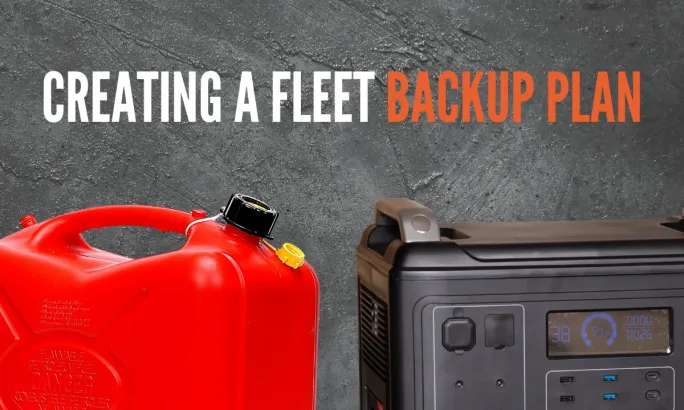
A reliable backup plan blends fuel and battery power, giving fleets the flexibility to operate when grid access and fuel delivery are uncertain.
BBM
Depot Resilience & The 'Infinite' Hybrid System
For fixed facilities like dispatch centers, consider a solar-tri-fuel hybrid approach. This approach can shape how depots handle long-duration outages. The concept is meant to act as three layers of defense:
- Modular scalability: Starting with a small battery baseline and adding modules over time as needs grow. This lets depots scale capacity in phases and match storage investment to their budgets and missions.
- Solar autonomy: Integrating battery storage with rooftop solar so the site can run on solar during the day while recharging for later use. This reduces reliance on delivered fuel and helps stretch backup capability through longer outages.
- Tri-fuel backup as a safety net: Pairing storage with a generator that can run on natural gas, propane, or gasoline. In scenarios where diesel deliveries cannot reach a depot due to flooded roads, the setup can switch to an existing natural gas line, extending runtime without relying on refueling trucks.
What Fleet Managers Should Do Before the Next Power Outage
Outages don’t fail fleets; assumptions do. The idea that fuel will always arrive, the grid will come back quickly, or one power source will carry the entire operation is where most plans break down.
The fleets that remain operational are those that plan for disruption across multiple fronts. That means building redundancy into power systems, pairing battery storage with smart generator use, and making sure crews can deploy equipment quickly without relying on perfect conditions.
Start with what you can control. Audit your real power needs, test your equipment under blackout conditions, and identify where a single point of failure could stall your operation. From there, build a system that can adapt when fuel is delayed, solar is limited, or access is cut off.
Because when the next outage hits, the goal isn’t to have a plan on paper. It’s to have a system that actually works in the field.
Quick Answers
A reliable power plan ensures continuous electricity supply during grid failures, preventing disruptions to essential services and maintaining safety and comfort in homes and businesses.
*Summarized by AI
More Disaster Response

25 Years Later: What 9/11 Taught Government Fleets About Emergency Response
Twenty-five years after 9/11, New York's fleet response still offers lessons for public agencies preparing for the unexpected. From repurposing equipment to maintaining essential services, the response shows what it takes to keep a fleet moving when the mission changes overnight.
Read More →
How Fleets Can Streamline Insurance Claims and Repairs
Learn how fleets can speed up storm recovery with proactive claims readiness, VIN accuracy, and pre-storm prep to minimize downtime and repair delays.
Read More →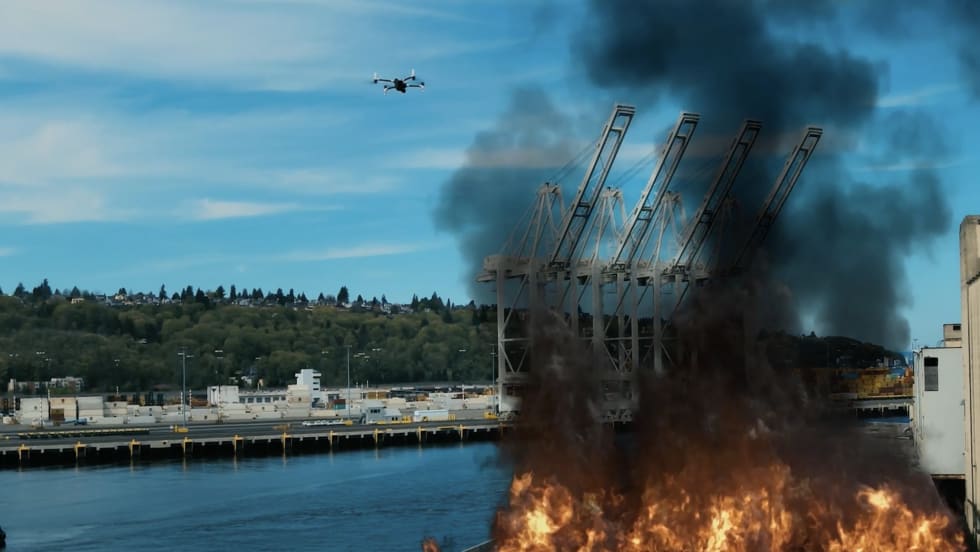
BRINC, Nova Partner to Advance Public Safety Drone Mapping
The partnership aims to provide real-time aerial intelligence to first responders with automated mapping and hotspot detection
Read More →
What to Say When It Matters Most: Crisis Communication for Fleet Leaders
Effective crisis communication is critical for fleet leaders navigating high-stakes, fast-moving situations. Clear, timely messaging helps maintain trust, align teams, and ensure operational continuity when disruptions occur. By preparing key messages in advance, leaders can respond with confidence and credibility when it matters most.
Read More →
Compliance Under Chaos: What Fleet Leaders Overlook During Disaster Response
Fleet leaders preparing for disaster response often focus on readiness, speed, and safety. What’s frequently overlooked is how quickly compliance, documentation, and utilization controls can degrade under pressure.
Read More →
Disaster-Proof Your Fleet: A Resilience Blueprint for Fleet Managers
Build a resilient fleet with this disaster-readiness guide for fleet managers. Learn how to plan, adapt, and lead through any emergency confidently.
Read More →