




About the Author: Jimmy Bink is the Vice President of the Parts and Service Division at Master's Transportation. Bringing 15 years of experience in bus service, he leads the strategic direction and management of the company's parts and service operations. His work focuses on preventive maintenance strategies, operational efficiency, and cost control for fleet operators. His efforts aim to reduce operational costs through preventative maintenance strategies.
Cold Starts, Warm Rides: Smart Winterizing Tips for Government Fleets
Practical checks and fixes to keep buses, shuttles, patrol vehicles, pickups, plows, refuse trucks, and bucket trucks running all winter.
by Jimmy Bink, Master's Transportation
December 5, 2025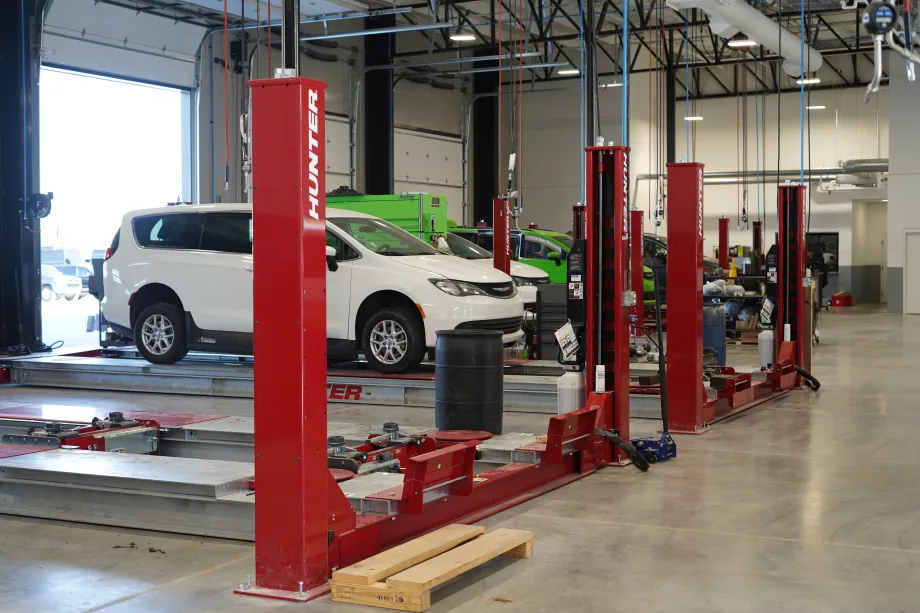
Standardize a winter checklist and tag accountability so steps do not get skipped.
Photo: Master's Parts and Service
7 min to read
Winter is hard on every vehicle in your yard. Cold snaps drain batteries, salt attacks lines and fittings, and small leaks turn into costly failures. One missed weak battery or a closed heater valve can strand a route, delay a plow, or sideline a patrol unit. The good news is that a tight checklist and a few targeted fixes prevent most winter headaches.
A Quick Winterization Checklist
● Batteries and charging: Test cold cranking amps (CCA). Verify alternator output near 14 volts under load. Clean and tighten all terminals and grounds.
● Heating and defrost: Clean heater cores. Confirm blower performance. Open heater shutoff valves. Run-test auxiliary pumps. Inspect fittings, clamps, and hoses.
● Tires and brakes: Set pounds per square inch (PSI) to manufacturer spec. Measure tread inner, middle, and outer. Verify U.S. Department of Transportation (DOT) brake measurements. Inspect lines and rotors for rust, glazing, or cracks.
● Visibility and lights: Install fresh wipers. Use region-appropriate washer fluid. Confirm a clean spray pattern. Make sure all lights work and lenses stay dry.
● Safety and body: Stock triangles, a first aid kit, and a charged, signed fire extinguisher. Carry tire chains where required by state law. Reseal body joints. Water test the vehicle.
The Most Common Winter Issues — and How to Prevent Them
Heaters lead the list. Start by cleaning heater cores and confirming blower motors run strong. Open shutoff valves so coolant reaches rear circuits. Top off with the correct coolant mix. Run-test the system and confirm pumps move coolant where it needs to go.
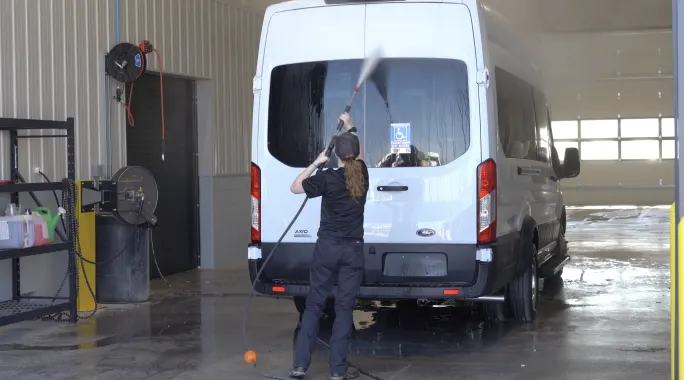
During pre-trips, they should test wipers, verify washer level and spray pattern, check tire pressure, and make sure emergency windows and exits open freely.
Photo: Master's Parts and Service
Next, chase leaks. Reseal body joints with quality sealant, then water test to confirm you kept moisture out. Inspect hoses for dry rot and tighten every fitting and clamp. In salted regions, look closely at valves and hard lines for rust. Air sneaking into the loop creates no-heat complaints and can trigger bigger failures. If you see seepage now, fix it before a cold snap magnifies the problem.
Prepping for Cold Starts
Cold exposes weak batteries. Load-test every battery and check for parasitic draw. Inspect and clean terminals so you get full cranking power. Confirm the alternator holds proper voltage with all loads on. In very cold climates, use overnight maintainers or engine block heaters, if the unit is equipped, at the lot. On engines that allow it, use block heaters to reduce strain. The goal is simple: reliable starts with no jump lines.
Heating System Checks That Actually Fix Problems
A heater check needs more than flipping a switch. Verify coolant strength and level, clean heater cores, confirm blower performance at each speed, and open shutoff valves before the first freeze. Run the heaters and watch the pumps to confirm coolant circulates to rear circuits. Then crawl the system. Fittings, clamps, and hoses should be dry, tight, and free of cracks.
Tires and Traction
Tire pressure drops with temperature. Check PSI during pre-trips and after big swings. Hold the spec on or near the vehicle identification number (VIN) plate. Measure tread depth in three spots to meet DOT requirements and catch uneven wear. Inspect sidewalls for damage and dry rot. Confirm tire age is in spec. Proper inflation and tread mean better braking and grip on slic
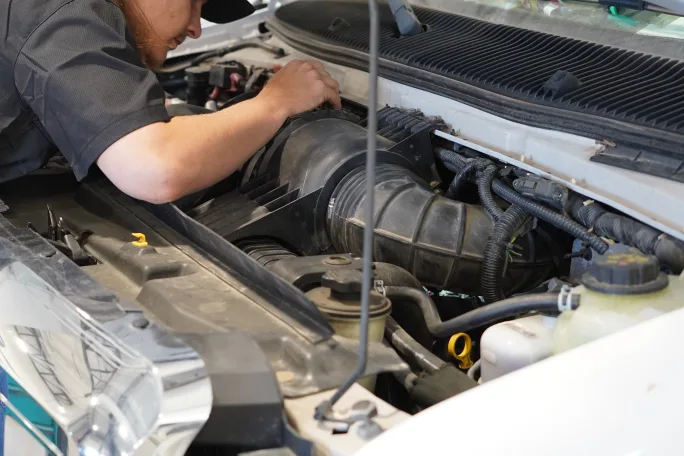
Keep preventive maintenance tight. Top off and flush fluids on schedule and verify belts and hoses are in good condition.
Photo: Master's Parts and Service
k roads.
Engine Maintenance That Prevents Roadside Failures
Keep preventive maintenance tight. Top off and flush fluids on schedule. Verify belts and hoses are in good condition. Small leaks, weak belts, and aging hoses often show up as hard starts, misfires, and warning lights when temperatures drop. Fix them in the bay instead of on the shoulder.
Tools and Products to Stock
Stock what winter demands. Add ice scrapers, snow-removal tools, emergency blankets, and safety triangles. Make sure the fire extinguisher is charged and signed. If your state requires tire chains, store the right size on board and train drivers to install them safely.
Body Materials and Flooring that Fight Winter Corrosion
Many passenger units use resilient floors such as Gerflor or Altro designed to keep moisture on the surface so it is visible and easy to remove. Seams and wall joints are sealed, and many builds include a coved wall-to-floor transition that stops water from running into joints between the flooring and the body.
That design helps manage window leaks and passenger spills, but only if you maintain it. During interior checks, inspect every seam and edge for cracks, lifted sealant, or damage and reseal immediately.
Because these floors do not absorb liquids, water will pool and migrate as the vehicle moves until it finds a weak point where it can drain into the structure and start rust or corrosion.
The Driver’s Role in Winter Reliability
Drivers are your early warning system. Ask them to report heat issues, rough running, leaks, and unusual noises right away. Have them confirm every light works before roll-out and keep the exhaust clear of snow at layovers.
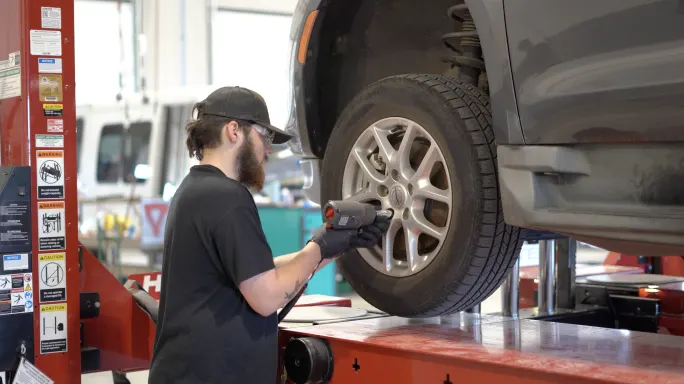
Tire pressure drops with temperature. Check PSI during pre-trips and after big swings.
Photo: Master's Parts and Service
During pre-trips, they should test wipers, verify washer level and spray pattern, check tire pressure, and make sure emergency windows and exits open freely. If cabin or rear heat is not working, it may be an air pocket, a closed valve, or a failed pump. Flag it and pull the unit before it strands a route.
Red Flags That Need Immediate Attention
No cabin or rear heat points to air in the system, a closed valve, or a failed pump. Visible leaks demand an inspection before the next run. Low-voltage alerts or any repeat no-start history in a cold snap mean it is time to load-test the battery and recheck the charging system.
Ensure that no warning light is present on the dash, for example, check engine light, ABS light, brake light or even the service engine light. Do not wait. These are pre-failure signals.
Getting the shop winter-ready
Standardize a winter checklist and tag accountability so steps do not get skipped. Train the team on chain laws and quick fixes such as locating and opening heater valves on specific models. Schedule resealing and heater checks before the first freeze.
Match the washer fluid to the climate because what works in one region can freeze in another. If vehicles shift regions, swap fluids. On any unit, steel or aluminum, complete interior checks for seams and seals. On steel-frame builds, inspect the seams along the floor and wall tracks where seats mount, as those joints are common moisture entry points.
On aluminum floors, the integrated floor track reduces intrusion and simplifies cleaning, but you still need to verify the seam sealant. During these checks, inspect the undercoat from below and around every through-floor fastener, such as wheelchair lifts and restraint anchors, to confirm the coating is intact. Keep an eye out for critter damage on units that sit because rodents target wiring harnesses.
Quick Wins and Success Stories
Here is a simple one that saves routes every year. Many commercial shuttles hide a heater shutoff valve underneath. Opening it takes less than five minutes and restores rear heat on the spot. Another win is proactive resealing. Snow and ice find hairline cracks, wick water into the interior, and cause expensive damage. Remove the cracked sealant, reseal the joints, and water test. It is cheap insurance.
Core Winterization Details for Your Fleet
Battery and charging: Test cold cranking amps (CCA) and verify alternator output near 14 volts under load. Clean and tighten every terminal and remove corrosion.
Heating: Clean cores. Confirm blowers. Open shutoff valves. Run-test pumps. Inspect fittings, clamps, and hoses. Fix seepage to keep air out.
Tires: Check pressure often. Hold spec PSI. Measure tread inner, middle, and outer. Inspect for dry rot and sidewall damage. Verify tire age.
Brakes: Measure to DOT spec. Watch for glazing and rust. Inspect hoses and lines for cracks or corrosion. Check rotors for lips, burn rings, or cracks. Test and adjust the emergency brake.
Wipers and washers: Replace worn blades. Top off washer fluid with a freeze-appropriate formula. Verify the spray pattern hits the glass cleanly.
Lights: Test every light. Replace weak bulbs. Make sure lenses are dry and sealed.
Safety equipment: Stock a fresh first aid kit, safety triangles, and a charged, signed fire extinguisher. Carry chains where required.
Body seals and floors: Remove cracked sealant. Reseal all joints. Water test for leaks. Inspect seat tracks and through-floor fasteners. Verify undercoat coverage.
Subscribe to Our Newsletter
More Operations

Is Keeping Older Fleet Vehicles Really Saving Money?
Is keeping vehicles longer saving money, and what happens when a diagnostic test points to the wrong fix?
Read More →
How Smart Fleet Strategy Can Help Local Government Agencies Do More with Less
Keeping a vehicle longer may ease this year’s budget, but what does it cost the next one? A closer look at fleet decisions can reveal opportunities to reduce spending while protecting essential services.
Read More →
Connect with Government Fleet on LinkedIn
From industry news and fleet management strategies to conversations with peers, Government Fleet's LinkedIn page offers public-sector fleet professionals another way to stay informed and connected.
Read More →
Town of Queen Creek Named Most Successful Fleet Award Winner of Inaugural RTA Fleet Success Awards
Five fleets were honored at RTA Connect 2026 in Chicago for excellence across resource efficiency, intentional culture, risk management, and stakeholder satisfaction.
Read More →
Sponsored•October 14, 2026
A buyer's guide to fleet management software in 2027
Buying fleet management software in 2027 means looking beyond features and price. As fleet operations, technology and expectations evolve, this guide explores what today’s fleet professionals should consider when choosing a system that can deliver value now and adapt to what comes next.
Read More →
Hazard Alerts, Fleet Car Sales Rise and a New Shuttle Concept
Fleet car sales doubled, but the bigger picture tells a different story in this week’s roundup.
Read More →
How St. Johns County Turned Fleet Data Into Better Replacement Decisions
St. Johns County, Florida, had fleet data, but turning it into reliable decision guidance was another matter. Instead of starting over with a new fleet management system, the county connected existing tools and built a scoring system that gives managers an objective look at fleet health.
Read More →
Fleet Forward Conference Introduces One-Day Passes for 2026
New one-day registration lets fleet professionals attend Tuesday, Wednesday, or Thursday, with passes available for $249.
Read More →
ENC Unveils its ZAVIR Medium-Duty Shuttle
Two variants of the concept shuttles were revealed: a low-floor configuration and a high-floor configuration.
Read More →
Could Your Next Fleet Technician Start as an Intern?
What if your next technician hasn’t worked in a fleet shop yet? What fleets are doing to free up time.
Read More →