




Can the Public Sector Learn from Private Enterprise?
Collaborating with the private sector, public agencies can develop creative ways to achieve cost-effective efficiencies. The City of Atlanta improved its fleet acquisition, maintenance, and customer service with help from UPS.
Today, government agencies face enormous challenges, including growing demand for services and shrinking resources. Public/private partnerships can help prevent harmful reductions in services while avoiding significant tax increases. The application of sound business practices can provide substantial increases in productivity and efficiency that benefit both sectors.
A survey by the International City/County Management Association reviewing practices of 1,400 cities and counties found that 90 percent of contracted services had been done in-house just five years earlier. Today, the average American city contracts 23 of 65 basic municipal services, and states contract approximately 14 percent of their activities. The National League of Cities surveyed 288 municipal CEOs and found 61 percent were less able to meet their financial obligations in 2005 than in 2004.
In 2002, 38 states cut budgets by nearly $13.7 billion. In 2004, 40 states cut another $11.8 billion, the biggest budget decrease ever recorded. Seattle alone reduced its 2005 revenues by $60 million dollars.
Private Business Provides Models
A confluence of rising infrastructure needs and social demands combined with tight budgets and resistance to tax increases has made it essential to turn to the innovative qualities of private business models.
Public interests are met through a rigorous oversight process and private enterprise is rewarded by the need to provide quality customer satisfaction for longterm contracts and future business opportunities. These partnerships are an innovative, practical, and new way of providing public services through private companies.
John Hunt, the 2005 Government FleetPublic Sector Fleet Manager of the Year, said he “went to school on the private enterprise examples employed by the City of Fresno, Calif., and started running the fleet department like a business.” Hunt, now fleet manager for the City of Portland, Ore., added, “Sound business principles can be applied across the board to increase productivity and efficiency. We can learn from the private sector. We need to learn from the private sector.”
The City of Atlanta fleet department’s experience illustrates the value of public agencies teaming with private enterprise.
The governor of Georgia felt agencies had insulated themselves from the pressures that produce quality services at reasonable costs. He began the New Georgia program. All commercial activities would be reviewed for improved efficiency or rely on private-sector resources to demonstrate their business models. Half of all government services exist in the commercial marketplace with 20- to 50-percent cost savings when commercial entities are forced to compete with each other.
Atlanta Collaborates with UPS
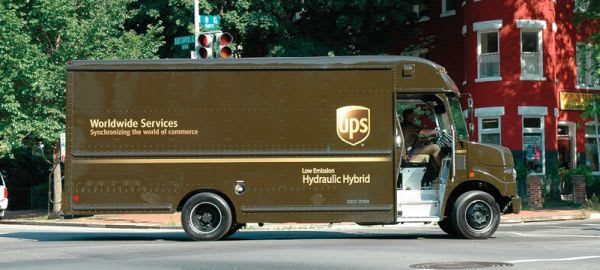
In Atlanta, city officials approached executives at local successful companies to help improve operations.According to Jan West-McIntyre, director of Atlanta’s motor transport services (MTS), United Parcel Service (UPS) was asked to help improve fleet processes. “It was a collaborative effort to streamline our fleet processes,” said West-McIntyre. “UPS is considered expert because of its fleet size.” The delivery company’s fleet numbers nearly 70,000 trucks, vans, and SUVs.
The first step was to set objectives for the partnership. The group developed six goals and four measurements to be completed in 60 days. They put into place clearly spelled-out performance guarantees that assured a level of quality and appropriate measures to evaluate performance.
Three major components of Atlanta’s fleet operation were restructured: acquisition, maintenance, and disposal.
“UPS helped us develop a five-year vehicle-replacement plan to get the department back on track while acknowledging the financial realities of the city’s budget,” said West-McIntyre.
The collaboration led to changes in the maintenance operations to improve turnaround time and upgrade and refine the computer fleet management system. The system now generates reports to track vehicle maintenance and repair services.
The parts department was also streamlined, said West-McIntyre. Parts usage is computer-tracked to determine which parts can be stocked versus a one-time order. Inventory is tracked for automatic reorder. Parts have been standardized. “We regularly meet with vendors and now order online,” said West-McIntyre.
City Improves Customer Service
In addition, the partnership team also addressed customer service issues. “UPS helped us implement a service agreement with customers,”West-McIntyre explained.MTS staff now asks customers to “Tell us what you need.” Fleet management meets regularly with customer departments. A customer-fleet contract was developed, outlining specific turnaround times, preventive maintenance schedules, vehicle service tracking, and replacement schedules.
“Customer service has improved tremendously,” said West-McIntyre. “We are no longer adversaries. We work together. Fleet and its customers have the same goal — serving the community.”
MTS implemented 90 percent of the changes UPS recommended, said West-McIntyre. “And some changes continue to be ongoing.” Her staff accomplished 20 major improvements in 24 months, and the department was named one of the 100 Best Fleets in North America. And, according to West-McIntyre, “UPS is still open to serve as consultants to MTS.”
According to David E. Scott, commissioner, department of public works, “Innovative governments have found they can provide high-quality services more efficiently and at less cost by developing partnerships with private firms.”
Partnerships Bring Benefits
The benefits of “not reinventing the wheel” and collaborating with private enterprise include:
Cost savings.
Flexibility and reduced red tape.
Increased quality.
Innovations.
Support of political leadership.
Private market expertise.
Best-in-class applications.
Increased efficiency of new technologies and operational techniques that cash-strapped governments cannot afford.
Capital improvements for innovative financial procurement practices.
Taxpayers benefit from efficiencies developed through experience and under the fire of the marketplace economy and economies of scale in purchasing goods and services.
West-McIntyre felt the process was “an incorporation of the public values of sharing, caring, and community with our obligations to save money and increase accountability.”
Atlanta is one example of an innovative government setting goals and objectives for quality public service, then working with the private sector to develop creative ways to achieve those goals. These partnerships are practical, viable, and alternative ways of providing public service through private company cooperation..
More Operations
How Leading Fleets Improve and Why Business Plans Matter
This week, we look at what past Leading Fleet winners can teach us about making progress, plus how to build a business plan your fleet will actually use.
Read More →
Nominate a Fleet Leader for the 2027 Public Fleet Hall of Fame
Do you know a fleet leader who has made a lasting impact on the industry? Nominate this fleet professional for the 2027 Public Fleet Hall of Fame.
Read More →
Why Fleet Business Plans Need Three Perspectives
A fleet business plan should help agency leaders understand the fleet’s value, give the organization a clear direction, and establish shared expectations with customer departments.
Read More →
How Oil Analysis, Safety Technology, and Fleet Awards Drive Improvement
What happens when fleets let measured results guide their next decision?
Read More →
Emergency Response, Fleet Sales and New Technology
This week’s fleet news covers emergency preparedness, shifting vehicle sales, electric truck investments, and new tools for monitoring road conditions.
Read More →
NCDOT Adds Dash Cam Imagery to Statewide Traffic Monitoring
North Carolina transportation officials are adding another set of eyes to roads that aren't covered by fixed traffic cameras. A statewide deployment gives NCDOT access to on-vehicle imagery to verify conditions during work zones, severe weather, emergencies, and other traffic events.
Read More →
Turning a Bottleneck Into a Blueprint: How Tallahassee Rethought Police Fleet Readiness
For Tallahassee, finally receiving 87 delayed police cruisers created a new problem: how to get them on the road without creating a massive backlog. The solution would change more than the upfit process.
Read More →
AI, Police Fleet Readiness and Fire Apparatus News
See how AI, a reworked police-vehicle upfitting process, and a fire apparatus acquisition could affect public fleet operations.
Read More →
How AI and Automation Work Together to Reduce Government Fleet Downtime
As their assets age and their budgets’ purchasing power shrinks, government fleet managers are facing growing pressure to do more with less.
Read More →
Police Fleet Innovation, EV Strategy and AI
See how public fleets are rethinking police vehicle readiness, electrification, workplace culture, and driver workflows.
Read More →